






Making the most of big data
Mobile technology has changed the way that business is done, goods are purchased and services are engaged with. With over 20 billion devices connected to the internet by 2020, an unprecedented volume of information is being generated. But is society making the most of this rich data?

Data is valuable, it’s the new currency. In many sectors, including transport, it becomes invaluable when it is gathered, analysed and transformed into operational and business intelligence. And now there is a great potential for doing so in real-time, offering even bigger opportunities for the travel experience. It’s how data is used that will inform and influence the design of future cities.
In March 2017, Atkins released a white paper that considers how insights from big data can be used to influence strategic decision-making and user behaviour.
As well as adding extra network capacity and delivering a better customer experience, big data presents an incredible opportunity to influence people’s behaviour, offering travellers smarter and more sustainable transport choices.
For example, in a world of connected and autonomous vehicles (CAVs), data can be gathered that will inform about the condition of the transport network, traveller and vehicle behaviour, usage peaks and troughs, the design and operation of towns and cities and social trends. The maximum value of collaborative CAVs will only be possible with shared ownership and better planned urban networks.
Atkins is currently expanding its use of big data to include mobile phone data, GPS data and a wide range of maintained data assets and connected sensors. This helps to plan and design future services, quickly address any issues on the network, inform customers of disruptions, travel updates and much more. This is just the tip of what is possible.
Atkins has a growing portfolio of big data insight projects based on more generic and well-maintained data sources. These are built on data analytics platforms that can automate common analysis to enable substantial productivity and quality improvements.
Using big data insight it will be possible to encourage and incentivise users of the transport system to move closer to their workplace and popular facilities as well as to more sustainable transport and urban environments.
Contemporary planning will help ensure that the right travel alternatives are in the right place and at the right time to make these long-term choices attractive.
So what needs to be done now?
- The ‘velocity’ of traditional data analytics needs to be increased from what might be several weeks to a matter of minutes, with big data enabling new forms of algorithms and models to be trained and applied on accelerated computer systems.
- A way needs to be found to ensure data can be shared seamlessly across systems and sectors to maximise the benefits of big data for society as a whole.
- The benefits that sharing data can have need to be shown so public opinion can shift and people’s lives and journeys can be improved through having access to the bigger picture.
By capturing data and applying scenario planning a route can be charted towards a more connected, automated and data-driven future and a better passenger experience for all.
This article was originally published here on 27 April 2017 by ICE. It was written by Lila Tachtsi, Service Director Asset Management, Atkins.
--The Institution of Civil Engineers
[edit] Related articles on Designing Buildings Wiki
- 5 steps for a healthy data culture in construction.
- Articles by ICE on Designing Buildings Wiki.
- Application Programming Interfaces (APIs).
- Big data.
- Building Services Analytics - BG 75 2018.
- Data analytics.
- Digital twin.
- Engineering Smart Cities.
- How data can stop waste.
- Internet of things.
- Open data.
- Open data - how can it aid the development of the construction industry?
- Smart technology.
- Top 10 tips for efficient data centre management.
- Top big data tools used to store and analyze data.
Featured articles and news
Costs and insolvencies mount for SMEs, despite growth

Construction sector under insolvency and wage bill pressure in part linked to National Insurance, says report.
The place for vitrified clay pipes in modern infrastructure

Why vitrified clay pipes are reclaiming their role in built projects.

Research by construction PR consultancy LMC published.
Roles and responsibilities of domestic clients

ACA Safety in Construction guide for domestic clients.
Fire door compliance in UK commercial buildings

Architect and manufacturer gives their low down.
Plumbing and heating for sustainability in new properties

Technical Engineer runs through changes in regulations, innovations in materials, and product systems.
Awareness of the Carbon Border Adjustment Mechanism
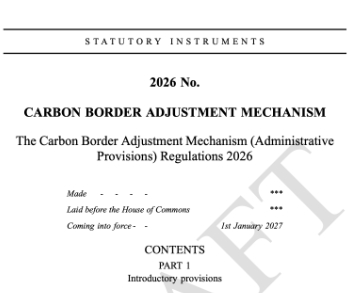
What CBAM is and what to do about it.
The new towns and strategic environmental assessments
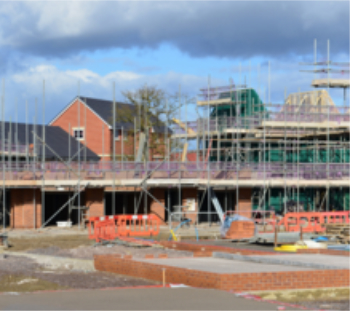
12 locations of the New Towns Taskforce reduced to 7 within the new towns draft programme and open consultation.

Buildings that changed the future of architecture. Book review.
The Sustainability Pathfinder© Handbook
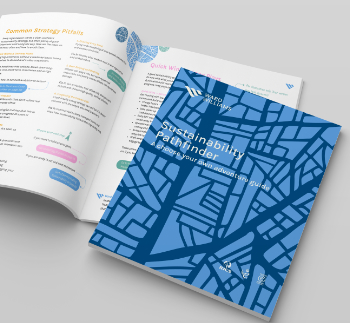
Built environment agency launches free Pathfinder© tool to help businesses progress sustainability strategies.
Government outcome to the late payment consultation, ECA reacts.
IHBC 2025 Gus Astley Student Award winners

Work on the role of hewing in UK historic conservation a win for Jack Parker of Oxford Brookes University.
Future Homes Building Standards and plug-in solar
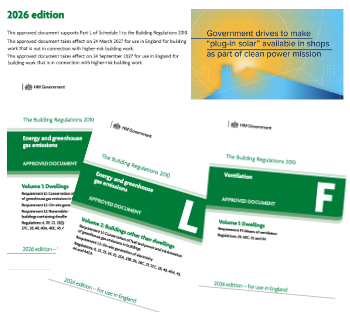
Parts F and L amendments, the availability of solar panels and industry responses.
How later living housing can help solve the housing crisis

Unlocking homes, unlocking lives.
Preparing safety case reports for HRBs under the BSA

A new practical guide to preparing structural inputs for safety cases and safety case reports published by IStructE.
Male construction workers and prostate cancer

CIOB and Prostate Cancer UK encourage awareness of prostate cancer risks, and what to do about it.