






How installer competence can help prevent major residential fires

|
| Mike Smith and Andrew Eldred of the Electrical Contractors' Association (ECA) highlight the continued fire risk due to under-qualified workers in response to this summer’s ‘Raising the Bar’ consultation. |
Contents |
[edit] Introduction
Close examination of the factors that contributed to the tragic Grenfell Tower fire in June 2017 has reinforced the importance of competence as a key factor in the safety of electrical and fire safety installations – and ultimately, the safety of those living in the buildings we make.
Everyone knows what happened at Grenfell Tower on the night of June 14, 2017, but it is no less shocking when repeated. In the capital of modern, allegedly safety-conscious Britain, the deadliest residential fire since World War II claimed 72 lives and threw the UK’s reputation for public safety into serious question.
[edit] Disturbing complacency
What has emerged in the subsequent investigations and reports initiated by Dame Judith Hackitt is that a disturbingly complacent approach to competence has been allowed in some places to hold sway for too long.
Two years since the fire, there remains a danger that some of the most vulnerable people in society are being put in harm’s way due to the work of under-qualified installers. Residential and care homes that hire them are especially in jeopardy, noting the many sick, confused or frail residents in their care.
In its ‘Raising the Bar’ submission, ECA repeated its view that tradespeople such as electricians, plumbers and builders who are hired to work in high-risk buildings need to have undertaken an appropriate apprenticeship or equivalent competence-based qualification. The work of under-qualified tradespeople is more likely to be dangerous, leading to a higher risk of electrocution and fire.
Government statistics show that in 2018/19, 636 fires were attended by emergency services in hospital and healthcare buildings, and 1,168 fires were attended in communal buildings, which includes residential care homes. Many of these fires are likely to be electrical in origin.
[edit] A warning to industry
ECA has warned Government and industry against a counterproductive trend towards short, classroom-based courses, which claim to prepare budding tradespeople for electrical and other installation work. These courses do not provide the technical understanding, or the extended real-life, on-the-job experience needed to ensure safe electrical work. Yet, within the electrotechnical industry, many individuals are claiming to be competent electricians despite having trained, in some cases, for only a matter of weeks.
The publication in August 2019 of the ‘Raising the Bar’ recommendations underlines the urgency and vital importance of ensuring that everyone who works in and on buildings must be sufficiently competent.
It should be remembered that the discussion is about protecting vulnerable and other people’s lives. It is now time to put a stop to low levels of electrical and fire safety competency. Workers with as little as five weeks’ training are not competent to design and undertake electrical work in residential and other premises.
[edit] A roadmap to competence
Having mapped a way forward for the sector in its response to ‘Raising the Bar’, ECA supports five recommendations regarding the competence of installers:
- There should be accredited third-party certification of all enterprises undertaking installation work.
- All individuals must have Level 2 or 3 Ofqual-regulated and competence-based qualifications (Level 3 for the electrical sector). ECA unequivocally advocates technical apprenticeships for new entrants.
- The electrotechnical sector should use the Electrotechnical Certification Card Scheme (ECS).
- CPD should ensure workers are up to date with the latest regulations and other developments.
- All installers should have core, relevant knowledge of fire safety in buildings, with standardised and mandatory training.
In the months following the Grenfell fire, former Chair of the Health and Safety Executive Dame Judith Hackitt was tasked with drafting the Independent Review of Building Regulations and Fire Safety to address the flaws in the system which allowed the disaster to happen. ECA and the Fire and Security Association (FSA) made a number of influential recommendations to this review, having listened closely to industry’s concerns over fire safety and competence.
Earlier this year, ECA and the FSA welcomed the government’s announcement that a new regulatory system would be created, aiming to introduce stronger sanctions and enforcement powers.
With phase two of the Grenfell inquiry report now underway, ECA and the FSA will continue to provide practical and responsible recommendations, to help ensure such a tragedy can never happen again.
[edit] About this article
This article was written by Mike Smith and Andrew Eldred of the Electrical Contractors' Association (ECA). It first appeared in ECA Today magazine, Issue 42, Winter 2019 and titled ‘Could another major residential fire happen again?’ It can be accessed HERE.
Other articles by the ECA on Designing Buildings Wiki can be accessed HERE.
[edit] Related articles on Designing Buildings Wiki
- Approved document B.
- BRE articles on Designing Buildings Wiki
- BS 9999.
- Fire detection and alarm system.
- Fire detector.
- Fire performance of external thermal insulation for walls of multistorey buildings, third edition (BR 135).
- Fire protection engineering.
- Fire safety design.
- Fire safety officer.
- Fire.
- Ionisation smoke alarm.
- Joint fire code.
- Managing fire risk in commercial buildings: A guide for facilities managers.
- Optical smoke alarm.
- Smoke detector.
- The causes of false fire alarms in buildings.
- Understanding the factors affecting flashover of a fire in modern buildings.
--ECA
Featured articles and news
Costs and insolvencies mount for SMEs, despite growth

Construction sector under insolvency and wage bill pressure in part linked to National Insurance, says report.
The place for vitrified clay pipes in modern infrastructure
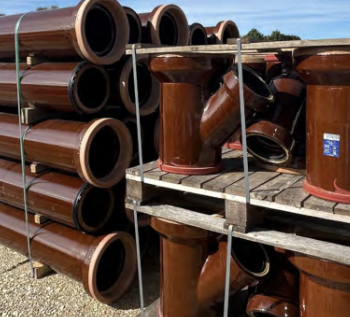
Why vitrified clay pipes are reclaiming their role in built projects.

Research by construction PR consultancy LMC published.
Roles and responsibilities of domestic clients
ACA Safety in Construction guide for domestic clients.
Fire door compliance in UK commercial buildings

Architect and manufacturer gives their low down.
Plumbing and heating for sustainability in new properties
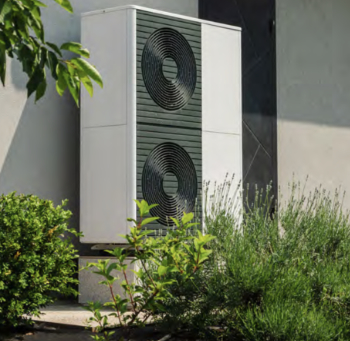
Technical Engineer runs through changes in regulations, innovations in materials, and product systems.
Awareness of the Carbon Border Adjustment Mechanism
What CBAM is and what to do about it.
The new towns and strategic environmental assessments

12 locations of the New Towns Taskforce reduced to 7 within the new towns draft programme and open consultation.

Buildings that changed the future of architecture. Book review.
The Sustainability Pathfinder© Handbook
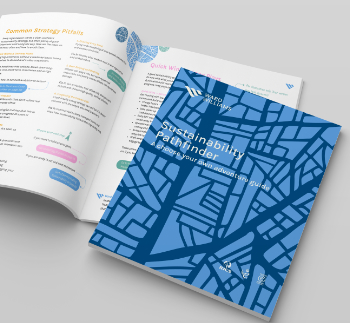
Built environment agency launches free Pathfinder© tool to help businesses progress sustainability strategies.

Government outcome to the late payment consultation, ECA reacts.
IHBC 2025 Gus Astley Student Award winners

Work on the role of hewing in UK historic conservation a win for Jack Parker of Oxford Brookes University.
Future Homes Building Standards and plug-in solar
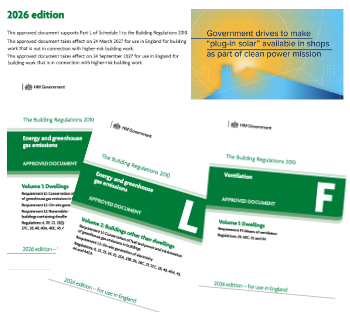
Parts F and L amendments, the availability of solar panels and industry responses.
How later living housing can help solve the housing crisis

Unlocking homes, unlocking lives.
Preparing safety case reports for HRBs under the BSA
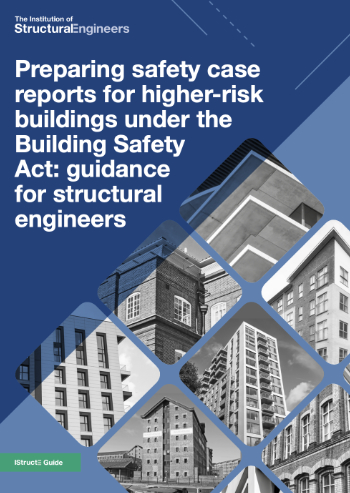
A new practical guide to preparing structural inputs for safety cases and safety case reports published by IStructE.
Male construction workers and prostate cancer

CIOB and Prostate Cancer UK encourage awareness of prostate cancer risks, and what to do about it.