






A smart home can be a healthy home too

COVID-19 has caused devastating human loss and pushed health care systems to breaking point, with hospitals everywhere struggling to temper the swell of sick people entering their doors. But the fact is, the NHS was struggling with capacity and resource issues well before COVID-19 took hold, and this will be the case long after things settle into a new normal.
In 2021, the World Health Organisation (WHO) stated that, across Europe, 4.5M people were in nursing and elderly home beds – equivalent to an estimated 19.7M beds globally. As life expectancy grows, alongside pressure on healthcare facilities, patients will be increasingly invisible to healthcare professionals outside of healthcare environments in between appointments.
If we could make it easier for people to proactively manage their own health from the comfort of their home, this would go a long way in addressing this pain point. The good news is that we are on our way there.
One of the positives to come from the COVID-19 pandemic is the realisation that many medical concerns can be identified – and even resolved – away from doctors’ surgeries, leading to growing confidence in mobile health applications. In fact, recent statistics which show only 20% of future medical appointments are expected to take place in person with a GP, are indicative of a growing appetite for telemedicine solutions, which is likely to remain even after the pandemic has subsided.
Until now, gaps in data, adherence and technical barriers have slowed down the growth of telemedicine. But the home setting – and smart technology specifically – offers a unique opportunity to complement existing solutions and enhance care in the community by filling in these gaps.
I am not talking about siloed smart home solutions here. After all, digital health devices themselves are nothing new. I am talking about building digital health ecosystems into homes that are firmly orientated around the occupant. This can come in the form of ecosystems that have the capacity to map important, but largely invisible environmental factors that impact patient welfare, including air quality, allergens, pollutants, particulates, bacteria, water leaks, humidity and energy usage, with lifestyle trends and activity classification.
Such a platform could facilitate connections to approved medical devices to provide participants, caregivers and clinicians with broader, deeper and actionable insights in physical and mental care. The system could then leverage this data to create smarter algorithms and provide greater patient insight by offering access to a common set of content, applications, analytics, datasets and other tools – ultimately responding to peoples’ health and wellbeing needs as they evolve.
GP involvement would be encouraged from the outset, with the platform providing practical analysis of each participant’s health in the context of both environment and lifestyle to provide actionable insights. As this could all be viewed virtually, occupants would be spared the trouble of making physical journeys, freeing up space in GP surgeries. Convenient access to accurate patient data would open the door to early diagnosis. This is a win-win for both patients and hospitals, by encouraging the shift away from simply treating illnesses, to encouraging general good health from the off and intervening early when symptoms emerge.
Digital technologies are already widely accepted to benefit patient outcomes and drive efficiencies in healthcare systems and patient management. So just think what could be achieved if we leveraged this power in an interconnected digital framework that can be easily understood and managed from people’s own residences?
This kind of technology would not only improve experiences and outcomes for patients, reduce reliance on hospital resources and ease the workload of overworked healthcare staff – it could have the power to truly democratise healthcare access for people, leading to transformational change within our healthcare systems and society generally.
The COVID-19 pandemic has brought with it immense challenges. But it also opened the door to encouraging real, positive change in the healthcare arena. We have only really scratched the surface when it comes to how telemedicine and mobile health devices could revolutionise the way we look after ourselves and each other. Now it is time to think about how the very homes we live in could support that ambition and purpose as well.
This article originally appeared under the headline, 'With health care systems at breaking point, it is time to re-think the relationship between our health and our homes' in the Architectural Technology Journal (at) issue 138 published by CIAT in summer 2021. It was written by Lee McCormack, Chief Executive, MyGlobalHome.
--CIAT
[edit] Related articles on Designing Buildings
Featured articles
Check out some of the best features and news from Designing Buildings as well as key stories from around the web.

CIAT publishes briefing on planning reforms.
Leaders in Learning for Practice Network

Call for conservation leaders in learning to register interest in new network.
The importance of early engagement

Construction lessons from the Trillium HealthWorks Experience Centre.
Mayors are to be given planning call in powers

Mayors across England will be able to make the most important planning decisions.

The Master Builder: William Butterfield and his times. Book review.

Why construction can't afford to ignore the skills gap.
Building Safety Regulator, 19 August

Gill Kernick appointed Independent Chair of Residents’ Panel.
Connecting knowledge, technology and conservation
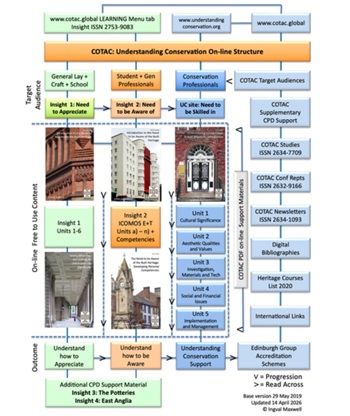
Building competence for the future of built heritage.
Building Regulations and Building Safety Act

CIOB publishes free advice for non-domestic clients.

Building Safety Newsletter from MHCLG.

An extraordinary record of steel engineering worldwide.

Households living near new pylons to save on bills.