






Europe moves to phase out electrical sulphur hexafluoride (SF6) gas
Sulphur hexafluoride (SF6) gas is colourless, odourless, non-toxic and five times denser than air. It’s also the world’s most potent greenhouse gas, with a global warming potential 23,500 times more than CO2. With that sort of climate change impact, one might wonder why it’s relevant to the future of an increasingly de-carbonized electrical industry. However, the electrical industry still relies on its excellent electrical insulation properties to prevent short circuits in medium- and high-voltage installations that would otherwise lead to damage, disruption, fire or explosion.
Sulphur hexafluoride is just one of a now infamous family of ‘F-gases’. The EU has banned the use of many of these gases and using SF6 has previously been banned from applications ranging from double glazing insulation to keeping trainer soles inflated.

Contents |
[edit] Proposed EU 2031 phase out
Yet, while SF6 is still deployed in switchgear to ensure electrical safety and reliability, change is on the way. Earlier in 2022, the European Commission proposed that SF6 should be banned from most new electrical equipment by 2031, as part of its broader F-gas reduction plan. Since this move involves products, the Commission’s plans also affect the UK - and various green Euro-groups would like to see a ban even earlier than 2031.
For now, SF6 gas is widely deployed in circuit breakers and switchgear in power stations, wind turbines and electrical sub-stations, to quench arcs and stop short circuits. It has a reliable track record and maintenance requirements are low – which is handy if your equipment is, for example, part of a mega-wind turbine operating in the North Sea. It also provides compact gas-insulated switchgear which is ideal for space-constrained applications.
[edit] MV applications – HV challenges
Even so, following an EU Report, the European Commission concluded that there is no technological barrier to eliminating SF6 in installations up to 145kV*. Indeed, for medium voltage (MV) primary and secondary switchgear, increasingly cost-effective alternatives to SF6 are already available from leading providers such as ABB, Eaton and Schneider. These companies deploy alternatives such as mixed gas, air/solid and vacuum technology. *GE Grid Solutions recently announced a contract with the UK’s SP Energy Networks for the supply of 145 kV SF6-free circuit-breakers.
Finding suitable alternatives to SF6 for even higher voltage installations is, however, more challenging. Even when feasible, the alternatives tend to be more expensive than using SF6 and the Commission is monitoring the situation. Ongoing activity includes GE’s EU-funded 2025 roadmap to extend SF6 free switchgear up to 420kV, and Hitachi ABB Power Grids 380kV substation upgrade with Germany’s TransnetBW.
[edit] Avoiding current emissions
For existing equipment, it’s vitally important that ongoing electrical equipment operation and decommissioning does not let SF6 escape. The Environment Agency oversees UK rules on the effective recovery of the gas, which is necessary when switchgear fails or degrades. However, there is no plan for a blanket requirement to replace existing SF6 switchgear, which would significantly increase the risk of releases.
[edit] Preparing for phase out
The European Commission is handling the phase out of SF6 with care because switchgear is a critical application. However, the alternatives increasingly offer functionality and performance, ready maintenance and no particular end of life challenges. Various manufacturers are continuing to explore the viability of replacement technologies beyond the currently achievable voltages. Meanwhile, alternatives to SF6 offer customers the prospect of future legal compliance and reduced GHG (greenhouse gas) reporting. For both customers and the industry, it’s now time to consider the prospect of an SF6-free future.
[edit] Implications beyond the grid
The Commission’s proposal to ban SF6 in new switchgear has implications beyond network supply. For example, larger commercial buildings that move to MV installations to support fast electric vehicle charging could go SF6 free and:
- provide even greener vehicle charging:
- reduce their reported GHG footprint;
- find it easier to win green building certification and other recognition; and
- future proof their electrical systems.
This article appears on the ECA news and blog site as "Europe moves to phase out electrical sulphur hexafluoride (SF6) gas" dated December 15.
--ECA
[edit] Related articles on Designing Buildings
- Absorption refrigeration.
- BREEAM Impact of refrigerants.
- Chlorofluorocarbons CFCs.
- F gases
- Greenhouse gases.
- HVAC.
- Hydrochlorofluorocarbons HCFCs.
- Kyoto Protocol.
- Montreal Protocol.
- Ozone depleting substance.
- Phase change.
- R22 phase out.
- R404A phase out.
- Refrigerants in buildings.
- Refrigerant selection.
- Refrigerants in building services guide TG 21/2022.
- Variable refrigerant flow.
Featured articles and news
A safe energy transition – ECA launches a new Charter
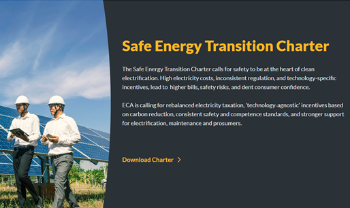
Practical policy actions to speed up low carbon adoption while maintaining installation safety and competency.
Frank Duffy: Researcher and Practitioner
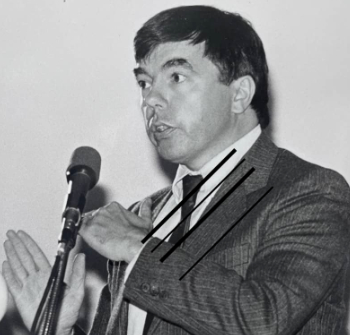
Reflections on achievements and relevance to the wider research and practice communities.
The 2026 Compliance Landscape: Fire doors

Why 'Business as Usual' is a Liability.
Cutting construction carbon footprint by caring for soil

Is construction neglecting one of the planet’s most powerful carbon stores and one of our greatest natural climate allies.
ARCHITECTURE: How's it progressing?
Archiblogger posing questions of a historical and contextual nature.
The roofscape of Hampstead Garden Suburb
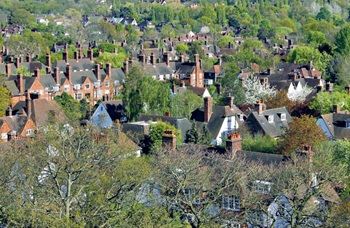
Residents, architects and roofers need to understand detailing.
Homes, landlords. tenants and the new housing standards
What will it all mean?
The Architectural Technology podcast: Where it's AT

Catch-up on the latest episodes.
Edmundson Apprentice of the Year award 2026
Entries now open for this Electrical Contractors' Association award.

Traditional blue-grey slate from one of the oldest and largest UK slate quarries down in Cornwall.
There are plenty of sources with the potential to be redeveloped.
Change of use legislation breaths new life into buildings

A run down on Class MA of the General Permitted Development Order.
Solar generation in the historic environment
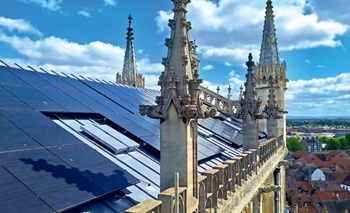
Success requires understanding each site in detail.
Level 6 Design, Construction and Management BSc
CIOB launches first-ever degree programme to develop the next generation of construction leaders.

Open for business as of April, with its 2026 prospectus and new pipeline of housing schemes.
The operational value of workforce health

Keeping projects moving. Incorporating unplanned absence and the importance of health, in operations.