






Civil engineering insights on the UK's first Road Investment Strategy

Contents |
[edit] Introduction
In 2015 the first Road Investment Strategy (RIS 1) was introduced. Running for five years, it concludes in spring this year.
Following an expert roundtable held at One Great George Street in December 2019, ICE have produced an insights paper, Civil engineering insights on the UK’s first Road Investment Strategy. This paper examines how effectively this strategy has been delivered and assessing where focus should be placed for future investment in the Strategic Road Network (SRN).
[edit] The value of the Strategic Road Network
With 4,400 miles of road to maintain and upgrade, ensuring that the right capacity is available, and downtime for roadworks is reduced, is critical to the economy. Congestion negatively affects productivity, the environment and quality of life with entire sectors dependent on the SRN to enable delivery of goods and services.
[edit] Effective investment
The transition from planning to the delivery of RIS 1 happened very quickly. Just nine months separated the announcement of RIS 1 and shovels going into the ground.
The reforms recommended by the Cook Review amounted to three ‘pillars’ – the RIS itself, outlining a long-term programme of work and funding envelope. Reforms to convert the Highways Agency to Highways England (HE) – an arm’s length public delivery company, and the establishment of new oversight and representative bodies in the Office for Rail and Road and Transport Focus.
This timescale meant that the programme had to hit the ground running. This has meant Highways England have had to learn on the job; with changes made to the programme, new approaches introduced, and capacity and capability progressively built up.
Whilst there have been hiccups along the way, there has also been significant successes. Efficiencies are ahead of internal targets. Some programmes, like the A14 are delivering ahead of time and the relationship between HE and many of its contractors has become far more robust.
[edit] New approaches for the future
RIS 1 has been a learning curve with new approaches being introduced. Towards the end of the first period new alliance style programmes, such as the Regional Delivery Partnership Framework and the Smart Motorways Alliance were introduced. These will start to deliver closer partnership working over future road investment periods. Specified funds have supported the development of a host of new approaches and technologies, including testing of autonomous plant equipment for repeatable tasks; a technology which could reduce labour demands, reduce costs, and improve safety. Digital first methods, like Building Information Modelling have been integrated into some projects improving design, delivery and safety.
[edit] Next steps and the National Infrastructure Strategy
The next road investment period should see prioritisation of efforts to improve on delivery, preparation and planning. Insufficient focus on these aspects of the strategy have negatively impacted the delivery of RIS 1.
A clear pipeline of work and improved confidence in funding has resulted in dividend style returns for innovation, safety and internal investment down the supply chain.
As HE improves its performance, it should also continue to better understand the effects of the assets it commands. As the company further deepens relationships with contractors and the supply chain it should also seek to better integrate whole-life, social and environmental value into its procurement of projects.
If gains are to be sustained this work needs time to bed in. It is important that there is continuity of approach and that there is a joined-up plan. This means giving the new relationship between sponsor and operator room to breathe and holding fast to commitments made to finance the second road investment period.
Long-term it is critical that roads planning continues to be joined-up within a strategic vision and have a sustainable source of funding.
With the second road investment period not yet finalised, there is an early opportunity for the Government to ensure this process endures in its upcoming budget and the long-anticipated delivery of the National Infrastructure Strategy (the Government’s response to the NIC’s National Infrastructure Assessment).
Read our Insight paper - Civil engineering insights on the UK’s first Road Investment Strategy.
This article was originally published on 22 January 2020 on the ICE infrastructure blog. It was written by Martin Shapland, ICE Policy Manager.
--The Institution of Civil Engineers
[edit] Related articles on Designing Buildings Wiki
- Highways Infrastructure Asset Management Plans.
- ICE articles.
- Inclusive cities and transport investment.
- National infrastructure plan.
- The future of transport in the UK.
- The role of transport in ending global poverty.
- The Institution of Civil Engineers.
- The transport revolution of Hyperloop.
- Transport networks in winter.
- Vision and validate: a third way in designing the roads of the future.
Featured articles
Check out some of the best features and news from Designing Buildings as well as key stories from around the web.

Why being a mentor can help your career.

Channel 4 broadcaster to host 125th anniversary ceremony.
Listed structures on the rail network
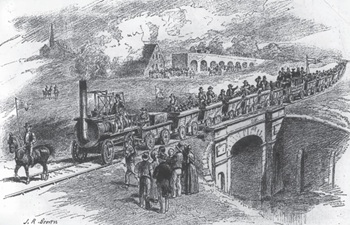
Heritage interests and operational requirements must be balanced.
Historic England publishes research into embodied carbon when retrofitting traditional buildings.

New Prime Minister delivers on ECA call for cut in electricity costs.

CIOB reacts to the announcement of Andy Burnham as Prime Minister.

Heritage and conservation science workforce survey - Have your say.

England's Suburbs 1820-2020. Book review.

New, more proportionate and targeted approach for higher-risk building assessments.

Government brings British Steel into public ownership.

UKCW Birmingham returns with bold new theme and focus.

New guidance published on competence requirements for self-certification schemes.