





Ceiling finishes
A ceiling is part of a building that encloses a space and is exposed overhead. Ceilings help create enclosure of and separation between spaces, they help to control the diffusion of light and sound around a room, and help prevent the passage of sound between rooms. They have fire resistant properties and may also accommodate building services such as vents, lighting, sprinkler heads and so on, as well as being able to conceal other services such as ducts, pipes and wiring.
There are a number of ways of finishing a ceiling.
Contents |
[edit] Plasterboard and skim
Plasterboard is fixed horizontally to stud partitions. The ceiling is then skim coated with plaster and decorated.
Advantages:
- Can create a void for services.
- Lightweight.
- Inexpensive.
- Good fire-resistance.
- Smooth seamless finish.
Disadvantages:
- Can be difficult in spaces with complicated shapes.
- Plasterboard can be easily damaged.
[edit] Suspended ceilings
The suspended ceiling typically consists of 600 x 600 mm aluminium grid system supporting fibre tiles.
Advantages:
- The grid is convenient for housing lighting and other services.
- Good acoustic qualities.
- Variety of tiles available.
- Good for covering roof voids.
- Individual tiles can be easily replaced.
Disadvantages:
[edit] uPVC cladding
The ceiling cladding can be PVC boards or larger sheets.
Advantages
- Very hygienic and surfaces can be kept clean.
- Lightweight.
- No decoration required.
- It can be used as a suspended ceiling.
Disadvantages:
- Larger panels can start to sag.
- Not very good fire rating.
- Heat can cause damage; lighting installations need to be considered.
See also: Stretched-skin ceiling
[edit] Timber boarded ceiling
Generally softwood timber boards with non-visible nails. The timber can be treated for a natural finish or painted.
Advantages:
- Can be aesthetically pleasing.
- Sustainable material.
Disadvantages
- Can have a low fire rating.
- Requires sealing and maintenance to prevent timber deterioration.
- Can be troublesome in high humidity areas like bathrooms and kitchens.
[edit] Exposed ceilings
In some buildings, it is possible to omit a 'finished' ceiling completely and simply expose the structural and mechanical components of the building to the interior. This offers the advantages of economy and ease of access for maintenance, and can also expose the thermal mass of the building. The thermal mass of exposed ceilings can be further exploited by the installation of heating or cooling elements such as chilled beams.
[edit] Related articles on Designing Buildings Wiki
- Anaglypta.
- Barrel vault.
- BREEAM Speculative floor & ceiling finishes.
- Chilled ceiling.
- Definition of ceiling.
- Domestic roof.
- Floating floor.
- Folded plate construction.
- Inspecting historic fibrous plaster ceilings.
- Integrated service module.
- Loft v attic.
- Plenum ventilation in buildings.
- Raised floor.
- Soffit.
- Stretched-skin ceiling.
- Suspended ceiling.
- Types of ceiling.
[edit] External references
BTEC National Construction - Pearson
Featured articles
Check out some of the best features and news from Designing Buildings as well as key stories from around the web.
New and updated CLC building safety guidance.
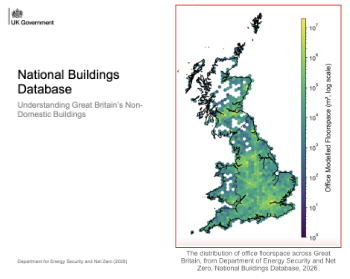
New UK National Buildings Database.
Building Safety Wiki Interviews

Chief executive of the British Woodworking Federation.
Planning condition discharge in England and Wales

A brief explanation from a building compliance expert, with further links.
Overheating guidance and tools for building designers

Guidance for dealing with element of building fabric control that have increasing importance.
Shading for housing, a design guide

From the Good Homes Alliance and British Blind and Shutter Association.
UK Standard Skills Classification (SSC)

A shared framework for describing skills needs.
Social media ban consultation comes to close

CIOB urges UK Government to consider social media’s role in careers guidance in ban debate.
The latest of eight Skills England apprenticeship units

The addition of battery manufacturing welcomed by ECA with a warning about the risks of fast-tracked apprenticeship units.
Building Control Independent Panel final report

A precis of a key report led by Dame Hackitt with full recommendations and link to the government response.
Building Safety recap April, 2026

A short and longer run-through of the month, with links to further information and sources.