






Amendment to the GB Energy Bill to prevent investment in panels produced by modern slavery

[edit] Announcement
ECA has welcomed the move made by Ed Miliband on 23 April, 2025 to propose an amendment to the GB Energy Bill. The amendment would prevent the nationally-owned energy company from investing in solar panels produced by modern slavery.
The Government had feared introducing restrictions to the solar supply chain would slow down the transition to renewable energy generation, which is central to its Clean Power 2030 mission. The Solar Stewardship Initiative (SSI), who work across the global solar value chain to foster responsible production, sourcing and stewardship of materials, are confident the supply of panels will continue to meet growing demand.
By the end of this year, SSI-certified manufacturing facilities will produce 100 gigawatts of solar panels each year, all produced without the use of forced labour. That is around five times more than the UK’s existing solar panels. If the UK’s solar industry continues in alignment with counterparts in Europe, the Clean Power 2030 target will remain on course.
Many concerns about forced labour arise from the exploitation of the Uyghur population in Xinjiang where around a third of polysilicon, the raw material for solar panels, is produced. China currently dominates the market for green energy technology. Britain will therefore need to pivot solar investment to other parts of the world, including from a small but growing number of British suppliers.
The GB Energy Bill has already passed through the House of Commons and is due to be voted on by the House of Lords soon. Peers from the three main parties joined forces with Labour back-benchers to lobby the Secretary of State to introduce the amendment preventing forced labour in the supply chain.
[edit] Modern slavery
Modern slavery is the recruitment and harbouring of humans through the use of force, abuse, deception, and coercion for exploitative purposes. It is estimated that there are more than 45 million people subject to modern slavery in the world today.
The construction sector is particularly vulnerable to modern slavery because of its extended supply chain, opaque procurement processes, skills shortage and high demand for migrant labour. This means that supply chains can conceal human rights abuses and exploitation.
The Modern Slavery Act was introduced in March 2015 to tackle slavery in the UK and in the supply chains of major UK corporations. It aims to prevent modern slavery in organisations by increasing the transparency of company practices.
This article appears on the ECA news and blog site as 'GB Energy to invest in responsibly produced Solar Panels' dated 23 April, 2025.
--ECA
[edit] Related articles on Designing Buildings
- Construction recruitment agency.
- Corporate social responsibility in construction.
- Equal opportunities policy.
- Equality Act.
- Ethical labour sourcing standard.
- Ethics and the engineer.
- Ethics in construction.
- Human resource management.
- Illegal.
- Large scale solar thermal energy.
- Modern slavery.
- Resource management.
- Solar Stewardship Initiative.
- Solar energy.
- Solar gain in buildings.
- Solar photovoltaics.
- Solar Stewardship Initiative.
- Solar thermal systems.
Featured articles and news
Costs and insolvencies mount for SMEs, despite growth

Construction sector under insolvency and wage bill pressure in part linked to National Insurance, says report.
The place for vitrified clay pipes in modern infrastructure
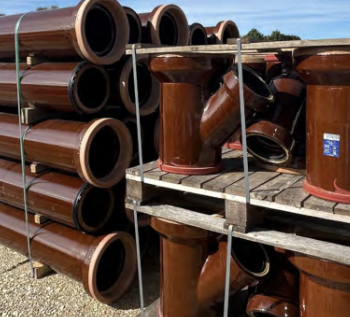
Why vitrified clay pipes are reclaiming their role in built projects.

Research by construction PR consultancy LMC published.
Roles and responsibilities of domestic clients

ACA Safety in Construction guide for domestic clients.
Fire door compliance in UK commercial buildings

Architect and manufacturer gives their low down.
Plumbing and heating for sustainability in new properties

Technical Engineer runs through changes in regulations, innovations in materials, and product systems.
Awareness of the Carbon Border Adjustment Mechanism
What CBAM is and what to do about it.
The new towns and strategic environmental assessments
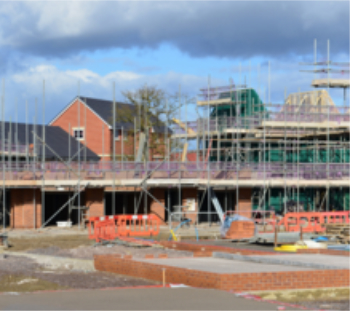
12 locations of the New Towns Taskforce reduced to 7 within the new towns draft programme and open consultation.

Buildings that changed the future of architecture. Book review.
The Sustainability Pathfinder© Handbook
Built environment agency launches free Pathfinder© tool to help businesses progress sustainability strategies.
Government outcome to the late payment consultation, ECA reacts.
IHBC 2025 Gus Astley Student Award winners

Work on the role of hewing in UK historic conservation a win for Jack Parker of Oxford Brookes University.
Future Homes Building Standards and plug-in solar
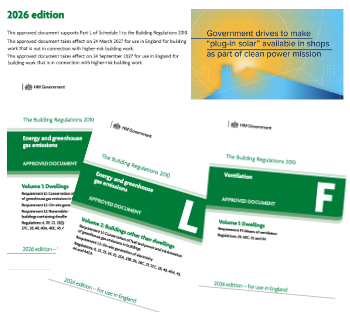
Parts F and L amendments, the availability of solar panels and industry responses.
How later living housing can help solve the housing crisis

Unlocking homes, unlocking lives.
Preparing safety case reports for HRBs under the BSA
A new practical guide to preparing structural inputs for safety cases and safety case reports published by IStructE.
Male construction workers and prostate cancer

CIOB and Prostate Cancer UK encourage awareness of prostate cancer risks, and what to do about it.