





Which Type of Concrete Batching Plant Do Peruvian Contractors Prefer?
The Peruvian construction landscape is dynamic, characterized by massive infrastructure megaprojects in coastal cities, demanding mining operations in the high Andes, and a constant need for urban development. In this varied environment, the choice of a concrete plant is not a one-size-fits-all decision. Peruvian contractors, known for their pragmatism and adaptability, base their preferences on a careful calculus of project requirements, logistical constraints, and economic efficiency. The preferred type of batching plant is ultimately the one that delivers reliable quality, operational flexibility, and the best return on investment for a specific job. Understanding the dominant trends reveals a market that values versatility, with a clear segmentation between large-scale stationary installations and highly mobile, compact solutions.
Contents |
[edit] The Dominant Choice: Mobile Concrete Batching Plants
For the majority of Peruvian contractors, especially those engaged in mid-sized projects, road construction, or multiple simultaneous jobs, the mobile concrete batching plant is the undisputed favorite. This preference is driven by Peru's defining geographical challenge: its extreme and varied terrain.
[edit] Unmatched Flexibility and Mobility
The ability to pack up, transport, and rapidly recommission a plant is invaluable. A contractor working on a longitudinal highway project in the mountains or a new housing development on the outskirts of a city cannot afford the time and capital tied to a permanent structure. Mobile plants, whether trailer-mounted or self-erecting, can be relocated in a matter of days to follow the project's progress or move to an entirely new site once a project is complete. This mobility directly translates to higher asset utilization and the ability to bid on a wider range of projects.
[edit] Ideal for Peru's Geography and Project Types
From the coastal deserts to the Andean highlands, site access can be limited. Mobile plants, often requiring a simpler foundation (or sometimes none at all), are the only feasible option for remote mining sites or rural infrastructure projects. Their modular design allows them to be transported in sections over difficult roads. This makes them the go-to solution for the vast network of road rehabilitation projects and decentralized public works that are common across the country.
[edit] Economic Advantages and Cost Considerations
While the initial concrete plant price Peru(planta de concreto Perú precio) can be a significant factor, contractors look at the total cost of ownership. Mobile plants often present a lower upfront investment compared to large stationary counterparts. More importantly, they eliminate or drastically reduce costs associated with permanent foundations, extensive electrical and water hookups, and long-term site leases. For a contractor whose business model is built on moving from project to project, this operational and financial flexibility is paramount.

[edit] The Stronghold of Stationary Concrete Batching Plants
For specific market segments, the stationary concrete batching plant(planta de hormigon) remains the preferred and most efficient choice. Its dominance is tied to scale, location, and consistent high-volume demand.
[edit] High-Volume Production for Urban Hubs
In major metropolitan areas like Lima, Arequipa, and Trujillo, where demand for ready-mix concrete is constant and massive, large stationary plants are essential. These facilities, often operated by dedicated ready-mix companies or large construction consortia, are designed for unimpeded, high-output production. They supply countless urban construction sites—from high-rise buildings to large commercial complexes—with a steady stream of concrete via transit mixers. Their fixed location near aggregate quarries and cement sources optimizes logistics for a dense market.
[edit] Key Projects: Mega-Infrastructure and Mining
When a single project has a colossal and predictable concrete requirement, an on-site stationary plant is frequently installed. Mega-projects like the new Lima airport, large hydroelectric dams, or major mine concentrator plants justify the capital expenditure. These project-dedicated plants are engineered to run continuously at peak capacity, ensuring strict quality control and just-in-time delivery for the critical path of construction. The scale of such operations makes the efficiency of a stationary setup irreplaceable.
[edit] The Rising Niche: The Compact and Mini Concrete Plant
A growing trend, particularly among small to medium-sized enterprises (SMEs) and specialized contractors, is the adoption of the mini concrete plant(mini planta de concreto). These compact units are carving out a significant niche in the Peruvian market.
[edit] Serving Localized and Specialized Markets
The mini concrete plant is perfect for producing concrete for pavers, blocks, precast elements, or small-to-medium building projects. A contractor specializing in residential construction, sidewalks, or small irrigation works can install one of these plants on a small plot of land. It provides full control over mix design and production schedule without the need for a large capital outlay or space.
[edit] Advantages of Affordability and Low Overhead
The most appealing aspect is the accessible concrete plant price Peru for these models. They offer an entry point for new businesses or a way for established contractors to bring concrete production in-house for specific tasks. Their low energy consumption, minimal foundation requirements, and small footprint keep operational overheads low. For producing specialty concretes or serving a localized community with periodic demand, they represent an optimized, economical solution.
[edit] Complementing Larger Operations
Interestingly, larger contractors sometimes deploy mini plants as satellite production units for a large project. They can be used to produce concrete for non-critical path elements or secondary structures, freeing up the main high-capacity plant for the primary structural work, thus optimizing the overall production flow on a complex site.
[edit] Decision Factors: What Guides the Contractor's Choice?
The preference for one plant type over another is not arbitrary. Peruvian contractors weigh a clear set of practical factors:
- Project Scale and Duration: A two-year, remote road project calls for a mobile plant; a 10-year mining operation leans toward a stationary setup.
- Budget and Financial Analysis: The decision always balances the initial concrete plant price Peru against long-term operational costs, mobility benefits, and projected revenue.
- Logistical and Site Constraints: Access roads, available space, and proximity to material sources are decisive.
- Required Production Output: The necessary cubic meters per hour unequivocally narrows down the options.
- Future Business Strategy: A contractor planning to operate as a regional ready-mix supplier will invest differently than one focused on civil works.

[edit] Conclusion: A Preference for Pragmatic Solutions
In conclusion, there is no single type of concrete batching plant that all Peruvian contractors prefer. Instead, the market demonstrates a sophisticated preference for the right tool for the job. The mobile batching plant is the versatile workhorse, beloved for its adaptability to Peru's challenging geography. The stationary plant remains the power player for urban markets and mega-projects where volume and permanence reign. Meanwhile, the mini concrete plant is rapidly gaining favor as a smart, economical solution for niche and localized demand. The unifying principle is a pragmatic focus on efficiency, reliability, and profitability—a reflection of a mature and agile construction industry that is building Peru's future.
Featured articles and news
Costs and insolvencies mount for SMEs, despite growth
Construction sector under insolvency and wage bill pressure in part linked to National Insurance, says report.
The place for vitrified clay pipes in modern infrastructure
Why vitrified clay pipes are reclaiming their role in built projects.

Research by construction PR consultancy LMC published.
Roles and responsibilities of domestic clients

ACA Safety in Construction guide for domestic clients.
Fire door compliance in UK commercial buildings

Architect and manufacturer gives their low down.
Plumbing and heating for sustainability in new properties
Technical Engineer runs through changes in regulations, innovations in materials, and product systems.
Awareness of the Carbon Border Adjustment Mechanism
What CBAM is and what to do about it.
The new towns and strategic environmental assessments
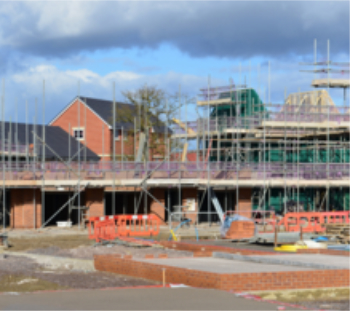
12 locations of the New Towns Taskforce reduced to 7 within the new towns draft programme and open consultation.

Buildings that changed the future of architecture. Book review.
The Sustainability Pathfinder© Handbook
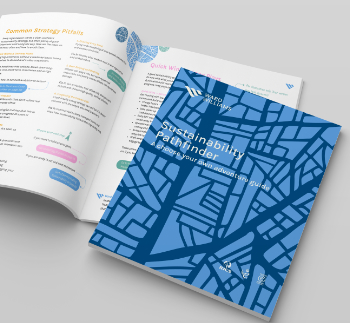
Built environment agency launches free Pathfinder© tool to help businesses progress sustainability strategies.

Government outcome to the late payment consultation, ECA reacts.
IHBC 2025 Gus Astley Student Award winners

Work on the role of hewing in UK historic conservation a win for Jack Parker of Oxford Brookes University.
Future Homes Building Standards and plug-in solar
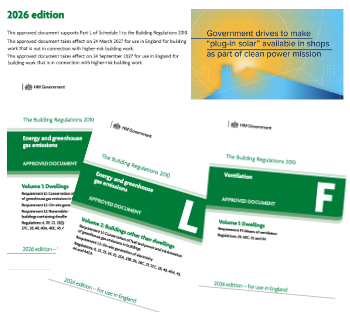
Parts F and L amendments, the availability of solar panels and industry responses.
How later living housing can help solve the housing crisis
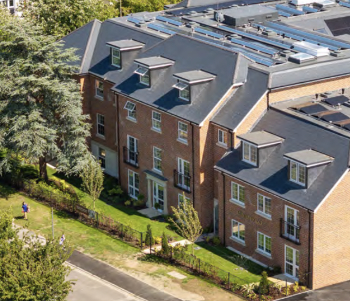
Unlocking homes, unlocking lives.
Preparing safety case reports for HRBs under the BSA

A new practical guide to preparing structural inputs for safety cases and safety case reports published by IStructE.
Male construction workers and prostate cancer

CIOB and Prostate Cancer UK encourage awareness of prostate cancer risks, and what to do about it.