





Underpass construction

Contents |
[edit] Introduction
An underpass, or subway, is a tunnel containing a road or pedestrian passageway running underneath a road or railway. Underpasses can also be constructed to allow wildlife to pass safely under a transport corridor.
[edit] Construction methods
There are three main methods for constructing underpasses:
- Precast concrete units.
- In situ concrete.
- Thrust-bored units.
Precast concrete units are often manufactured as standard units and can be provided to site as complete box-like open-ended sections, portal frame segments, or as separate wall and roof units.
Box units are typically jointed using a pre-formed sealant strip in a socket and spigot joint. Connection plates in the floor and roof are used to bolt together the units.
Portal frame units, which are pre-stressed, require the lower waterproofing membrane to be placed on a concrete slab, with continuous concrete bearing pads (usually 300 mm wide x 25 mm deep) are laid on top. The units are then placed in position, with lubrication applied to reduce stress-induced friction.
Wall and roof unit systems comprise precast units that are placed in position with the floor laid in situ using the units as shuttering. The roof units are then placed and the in situ loading slab poured, with loading requirements determining the thickness.
Thrust-bored units require a suspension of bentonite as lubrication. As a means of transmitting the thrust load, the units must have direct edge contact rather than the pre-formed sealing strip. This jointing method should allow edge contact for jacking, but be capable of receiving a sealing compound from the inner face. This is possible by forming a rebated joint filled with mortar prior to applying the sealant.
In situ concrete underpasses are constructed using the same methods as any underground tunneling construction.

[edit] Waterproofing
Waterproofing underpasses is commonly achieved by applying one of the following:
Two coats of mastic asphalt should be laid, with joints staggered at least 150 mm. Bituminous sheeting should be applied in 2-3 layers, with hot bitumen fully bedding each layer. A self-adhesive bituminous polythene can be used and have the advantage of being easier and quicker to lie in place.
Once in place, the waterproof membrane must be protected by constructing a concrete-block skin against the membrane before backfilling with granular material. This helps to avoid the membrane being punctured.
[edit] Lighting and drainage
To try and avoid vandalism occurring, underpass lighting should be made using toughened glass and recessed into the walls or roof units.
The locality and use of the underpass will determine the finishes. Urban underpasses are often painted in bright colours or to suit the finish of its immediate surroundings, using mosaics, tiling and rendering. For underpasses where aesthetics are not as important, a plain concrete finish will often be chosen.
Drainage comprises normal falls, screeded floor and gullies or continuous side channels which will flow into a storm sewer as and when required.
[edit] Find out more
[edit] Related articles on Designing Buildings Wiki
Featured articles
Check out some of the best features and news from Designing Buildings as well as key stories from around the web.
A quick introduction to its uses and risks.
Construction Management, 17 June

Government rolls out digital planning tool to all local authorities.

Your views needed - a strategy for the professions, trades and occupations.

Confronting competency, codes, capacity and costs.
The hidden risk in modern construction supply chains.
Construction Management, 10 June

24 months to 14: CITB launches accelerated apprenticeships.
Bridging the gap between clients and contractors
Concerns remain around contractor quality, capability, and delivery.
Construction Management, 10 June.
Heat pumps beat boilers in new home tests.
Building Safety Act implementation in Wales

CIAT to host industry panel on 26 June.

New and updated CLC building safety guidance.
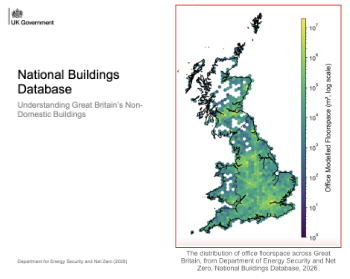
New UK National Buildings Database.