






The case for a new road-user charging scheme in London

|
| A new report by Centre for London argues that the UK capital should move towards an innovative new road-user charging scheme which charges drivers on a per-mile basis and is a test bed for other cities. |
Contents |
[edit] Introduction
It’s now apparent that, sooner or later, the government will need to overhaul national vehicle taxation. The switch to cleaner and more fuel-efficient vehicles, along with people’s changing travel habits, mean that revenue from vehicle excise duty (VED) and fuel duty has been declining.
The government’s own policies exacerbate the issue: it has, for example, put in place a long-term fuel duty escalator freeze and is committed to ending the sale of all new conventional petrol and diesel vehicles by 2040.
Many have recommended a distance-based system as a way to ensure road funding is sustained and to accommodate a zero-emissions future. However, there seems to be limited appetite in the Treasury for this at the moment. Perhaps this is because the significant revenue drop is not projected for another 10 years or so, or because fuel duty is currently easy to collect, so there seems to be little incentive to overhaul it.
[edit] How cities and regions are looking at road-user charging
Since the Greater London Authority Act 1999 and the Transport Act 200, cities in England have had the power to implement road-user charging schemes, without holding local referenda or seeking government approval, .
For a long time, London was the only city to have exercised this power with the establishment of the Congestion Charge (CC) in 2003.
The government has now mandated a number of large cities to produce plans to tackle air pollution and some are looking to implement charging or non-charging Clean Air Zones.
London has also established a new environmental charging scheme, the Ultra Low Emission Zone (ULEZ). At the same time, cities and regions are planning different types of road-user charging schemes ahead of central government. Indeed, the government has now mandated a number of large cities to produce plans to tackle air pollution - and some are looking to implement charging or non-charging clean air zones.
[edit] What will happen to local schemes when a national one comes along?
As the number of schemes across the country multiplies, it poses an important question: what happens to these schemes when a new national scheme becomes a priority for central government?
We believe it is vital that any government reforms complement, rather than try to absorb, any existing road-user charging schemes.
It makes sense for central government to replace VED and fuel duty with a distance-based charge for the use of the strategic road network managed by Highways England.
This should be graduated depending on vehicle class and emissions to encourage cleaner vehicles. Its purpose would be purely to replace existing vehicle taxation, ensuring that a proportion of the revenue is hypothecated towards roads spending.
In contrast, the legislation stipulates that any city road-user charging schemes should not be established to raise revenue but solely to address congestion and air pollution – and it makes sense that cities should decide how best to address these negative impacts of driving on locally-managed roads.
This point is illustrated by the great number of variations in different cities’ CAZ proposals: some are non-charging, some are charging commercial vehicles (vans, trucks and buses) only, while others are proposing to charge private cars as well.
For a national scheme to try to absorb and reflect these various arrangements would be too complex, especially local schemes that vary the charge on the basis of locally observed congestion and pollution levels on the roads in question.
[edit] Funding
In the meantime, the government should support London with funding to implement a new distance-based road-user charging scheme, just as other cities can access clean air zone implementation funding and the Transforming Cities Fund.
Once piloted in London, other cities would then be able to introduce elements of the scheme in the implementation of clean air zones to improve their overall air quality and health objectives.
[edit] About this article
This article was written by Silviya Barrett, Research Manager at Centre for London. It was published on the website of The Institution of Civil Engineers in May 2019 and can be accessed here.
[edit] Related articles on Designing Buildings Wiki
- A brighter future for our towns and cities.
- Are electric bikes the future?
- Car sharing.
- Cities as systems - BRE Solutions for urban environments.
- Construction 2025.
- Designing for cycle traffic.
- Government Construction Strategy 2016 2020.
- Integrated transport system.
- London car charging infrastructure.
- London infrastructure plan.
- Road traffic management.
- Sustainable transport.
- The compact sustainable city.
- Towards an urban renaissance.
- Transport assessment.
- Transport design and health.
- Urban design.
Featured articles and news
Costs and insolvencies mount for SMEs, despite growth

Construction sector under insolvency and wage bill pressure in part linked to National Insurance, says report.
The place for vitrified clay pipes in modern infrastructure
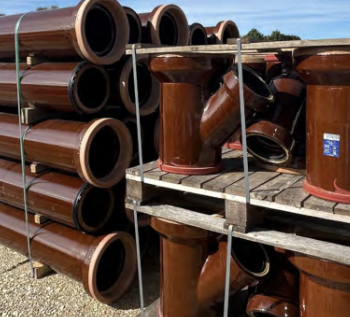
Why vitrified clay pipes are reclaiming their role in built projects.

Research by construction PR consultancy LMC published.
Roles and responsibilities of domestic clients

ACA Safety in Construction guide for domestic clients.
Fire door compliance in UK commercial buildings

Architect and manufacturer gives their low down.
Plumbing and heating for sustainability in new properties

Technical Engineer runs through changes in regulations, innovations in materials, and product systems.
Awareness of the Carbon Border Adjustment Mechanism
What CBAM is and what to do about it.
The new towns and strategic environmental assessments

12 locations of the New Towns Taskforce reduced to 7 within the new towns draft programme and open consultation.

Buildings that changed the future of architecture. Book review.
The Sustainability Pathfinder© Handbook
Built environment agency launches free Pathfinder© tool to help businesses progress sustainability strategies.
Government outcome to the late payment consultation, ECA reacts.
IHBC 2025 Gus Astley Student Award winners

Work on the role of hewing in UK historic conservation a win for Jack Parker of Oxford Brookes University.
Future Homes Building Standards and plug-in solar
Parts F and L amendments, the availability of solar panels and industry responses.
How later living housing can help solve the housing crisis

Unlocking homes, unlocking lives.
Preparing safety case reports for HRBs under the BSA

A new practical guide to preparing structural inputs for safety cases and safety case reports published by IStructE.
Male construction workers and prostate cancer

CIOB and Prostate Cancer UK encourage awareness of prostate cancer risks, and what to do about it.