





St John Ambulance warns employers they are 'risking every second' as gaps in first aid and mental health training leave workplaces dangerously exposed

England’s leading first aid charity, St John Ambulance, has warned workplaces around the country they are risking every second when they don’t have enough trained first aiders or the right equipment on site.
The charity underscored how it’s not just about having first aiders, but the right number of them, across different shifts, locations, and remote teams.

First aid is no longer solely about treating physical illness or injury, or maintaining emergency first aid kits, but integrating both physical and mental health first aid to holistically keep workers safe.
Workplace illness is a rapidly growing economic cost for employers in England. On average each sickness absence day costs £120 in lost profit, with 150 million days lost annually.
Lisa Sharman, Head of Education and Commercial Training at St John Ambulance, emphasised the importance of having the right equipment in place.

“Having defibrillators, stocked first aid kits, and clear processes in place is just as vital as having people trained to use them,” Ms Sharman said. “Cardiac arrests, seizures, choking… these events strike without warning, and without the right equipment in place and someone trained to act in those first critical minutes, the consequences can be devastating. January is the moment to get organised for 2026. St John Ambulance can provide clear, actionable guidance for businesses to assess their current risk and take steps to close the gap."
“Our First Aid at Work Blended Online course is one day of online learning with just two days in the classroom, and our fire marshal training takes just three hours. Check your certifications. Book refreshers and take advantage of e-Learning. Make sure your workplace isn’t taking unnecessary risks, because preparedness saves.”

Roy Peach, a shop worker on his day off but passing by his store, recounted how his first aid training kicked into gear when his colleague experienced a seizure.
“A colleague nearby caught them as they fell and guided them safely to the floor, while I removed my jumper and used it as a cushion for their head,” Mr Peach said. Roy kneeled beside his colleague and loosely cradled their head to protect them, constantly checking they were breathing.
“During that time, I coordinated the team to form a barrier from prying customer eyes and supported a colleague with the phone call to emergency services. When the paramedics arrived, I did a handover, including giving them a rough estimate of how long the seizure had lasted. I stayed on site until the patient left for hospital. I was told by colleagues I had been so calm, and they wondered how. I've been trained for many years and dealt with bones and blood, but this was my first seizure. First aid training can’t prepare you for every scenario, but what it can do is place you in a better position of support and ability to think clearly.”
Roy says he always updates his training, as ‘you never know when you can help someone.’´
“I'm glad to have refreshed mine a couple of months prior to this incident,” he added. “I feel it made a huge difference to how I handled it.”

St John Ambulance provides a range of physical and mental health first aid courses for the workplace that adopt a uniquely practical approach to creating competent and confident workplace first aiders.
St John Ambulance is also one of the most trusted providers for first aid training, with organisations across England rating their courses at 4.9 out of 5, based on almost 49,000 reviews.
St John Ambulance Workplace First Aid Training Courses range from First Aid and Emergency First Aid at Work, to specialist training for workplace first responders, paediatric first aid, annual refreshers and more.
St John Ambulance Mental Health First Aid Training Courses range from Mental Health First Aid (two days) to Mental Health Advocate (one day) and eLearning courses, helping workers to spot the signs and respond to the needs of a person experiencing a mental health issue.
Employers have a legal duty of care to ensure that employees are provided with a safe working environment. They must take reasonable care to prevent personal injury (including mental or physical harm) that may arise in the workplace. Employers can address first-aid provision in the workplace with the latest Health and Safety Executive (HSE) guidance.
For more information, and to book a training course with St John Ambulance, visit https://www.sja.org.uk/the-missing.
This article was issued via Press Release as "St John Ambulance warns employers they are 'risking every second' as gaps in first aid and mental health training leave workplaces dangerously exposed" London, England, 7 January 2026.
[edit] Related articles on Designing Buildings
- Accident book.
- Automated external defibrillator AED.
- Building a Safe Workspace: Your Complete Guide to Preparing First Aid in the Workplace.
- Competent person.
- Empowering the Construction Industry to take Action on Mental Health.
- First aid
- First aid kit
- First aid qualifications
- Health and safety.
- Health and safety at work etc act 1974.
- Health and safety consultant.
- Health and Safety Executive.
- Health and safety file.
- Health and safety inspector.
- Health and safety policy.
- Mental health first aid
- Near miss.
- Notification to HSE.
- Personal protective equipment PPE.
- Reporting accidents and injuries on construction sites.
- Site safety.
- Work at height regulations.
- Workplace first aid training.
- Workplace safety supplies.
Featured articles and news

ECA, JIB and JTL back Fabian Society call to invest in skills for a stronger built environment workforce.

Women's Contributions to the Built Environment.
Calls for the delayed Circular Economy Strategy

Over 50 leading businesses, trade associations and professional bodies, including CIAT, and UKGBC sign open letter.
The future workforce: culture change and skill

Under the spotlight at UK Construction Week London.

A landmark moment for postmodern heritage.
A safe energy transition – ECA launches a new Charter
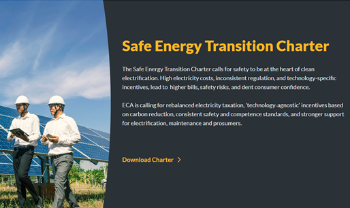
Practical policy actions to speed up low carbon adoption while maintaining installation safety and competency.
Frank Duffy: Researcher and Practitioner

Reflections on achievements and relevance to the wider research and practice communities.
The 2026 Compliance Landscape: Fire doors

Why 'Business as Usual' is a Liability.
Cutting construction carbon footprint by caring for soil

Is construction neglecting one of the planet’s most powerful carbon stores and one of our greatest natural climate allies.
ARCHITECTURE: How's it progressing?
Archiblogger posing questions of a historical and contextual nature.
The roofscape of Hampstead Garden Suburb

Residents, architects and roofers need to understand detailing.
Homes, landlords. tenants and the new housing standards

What will it all mean?
The Architectural Technology podcast: Where it's AT

Catch-up on the latest episodes.
Edmundson Apprentice of the Year award 2026

Entries now open for this Electrical Contractors' Association award.

Traditional blue-grey slate from one of the oldest and largest UK slate quarries down in Cornwall.

There are plenty of sources with the potential to be redeveloped.
Change of use legislation breaths new life into buildings

A run down on Class MA of the General Permitted Development Order.
Solar generation in the historic environment

Success requires understanding each site in detail.