






Infrastructure nationalisation

|
| In November 2018, the Institution of Civil Engineers (ICE) published a discussion paper on the potential effects that nationalising parts of Great Britain's economic infrastructure, namely rail, water and energy, would have on investment and service delivery. |
Contents |
[edit] Introduction
In the Labour Party’s 2017 manifesto ahead of that year’s general election, details on the following were outlined:
- Rail networks would be nationalised as each private franchise expires;
- The water ownership system would be replaced with a network of regional publicly-owned companies;
- The ‘Big Six’ private energy firms would have operator license conditions changed, and there would be a gradual transition to a publicly-owned, decentralised energy system.
With this in mind, alongside high public support for nationalisation, it’s important to examine the potential implications that public ownership on this scale may have on Great Britain’s infrastructure. This includes finance and investment, the jobs infrastructure sustains and creates, as well as the long-term viability and need to meet future challenges.
In compiling this discussion paper, ICE has conducted desk research and spoken with key stakeholders in the rail, energy and water sectors, as well as political parties and independent infrastructure experts.
The paper itself doesn’t represent a series of ICE policy positions. Instead, it outlines the potential costs, benefits, practical and technical implications that could result from nationalisation, providing a source of impartial advice for policymakers.
[edit] Strong public support and the realities of nationalisation
One key area of focus for ICE’s paper was to contrast the possible implications of nationalisation within the context of public perception. In opinion poll after opinion poll, the public is often overwhelmingly in favour of public ownership of the utilities and rail.
Questions have been asked around market competition, excessive dividend pay-outs and executive pay, public subsidies, rising consumer costs, corporate governance arrangements and levels of company debt. These are valid concerns, with some recognised by the government and action now underway to address them.
But there’s another side to this coin. As anyone in the media will say, good news doesn’t always sell.
The day-to-day safe and reliable operation of the utilities and railways, something that didn’t always occur under public ownership, and huge increases in investment and productivity are often not recognised.
And while rail prices remain high, UK water and energy bills are actually less expensive than many other developed countries’ state-owned utility networks.
Indeed, when the public were presented with a poll on nationalising the water sector with arguments for and against, support fell significantly.
While backing for nationalisation is a simple binary answer to give to a poll question, it’s unclear what real risks the public are prepared to take in enacting sweeping changes to the country’s infrastructure systems.
[edit] The bigger picture
Climate change, a growing population with more people concentrated in urban areas, and the digital revolution will all change the demands placed on infrastructure and shape how it’s used.
When the ownership of infrastructure assets is considered, meeting these challenges is paramount, not to mention the need to continue upgrading and maintaining existing assets.
Doing this will require heavy and sustained investment, as well as sensible regulation, good governance and accountability in order to provide best value to consumers.
Hence, one of the central arguments that’s put forward in ICE’s paper states that whether services are in public or private ownership, consideration must be given to these investment requirements and how they are to be best delivered.
You can download the report at: https://www.ice.org.uk/ICEDevelopmentWebPortal/media/Documents/Media/Policy/nationalisation-discussion-paper.pdf
This article was written by David Hawkes, ICE Policy Manager. It originally appeared as ‘Nationalisation of infrastructure: what could this mean for the sector?’ at: https://www.ice.org.uk/news-and-insight/the-infrastructure-blog/november-2018/implications-of-infrastructure-nationalisation
--The Institution of Civil Engineers
[edit] Related articles on Designing Buildings
- Breaking Barriers in Infrastructure - perspectives from the profession
- Brexit - The case for infrastructure.
- Government construction and infrastructure pipelines.
- Green infrastructure.
- Growth and Infrastructure Act.
- ICE articles on Designing Buildings Wiki.
- Infrastructure.
- Infrastructure and Projects Authority.
- Infrastructure UK (IUK).
- London infrastructure plan.
- National Infrastructure Pipeline.
- National Infrastructure Plan.
- Nationally Significant Infrastructure Projects.
- Smart cities.
- The Institution of Civil Engineers.
- Traffic and transport.
- Union Connectivity Review calls for UK-wide strategic transport network.
- Williams-Shapps Plan for Rail.
Featured articles and news
Costs and insolvencies mount for SMEs, despite growth

Construction sector under insolvency and wage bill pressure in part linked to National Insurance, says report.
The place for vitrified clay pipes in modern infrastructure
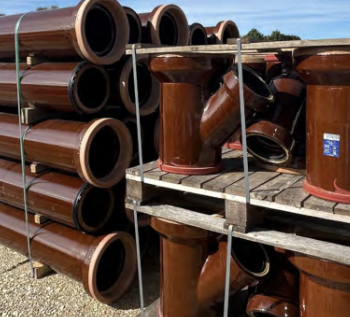
Why vitrified clay pipes are reclaiming their role in built projects.

Research by construction PR consultancy LMC published.
Roles and responsibilities of domestic clients

ACA Safety in Construction guide for domestic clients.
Fire door compliance in UK commercial buildings

Architect and manufacturer gives their low down.
Plumbing and heating for sustainability in new properties

Technical Engineer runs through changes in regulations, innovations in materials, and product systems.
Awareness of the Carbon Border Adjustment Mechanism
What CBAM is and what to do about it.
The new towns and strategic environmental assessments
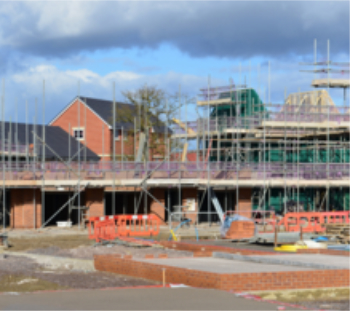
12 locations of the New Towns Taskforce reduced to 7 within the new towns draft programme and open consultation.

Buildings that changed the future of architecture. Book review.
The Sustainability Pathfinder© Handbook
Built environment agency launches free Pathfinder© tool to help businesses progress sustainability strategies.
Government outcome to the late payment consultation, ECA reacts.
IHBC 2025 Gus Astley Student Award winners

Work on the role of hewing in UK historic conservation a win for Jack Parker of Oxford Brookes University.
Future Homes Building Standards and plug-in solar
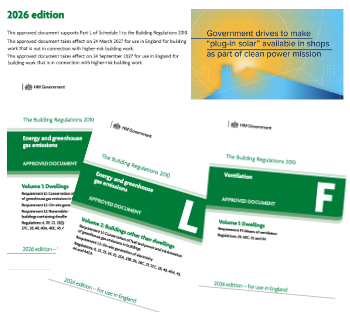
Parts F and L amendments, the availability of solar panels and industry responses.
How later living housing can help solve the housing crisis

Unlocking homes, unlocking lives.
Preparing safety case reports for HRBs under the BSA

A new practical guide to preparing structural inputs for safety cases and safety case reports published by IStructE.
Male construction workers and prostate cancer

CIOB and Prostate Cancer UK encourage awareness of prostate cancer risks, and what to do about it.