





Frank Gehry 1929-2025

Frank Gehry was widely regarded as one of the most influential and revered figures in modern architecture, described by the New York Times as a 'Titan of Architecture' and by the BBC as 'legendary'. He is known for ‘statement’ buildings that challenge preconceived ideas about aesthetics and form in a way that is as controversial as it is celebrated. Perhaps his most famous building is the Guggenheim Museum in Bilbao, a Deconstructivist masterpiece and one of the defining buildings of the 20th century.
Frank Gehry died on 5 December, 2025, at the age of 96 years old in Santa Monica, California, United States. It was said he continued to work well past the age of 90 saying at 92 years he was "too busy to retire". He died after a brief respiratory illness and is survived by two daughters from his first marriage, Leslie and Brina, as well as his wife, Berta Isabel Aguilera, and their two sons, Alejandro and Samuel.
Gehry was born in Toronto, Canada in 1929 and moved to Los Angeles in 1947, the city with which he is most commonly associated. He took an architecture course at Los Angeles City College, initially on a whim, and went on to graduate from the University of Southern California. After an abortive spell at the Harvard Graduate School of Design and a year studying in Paris, Gehry returned to Los Angeles and established Gehry Associates.
While initially working in the European-modernist style of Le Corbusier and the Bauhaus, he was drawn to the avant garde arts scene of Los Angeles’ Venice Beach and Santa Monica, and began to hone his own creative vision. He made a name for himself with a line of furniture called Easy Edges, and began to be commissioned to design buildings such as the Rouse Company headquarters in Columbia, Maryland, and the Santa Monica Place shopping mall.
His breakthrough came in the late-1970s when he renovated his own home, now known as the Gehry Residence, that with its unconventionally expressive use of chain-link fences and corrugated steel was seen as a showpiece for a new Deconstructivist style of domestic building. The attention gained by this work allowed him to incorporate new experimental designs into buildings such as the Cabrillo Marine Aquarium (1981) and the Air and Space exhibit building (1984), as well as buildings in Switzerland and Germany.
By the end of the 1980s, Gehry had established himself as a key figure in international architecture, known for his injection of playful elements into otherwise ‘serious’ designs. His reputation was secured on being awarded the prestigious Pritzker Architecture Prize in 1989.
In the early 1990s he designed the Chiat/Day Building in Los Angeles, with its distinctive binoculars entrance. In 1996 he built the ‘Dancing House’ in Prague with its twisting steel shapes and concrete paneling.
In 1997, he completed the Guggenheim Museum in Bilbao, Spain, with its sweeping titanium contours and irregular curves, that was widely regarded as a masterpiece of modernist architecture. The ‘Bilbao effect’ was a term derived from the socio-economic benefits that the city enjoyed as a result of the museum opening.

In a similar style he went on to design the Walt Disney Concert Hall (2003) in Los Angeles, and the Experience Music Project in Seattle.
He became one of the few architects whose critical acclaim and media visibility has branded him the title of ‘starchitect’. Often widely sought by developers for ‘statement projects’ that gain immediate, widespread attention simply because of his involvement.
Most notable buildings:
- Gehry Residence, Santa Monica, California.
- Binoculars Building, Venice, California.
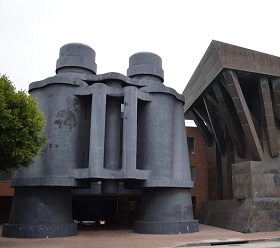
- Dancing House, Prague, Czech Republic.

- Guggenheim Museum, Bilbao, Spain.
- Gehry Tower, Hanover, Germany.
- Experience Music Project, Seattle.

- Walt Disney Concert Hall, Los Angeles.

- 8 Spruce Street, New York.


[edit] Related articles on Designing Buildings
- 8150 Sunset Boulevard.
- Antoni Gaudi.
- Archigram.
- Architect.
- Buckminster Fuller.
- Deconstructivism.
- Ernö Goldfinger.
- Frei Otto.
- Guggenheim Museum, Bilbao.
- Norman Foster.
- Renzo Piano.
- Ted Happold.
- The architectural profession.
- Walt Disney Concert Hall.
- Zaha Hadid.
[edit] External links
Featured articles and news
Costs and insolvencies mount for SMEs, despite growth

Construction sector under insolvency and wage bill pressure in part linked to National Insurance, says report.
The place for vitrified clay pipes in modern infrastructure
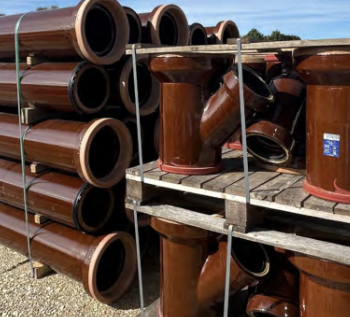
Why vitrified clay pipes are reclaiming their role in built projects.
Research by construction PR consultancy LMC published.
Roles and responsibilities of domestic clients

ACA Safety in Construction guide for domestic clients.
Fire door compliance in UK commercial buildings

Architect and manufacturer gives their low down.
Plumbing and heating for sustainability in new properties

Technical Engineer runs through changes in regulations, innovations in materials, and product systems.
Awareness of the Carbon Border Adjustment Mechanism

What CBAM is and what to do about it.
The new towns and strategic environmental assessments
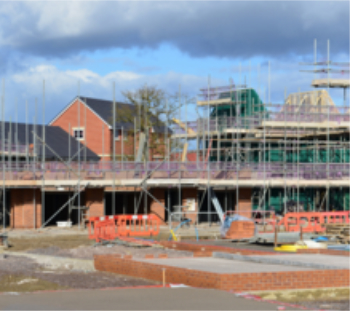
12 locations of the New Towns Taskforce reduced to 7 within the new towns draft programme and open consultation.
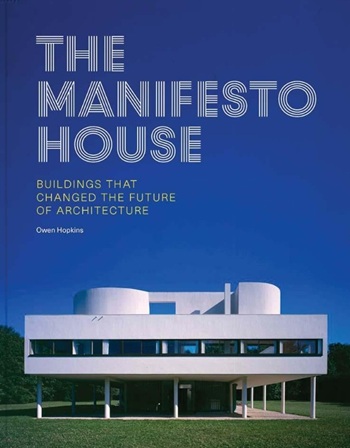
Buildings that changed the future of architecture. Book review.
The Sustainability Pathfinder© Handbook
Built environment agency launches free Pathfinder© tool to help businesses progress sustainability strategies.

Government outcome to the late payment consultation, ECA reacts.
IHBC 2025 Gus Astley Student Award winners
Work on the role of hewing in UK historic conservation a win for Jack Parker of Oxford Brookes University.
Future Homes Building Standards and plug-in solar

Parts F and L amendments, the availability of solar panels and industry responses.
How later living housing can help solve the housing crisis
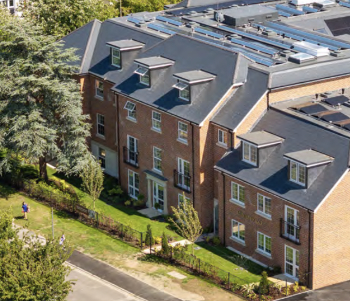
Unlocking homes, unlocking lives.
Preparing safety case reports for HRBs under the BSA

A new practical guide to preparing structural inputs for safety cases and safety case reports published by IStructE.
Male construction workers and prostate cancer

CIOB and Prostate Cancer UK encourage awareness of prostate cancer risks, and what to do about it.
Comments
Weisman Art Museum in St.Paul, MN & Eisenhower Memorial in Washington d.c. would greatly add to the tribute.