





Buy to leave

The term ‘buy to leave’ or ‘buy to leave empty’ refers to the practise of purchasing dwellings as investments and leaving them unoccupied in the expectation that their value will rise.
Buy to leave has become a contentious issue in light of the UK housing crisis, with a particular emphasis on London, where the rapid rise of house prices has seen investors buying dwellings off-plan before they reach the housing market with no intention of occupying them. This has left some new developments fully sold but apparently virtually empty.
Investors, very often from overseas, facing persistently low interest rates on traditional savings and investments, and relatively poor rental returns for letting out property with high capital values, have come to see London real estate as a ‘safe haven’, where they can rely on long-term capital appreciation without having to let out the property.
Criticism is also leveled at buy to leave because purchasers often prefer new-build units in managed blocks. If a large proportion of properties in a building are left empty, the provision of services can be impaired to the detriment of owner-occupiers.
Along with many other voices expressing concern, London’s Evening Standard has criticised the practice, claiming it is so prolific is has created ‘ghost towns of the super-rich’.
A 2013 Evening Standard article suggested that the 14-storey Bezier development in London had 127 apartments, but just 75 were listed as having occupants registered for council tax. It has been suggested that up to half the homes in some new developments in EC1 have no occupants listed on the electoral roll.
Another high-profile symbol of buy to leave is One Hyde Park, where reports indicate that at any one time it is only 30% occupied, with some of the apartments having never been occupied at all.
In the 2014 budget, the chancellor announced that Stamp Duty Land Tax (SDLT) would be charged at 15% on residential dwellings costing more than £500,000 bought by some companies and collective investment schemes.
In addition, local councils have been given the power to withdraw council tax discounts for unoccupied properties.
In late-2015, the Labour-run North London borough of Islington adopted a Supplementary Planning Document requiring all new homes built within its boundaries to be regularly occupied in an attempt to curtail the practice. Owners must ensure occupy their property for at least 14 days in any three month period. This would be achieved through a section 106 agreement, the provisions of which could be enforced through the courts.
They have suggested that, “If a property is left unoccupied for more than three months, the council would be able to take legal action such as seeking an injunction from the High Court against the owner… Persistently breaking the injunction could lead to a fine, prison and even seizure of the empty property.”
However, this has drawn criticism from some, including the real estate firm Savills who argue that the focus should be centred on the lack of affordable housing, and that if buy-to-leave is prohibited then developers may be unable to finance suitable levels of provision.
The new Mayor of London Sadiq Khan has said that he wants to use planning powers to restrict buy to leave, and announced that he will try to persuade foreign investors to put capital into helping build affordable homes through his new agency Homes for Londoners.
Critics of buy to leave highlight the policy adopted in Manhattan, where the majority of housing units are ‘co-ops’, with a board who generally do not permit purchasers who are not full-time residents. In Switzerland, non-resident foreigners wishing to purchase property must have a Swiss work permit or apply for a special licence before they can do so.
[edit] Find out more
[edit] Related articles on Designing Buildings Wiki
- Affordable housing.
- Buy-to-let mortgage.
- Empty dwelling management orders.
- Empty housing in London - documentary.
- Ground rent.
- Help to buy.
- Housing Strategy for England.
- One Hyde Park.
- Property development finance.
- Right to buy.
- Right to rent.
- Section 106 agreements.
- Social housing.
- Social rented housing.
- What is a mortgage?
[edit] External resources
- The Guardian - Foreign buyers own two-thirds of St. George's Wharf
- Financial Times - Buy to leave
- The Guardian - Sadiq Khan condemns foreign investors
- Islington.gov - Islington sets out proposals to halt "buy-to-leave".
- Evening Standard - Scandal of the 'buy-to-leave' investors who keep flats empty.
Featured articles and news
Costs and insolvencies mount for SMEs, despite growth

Construction sector under insolvency and wage bill pressure in part linked to National Insurance, says report.
The place for vitrified clay pipes in modern infrastructure

Why vitrified clay pipes are reclaiming their role in built projects.

Research by construction PR consultancy LMC published.
Roles and responsibilities of domestic clients

ACA Safety in Construction guide for domestic clients.
Fire door compliance in UK commercial buildings

Architect and manufacturer gives their low down.
Plumbing and heating for sustainability in new properties

Technical Engineer runs through changes in regulations, innovations in materials, and product systems.
Awareness of the Carbon Border Adjustment Mechanism
What CBAM is and what to do about it.
The new towns and strategic environmental assessments
12 locations of the New Towns Taskforce reduced to 7 within the new towns draft programme and open consultation.
Buildings that changed the future of architecture. Book review.
The Sustainability Pathfinder© Handbook
Built environment agency launches free Pathfinder© tool to help businesses progress sustainability strategies.
Government outcome to the late payment consultation, ECA reacts.
IHBC 2025 Gus Astley Student Award winners

Work on the role of hewing in UK historic conservation a win for Jack Parker of Oxford Brookes University.
Future Homes Building Standards and plug-in solar
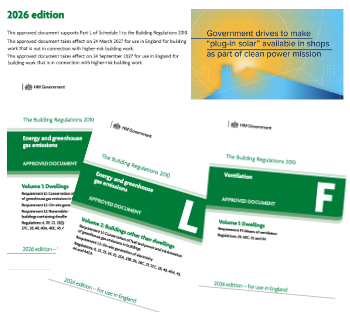
Parts F and L amendments, the availability of solar panels and industry responses.
How later living housing can help solve the housing crisis

Unlocking homes, unlocking lives.
Preparing safety case reports for HRBs under the BSA
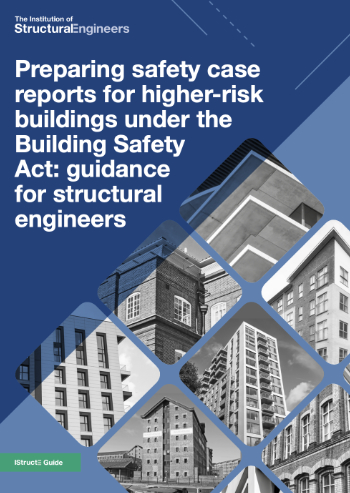
A new practical guide to preparing structural inputs for safety cases and safety case reports published by IStructE.
Male construction workers and prostate cancer

CIOB and Prostate Cancer UK encourage awareness of prostate cancer risks, and what to do about it.
Comments