






BREEAM and air quality
21 June 2018 was Clean Air Day. A whole day dedicated to raising awareness about the harmful impacts of air pollution, and learning what we can do to make the air cleaner and healthier for everyone.
Air pollution is a serious issue that causes a broad range of detrimental impacts to people’s health. For example, air pollution increases the risk of lung cancer and is linked to the development of cardiovascular disease. There is also emerging evidence that air pollution might increase the risk of Type 2 Diabetes. Whilst exposure to air pollution during pregnancy and after birth has an adverse effect on lung function development of children. The list goes on, and as the evidence mounts up it leaves us with no doubt that we need to be taking action to clean up the air that we breathe.
There are numerous sources of air pollution that impact on the quality of both external and internal air, from day to day activities such as driving to more large-scale processes such as energy production. A number of these sources are relevant in the built environment through design decisions, construction practices, and operational management. As such, the built environment must be designed, constructed and operated in a way that reduces emissions polluting the external environment whilst also creating healthy internal environments for occupants. But how do we go about doing this?
BREEAM UK New Construction 2018 offers a number of opportunities to address the complicated issue of air pollution throughout a buildings lifespan. The nine environmental categories of BREEAM contain various criteria that relate to a range of sustainable solutions. Whilst each category has a specific focus, the holistic approach of BREEAM means that there is influential crossover between categories and the issues they address. In the case of air quality, there are numerous requirements throughout BREEAM that both directly and indirectly tackle this issue.
In the Management category, the criteria of the ‘Responsible construction practices’ credit include requirements to manage construction sites in an environmentally-accountable manner. Of these requirements a number relate to reducing the sites impact on air quality through minimising traffic, operating procedures for pollution management and monitoring and recording data for total transport-related carbon emissions.
It is important that systems and services of a building are operating properly to minimise potential detrimental impacts on external and internal air quality. In the ‘Commissioning and handover’ and ‘Aftercare’ credits of the Management category, the criteria set out commissioning testing schedule responsibilities and requirements for engagement with building users. These requirements support the efficient operation of the building, ensure the systems and services of the building are being used as intended and support building user experience.
The Health and Wellbeing category features an entire credit for indoor air quality. Prior to any reward being achieved in this credit, an Indoor Air Quality plan must be produced for the building. This plan facilitates a process that leads to design and specification decisions that minimise indoor air quality pollution during occupation of the building. The further requirements of the credit address ventilation, emissions from construction products and post-construction indoor air quality measurement. There is also a credit in this category for providing outside space whereby the requirements specifically state the outside space must be non-smoking and located away from building services, car parks, and busy roads so that users can enjoy a healthier external environment.
The Energy category of BREEAM specifically aims to encourage the specification and design of energy-efficient building solutions, systems and equipment that encourages the reduction of SO2 and NOx associated with the burning of fossil fuels for energy generation.
Driving is a day to day activity that the majority of people undertake which can impact upon air quality. BREEAM features a whole section on Transport, where buildings are rewarded for assessing their current accessibility, planning for different travel methods to and from the building and encouraging and enabling the use of sustainable transport methods. This results in a building that is equipped to support building users in alternative modes of transport, helping to reduce air pollution from travel and traffic.
Similar to the Health and Wellbeing category having a credit specifically focussed on indoor air quality, the Pollution category hosts a credit dedicated to local air quality. Aiming to reduce local air pollution, requirements cover the specification of low-emission combustion appliances in the building. Buildings are rewarded for choosing plant that emits lower NOx, particulate matter and volatile organic compound emissions
Through assessment of a variety of environmental categories, BREEAM offers a comprehensive method of addressing sustainability in the built environment through setting standards and benchmarks based on and led by the principles of sound science. This holistic approach means that the requirements of the categories support one another, enabling a building to tackle a complex issue such as air quality from a range of angles.
This article was originally published on 21 June 2018 on BRE Buzz as 'Clean air day and the built environment'. It was written by Kerri-Emma Dobson, a Senior technical consultant within the UK BREEAM team. Kerri-Emma's expertise involves sustainability assessment methodologies, sustainability planning and reporting, EIA, social sustainability, and sustainability marketing.
--BRE Buzz
[edit] Related articles on Designing Buildings Wiki.
- Air quality.
- Air Quality Taskforce.
- At a glance - Indoor air quality.
- BRE Buzz.
- BRE Buzz articles on Designing Buildings Wiki.
- BREEAM.
- BREEAM Indoor air quality plan.
- BREEAM Indoor air quality Ventilation.
- BREEAM Indoor pollutants VOCs.
- BREEAM NOx emissions.
- BSRIA responds to UK Air Pollution Report.
- Bringing a breath of fresh air to the design of indoor environments.
- Construction dust.
- Ensuring good indoor air quality in buildings.
- Health effects of indoor air quality on children and young people.
- Indoor air quality.
- Indoor environmental quality.
- Locating ventilation inlets to reduce ingress of external pollutants into buildings: A new methodology IP 9 14.
- TSI Environmental dust monitoring system.
- Ultra Low Emission Zone.
Featured articles
Check out some of the best features and news from Designing Buildings as well as key stories from around the web.
Bridging the gap between clients and contractors
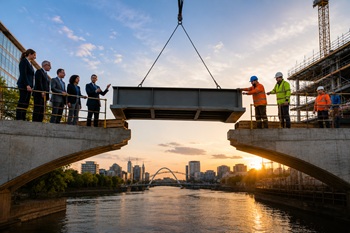
Concerns remain around contractor quality, capability, and delivery.
Construction Management, 10 June.
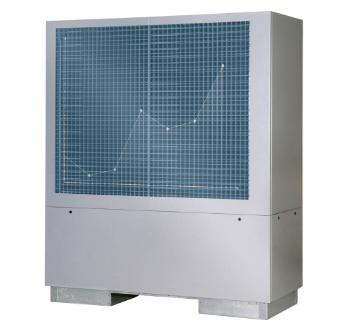
Heat pumps beat boilers in new home tests.
Building Safety Act implementation in Wales
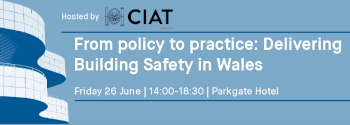
CIAT to host industry panel on 26 June.

New and updated CLC building safety guidance.
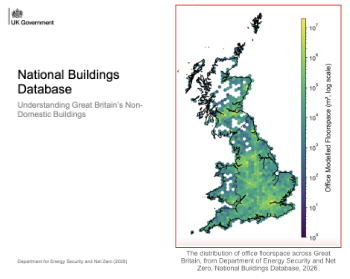
New UK National Buildings Database.
Building Safety Wiki Interviews

Chief executive of the British Woodworking Federation.
Planning condition discharge in England and Wales

A brief explanation from a building compliance expert, with further links.
Overheating guidance and tools for building designers

Guidance for dealing with element of building fabric control that have increasing importance.
Shading for housing, a design guide

From the Good Homes Alliance and British Blind and Shutter Association.
UK Standard Skills Classification (SSC)

A shared framework for describing skills needs.
Social media ban consultation comes to close

CIOB urges UK Government to consider social media’s role in careers guidance in ban debate.