





Business case for construction projects
Contents |
[edit] Introduction
The CIOB Code of practice for project management 4th edition, defines a business case as the 'Information necessary to enable approval, authorisation and policy-making bodies to assess a project proposal and reach a reasoned decision'.
In the very early stages of a project, a preliminary business case should be prepared. This is then developed into a detailed business case for the preferred option after feasibility studies and options appraisals have been carried out. The detailed business case is the document that will be used to determine whether authority should be given for the preferred option to progress to the next stage (concept design).
Preparing a business case may require input from independent client advisers (such as management accountants, business development advisers, facilities managers, specialist advisers such as IT consultants, etc.), but generally, it will be prepared and 'owned' by the client, who can learn a considerable amount about themselves and their project through the process of writing the business case.
[edit] Contents
A business case may include:
- Confirmation that the project is compatible with the client's stated vision, mission and objectives.
- An assessment of the support for the project.
- Confirmation that feasibility studies have been completed, the appropriate options have been explored and a preferred option identified.
- Confirmation that the project is likely to deliver its business goals. These goals should be prioritised and should be testable so that the developing and completed project can be tested against them.
- Confirmation that the proposal is affordable, achievable and likely to deliver value for money.
- Confirmation that the scope and requirements are realistic, clear and unambiguous.
- Confirmation that appropriate advice has been obtained.
- Confirmation that market conditions have been properly considered.
- Identification of major risks and possible mitigation.
- Identification of third party dependencies and necessary consultations.
- Assessment of the likely need for the appointment of a consultant team or independent client advisers.
- Assessment of long term investment prospects.
- Assessment of procurement options.
- Statement of design intent.
- Schedules of critical dates (some of which may be beyond the control of the client):
- Planning committee meetings.
- Key holiday dates.
- Client board meetings.
- Spending budgets.
- Competition coming to market.
- Grant entitlements.
- Projected financial forecasting:
- Projected balance sheet.
- Cash flow projection.
- Project expenditure.
- Income (or savings) projections.
- Projected profit and loss accounts.
- Plans for the next stage.
The business case should be written in clear, concise language that is easy to understand and may include diagrams and illustrations where appropriate. It may be seen by a wide range of people and so should be accessible and should express key brand values.
It is likely to be presented as a report, however, where possible, information and requirements should be scheduled in a database or spreadsheet format that will be easy to expand and will be easy to use to test whether proposals satisfy requirements later in the project.
External consultants may be brought in to review a draft business case before it is finalised or circulated to a wider audience.
[edit] Other definitions
NB The RIBA Plan of Work 2013 defines the business case as: '...the rationale behind the initiation of a new building project. It may consist solely of a reasoned argument. It may contain supporting information, financial appraisals or other background information. It should also highlight initial considerations for the Project Outcomes. In summary, it is a combination of objective and subjective considerations. The Business Case might be prepared in relation to, for example, appraising a number of sites or in relation to assessing a refurbishment against a new build option.'
Guide to developing the project business case, Better business cases: for better outcomes, published by HM Treasury in 2018, defines a business case as: ‘A management tool that records the current state of evidence and thinking concerning the development approval and implementation of proposal. It supports the processes of scoping, analysis, appraisal, planning, monitoring, evaluating, approval and implementation a proposal and is the repository for the evidence base.’
[edit] Related articles on Designing Buildings
- Accounting.
- Additionality.
- Benchmarking.
- Budget.
- Business.
- Business justification case.
- Cash flow.
- Client requirements.
- Commercial management.
- Construction loan.
- Construction project funding.
- Contingencies.
- Cost engineering.
- Cost information.
- Cost plans.
- Demonstration project.
- Development appraisal.
- Development proposal DP.
- Direct cost.
- Environmental scanning.
- Full business case.
- Funding options.
- Funding prospectus.
- Investment.
- Investment property.
- Irrelevant cost.
- Managing the procurement process.
- Needs analysis.
- Net Present Value.
- Officials pledge to continue housebuilding work.
- Outline business case.
- Overheads.
- Preliminary business case.
- Project risk.
- Relevant cost.
- Risk management.
- Risk register.
- Turnover.
- Value added.
- Vision.
- What makes good design?
- Whole-life costs.
- Yield.
[edit] External references
- HM Treasury: Business Case Guidance.
- HM Treasury: Green Book, a framework for the appraisal and evaluation of projects.
- Business Case & Business Plan
Featured articles
Check out some of the best features and news from Designing Buildings as well as key stories from around the web.

Your guide to The Construction Reset at UKCW Birmingham.

Accommodating the Victorian and Edwardian working woman. Book review.
Rethinking passive fire protection in design

PFP demands the same level of design rigour as structure or services.

38% of Gen Zs feel safe when a fire door is wedged open.
Stunning images from around the world

Shortlist for CIOB’s Art of Building photography competition.

Guidance for conversion of traditional pre-1919 stone buildings.
Industrial heritage in the Ruhr
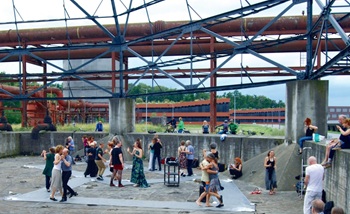
A marked difference to the fate of industrial landscapes in the UK.

Communities will be able to build their own clean energy.
Why diversity and inclusion matters for SMEs

CIOB’s D&I Charter shows how practical changes can support long-term growth.
Cut electricity bills to power growth

Coalition sends joint letter to the Chancellor.

Gasholders: a history in pictures. Book review.
Recognition, influence and growth

SocEnv identifies three strategic pillars in new strategy to 2045.
Comments
To start a discussion about this article, click 'Add a comment' above and add your thoughts to this discussion page.