





Recycling modular buildings
Contents |
[edit] Introduction
Mike Williams, Managing Director of Foremans Relocatable Building Systems, looks at why demand for recycled and refurbished modular buildings continues to rise, and its place in the off-site sector.
The sustainability features of advanced off-site construction solutions have been well documented – significantly less waste, improved thermal efficiency and life cycle costing benefits. But recycled and refurbished modular buildings take sustainable construction to a completely new level.
[edit] Why is the Approach so Sustainable?
Our approach is to recycle the steel structure of the building. The bulk of the embodied energy in any modular building is in the steel structure and steel components used in its manufacture. By preserving these elements, you can create a building without manufacturing new steel or a new building structure, which is vastly more sustainable. It reduces carbon emissions and is an environmentally-sound alternative to demolishing and disposing of buildings in landfill sites when the facilities are no longer required.
When we re-use a modular building, we generate less than 10 per cent of the carbon emissions compared to a newly manufactured building of equivalent size. This dramatically improves a building’s carbon footprint which is increasingly important to many construction clients, particularly in the public sector.
We then refurbish the recycled building with new fixtures and fittings, doors, windows, wall linings and cladding. Many of our customers tell us that you would never know our buildings are modular – let alone recycled. The result is a highly thermally-efficient building with lower running costs.

[edit] Cost-effective Construction and up to 70 Per Cent Faster
Recycling also means we can offer exceptional cost efficiency. This can allow construction clients to benefit from larger buildings or a higher specification for the same budget as new build. The approach is also up to 70 per cent faster than site-based construction and lead times are reduced by up to 30 per cent compared to new modular construction. This speed of delivery is very important to customers who need to work to even shorter programmes than other building solutions can offer for permanent facilities.
And the other benefits of modular construction still apply – less time on site so there is less disruption; constrained and inaccessible sites can be developed with ease, and site safety is improved because work off site is maximised.
[edit] Investment to Meet Demand
We have recently invested £1.5 million in our building stocks to meet the increasing demand for our services. Foremans buildings are widely used in both public and private sectors – from teaching blocks and health centres to transport depots, ancillary accommodation for hospitals, amenity buildings in the energy sector, and office schemes.
As budgets become ever tighter, specifiers need to look for alternative accommodation solutions that provide best value and yet maintain quality. This is an area we really excel in, with the resources and on time, on budget, quality and service commitments from being part of market leader as strong as Portakabin. It is a very compelling offer but it is not without its challenges.

[edit] A Hugely Disparate Market
The challenge for specifiers and building customers is that the market is hugely disparate. This is a very diverse sector of the modular industry and the extent of refurbishment and the level of quality and service offered lacks consistency and is very varied.
Customers should take the time to understand the differences between suppliers – will the recycled building have just a coat of paint to freshen up the interior or will it be completely refurbished to create a high quality, highly energy-efficient scheme? We strongly advise customers considering a recycled solution to:
- Visit completed buildings
- Talk to other customers
- Meet the suppliers – never make a buying decision just on the basis of a tender or quotation
- Visit production facilities to assess the level of ‘refurbishment’.
[edit] The Perception Issue
We still have to respond to preconceptions about recycled modular buildings. The reality is that a refurbished modular building can be better quality than a new build modular solution in terms of building performance and the quality of internal fixtures and fittings – depending on the supplier. This goes back to the huge disparity of modular companies and not all offer technically advanced, highly engineered solutions, as for example, Portakabin does.

The focus should always be on the quality of the finished building – and not whether it is new or recycled. That is why it is so important to encourage customers to visit completed buildings to assess quality at first hand. But we are in no doubt that there is room in the modular market for another type of solution and which takes sustainable construction to a new level whilst offering customers exceptional value.
[edit] Related articles on Designing Buildings Wiki
- Design for deconstruction, BRE modular show house
- Demand for Off-Site Construction Continues to Increase in the UK’s Manufacturing Sector
- Design for Manufacture and Assembly (DfMA).
- Kit house.
- How to Develop the Most Constrained Hospital Sites to Reduce Waiting Times and Improve Patient Care
- Modular buildings
- Modular buildings for education
- Modular construction
- Modular Solutions to Place Planning Issues
- Modular vs traditional construction
- Off-site prefabrication of buildings: A guide to connection choices.
- Structure relocation.
- The myths of modular construction
- WikiHouse.
- Y:Cube.
Featured articles
Check out some of the best features and news from Designing Buildings as well as key stories from around the web.
An extraordinary record of steel engineering worldwide.

Households living near new pylons to save on bills.

ECA warns growth must not outpace grid capacity or skills.
The role of the client and decision making

CIOB response to built environment professions call for evidence.
Construction's sustainability reporting revolution
Tracking upfront embodied carbon with digital tools.
ECA welcomes procurement reforms
Public spending must back British jobs and skills.
Campaigning for Edinburgh: the Cockburn Association 1875-2049

The role of the civic voice in protecting character. Book review.

CIOB photography competition is open for entries.
ECA Edmundson apprentice of the year award
Finalists announced.
Major new study exposes serious knowledge gaps.
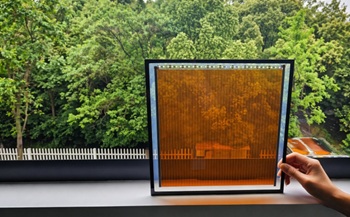
Generating energy from internal light as well as sunshine.

ECA welcomes plans to strengthen subcontractor quality control.