





Blockwork

Contents |
[edit] Introduction
Blocks are constructed using concrete or cement. They may include a hollow core to make them lighter and to improve their insulation properties. They have been in use since the 1930s when they were commonly used for the inner leaf of cavity walls. At this point they were made from an aggregate of stone or industrial waste such as clinker or breeze, hence the term ‘breeze block’.
They are now used for a wide variety of purposes such as the construction of load-bearing walls, retaining walls, partitions and foundations.
A standard block is 440 mm x 215 mm, the equivalent of 3 bricks high and 2 long, the maximum size that one person can comfortably lift. They are available in a range of widths from 50 mm to 300 mm.
The kind of block selected for a particular application will depend on its:
- Density.
- Load-bearing characteristics.
- Appearance.
- Weight and handling properties.
- Thermal characteristics, such as U-value or thermal mass.
[edit] Dense blocks
Dense blocks are usually made from cement, fine aggregate and coarse aggregate. They can be produced in a range of crushing strengths and tend to be used for structural purposes, such as foundations and load-bearing walls.
They generally have poor thermal insulation and readily absorb water, but have good thermal mass.
[edit] Lightweight blocks
The advantage of lightweight blocks include their thermal insulation characteristics and ease of handling. During the last 80 years a variety of aggregates have been used - clinker blocks (8 parts clinker to 1 part cement), and blast furnace slag. They may be slightly more expensive than dense blocks
[edit] Aerated blocks
Aerated blocks are made from cement, lime, sand, pulverised fuel ash (from power stations). They are popular for a number of reasons, other than their light weight and good thermal insulation:
- Their closed cell structure means they have good resistance to water penetration.
- They provide good fire protection.
- They are easy to cut with a saw.
- They can accommodate fixings such as screws and nails.
Autoclaved aerated concrete (AAC) blocks are manufactured by adding a foaming agent to concrete and then hardening the blocks (autoclaving) with steam.
[edit] Mortar mixes
Mortar mixes should not be too strong. Mixes of cement : sand 1 : 3 are unsuitable because they will not accommodate movement in the blockwork.
For above ground uses, they might include mixes such as:
- cement : lime : sand 1 : 1 : 6
- cement : sand with plasticiser 1 : 6
- masonry cement : sand 1 : 5
- cement : lime : sand 1 : 2 : 9
Below ground a slightly stronger mortar can be used, such as 1 : 0.5 : 4 cement : lime : sand.
Dense blocks are typically laid in mortars of average strength, 1:1:6 or 1:2:9. Stronger mortars may limit movement and may cause cracking of the blocks, although they are sometimes specified below ground level.
[edit] Related articles on Designing Buildings
- Aircrete blocks.
- Ashlar.
- Brick.
- Bricklayer.
- Brick sizes.
- Coal ash.
- Ceramics.
- Concrete.
- Damp-proof course.
- Defects in brickwork.
- Defects in stonework.
- Dust heap.
- Hempcrete.
- How to lay block paving.
- How to lay bricks.
- Lime mortar.
- Mortar.
- Parge coat.
- Pebbledash.
- Perpend.
- Pyrite and mica redress issues in Dail Eireann.
- Quoin.
- Rendering.
- Rustication.
- Screed.
- Stucco.
- Timber.
- Types of brick.
- Types of brick bonding.
Featured articles
Check out some of the best features and news from Designing Buildings as well as key stories from around the web.

The Master Builder: William Butterfield and his times. Book review.

Why construction can't afford to ignore the skills gap.
Building Safety Regulator, 19 August

Gill Kernick appointed Independent Chair of Residents’ Panel.
Connecting knowledge, technology and conservation
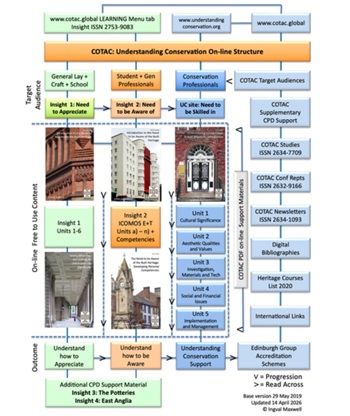
Building competence for the future of built heritage.
Building Regulations and Building Safety Act
CIOB publishes free advice for non-domestic clients.

Building Safety Newsletter from MHCLG.

An extraordinary record of steel engineering worldwide.

Households living near new pylons to save on bills.

ECA warns growth must not outpace grid capacity or skills.
The role of the client and decision making

CIOB response to built environment professions call for evidence.
Construction's sustainability reporting revolution
Tracking upfront embodied carbon with digital tools.
ECA welcomes procurement reforms

Public spending must back British jobs and skills.