






What a digital twin could be

|
| Kevin Reeves, Director for Internet of Things at Costain, takes a look at potential uses for digital twins in infrastructure. |
Contents |
[edit] Introduction
Being a relatively new concept in the infrastructure sectors, the most common question I get asked is ‘what is a digital twin?’ A tough question to answer, but at Costain we believe the best approach to the digital twin evolution is to help our clients define what it means to them.
However, the more people I speak to, the greater my belief that there's a better question: ‘What could a digital twin be?’
[edit] Emerging markets for digital twins
The real beauty of a digital twin is that the market is emerging, the ‘what’ is still being explored by those who will own and operate them, predominantly owner/operators of UK infrastructure assets.
You can, of course, speak to many organisations who can articulate a vision for a digital twin that's tailored to their goods and services, and in my experience, these are generally valid examples.
[edit] Use cases for digital twins
Here are a few potential use cases:
- An engineering provider with a vision of lifecycle building information modelling (BIM), enabling clients to adjust parameters and assess the impact of real-world behaviours in a digital rehearsal, for example, perhaps even with real time inputs, will use a digital twin to understand how an asset will perform over its whole life.
- Real-time operational technology providers, who can demonstrate how real-time systems, old and new can be integrated with business systems to run different scenarios, may define a digital twin as allowing clients to integrate or simulate real-world feedback into risk-based planning. For example, to see how changing components within a system might affect overall risk profiles.
- A contractor might use a digital twin to explain how digital production management can evolve design data through the build process, to ensure it's ready for use in operational phases of the asset.
- And finally, an IT provider might define a digital twin as being able to portray a vision of enterprise systems, such as workforce management, being linked to real-time information from sensors, leveraging internet of things capability. This approach enables owner/operators to prioritise scheduling and optimise maintenance budgets.
[edit] The huge potential of integrating digital twins
All of the above are great examples of digital twin capabilities when considering the Gemini Principles definition: ‘a realistic digital representation of assets, processes or systems in the built or natural environment’.
What excites me most is what would happen if we considered integrating all these capabilities to create a fully integrated enterprise, to include supply chains, and perhaps even citizens?
Think of what could be achieved - a design change could be tested against real-time data in a simulation to assess how it performs in operational life, not only that, the link to enterprise systems would mean the impact on cost, risk, supply chain and other business metrics could be tested. The possibilities are quite literally endless. Importantly, many businesses already have the component pieces, they are however isolated rather than being integrated.
[edit] Taking the first step for your organisation
Taking this very broad, all-encompassing view, is tough for businesses to digest as they identify likely investment needs, work through value creation and understand risks. This is difficult when thinking about things on such a grand scale.
This is why a good first step might be to:
- develop a roadmap for what a digital twin could be for your organisation,
- set a high-level vision,
- and work backwards to prioritise what to do now, in the mid- and long-term to help you get there.
A roadmap shouldn't be considered a fixed plan and must evolve with your business as it changes. However, it provides direction and initial guidance on where to focus investments and create early value. By taking this approach, integrated enterprises as set out in the ICE Project 13 model, will not constrain themselves by worrying too much about ‘what is a digital twin’, and can instead focus on what a digital twin could be.
This approach is being promoted by the water sector regulator OFWAT, termed ‘systems thinking’. Systems thinking encourages a big picture mindset, identifying the pieces of the puzzle to create that big enterprise picture and approaching each piece of the puzzle in a structured way, towards a common goal.
For more information on systems thinking, check out this article by Costain’s Jeremy Dick, where he explains the relationship between systems thinking and systems engineering.
[edit] The National Digital Twin concept
The next big step from an integrated enterprise is thinking about federating information across multiple organisations to create a National Digital Twin, a concept that's taking hold across the globe. It's this global opportunity that we should all be excited about. Through collaboration between government, academia and industry the UK can be a world leader in the evolution of the digital economy.
To achieve this, we need to think big, be prepared to fail, not hold back and work together to evolve UK infrastructure to be a world leading centre of excellence. This is without doubt the most exciting time for UK infrastructure since the first industrial revolution; I for one cannot wait to see the future unfold for the benefit of UK citizens.
This article was originally published by ICE on 22 August, 2019 as ‘What could a digital twin be for your organisation?’ It was written by Kevin Reeves, Director for Internet of Things and Digital Twin, Costain. Kevin delivered a workshop on 9 September 2019 at the ICE National Digital Twin Day to discuss ‘What is a Digital Twin?’.
--The Institution of Civil Engineers
[edit] Related articles on Designing Buildings
- Big data.
- Building information modelling.
- Defining the digital twin: seven essential steps.
- Digital Built Britain.
- Digital Roads 2025.
- Digital twin.
- How can infrastructure be retrofitted in the digital age?
- ICE articles.
- Internet of things.
- National Digital Twin sounds exciting but we must do the hard stuff.
- Project 13.
- The Institution of Civil Engineers.
- UsBIM.geotwin
Featured articles and news
Costs and insolvencies mount for SMEs, despite growth

Construction sector under insolvency and wage bill pressure in part linked to National Insurance, says report.
The place for vitrified clay pipes in modern infrastructure
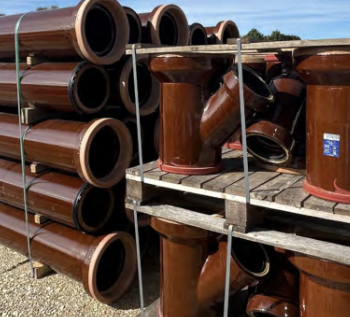
Why vitrified clay pipes are reclaiming their role in built projects.

Research by construction PR consultancy LMC published.
Roles and responsibilities of domestic clients

ACA Safety in Construction guide for domestic clients.
Fire door compliance in UK commercial buildings

Architect and manufacturer gives their low down.
Plumbing and heating for sustainability in new properties

Technical Engineer runs through changes in regulations, innovations in materials, and product systems.
Awareness of the Carbon Border Adjustment Mechanism
What CBAM is and what to do about it.
The new towns and strategic environmental assessments
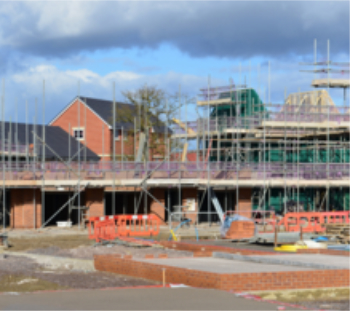
12 locations of the New Towns Taskforce reduced to 7 within the new towns draft programme and open consultation.
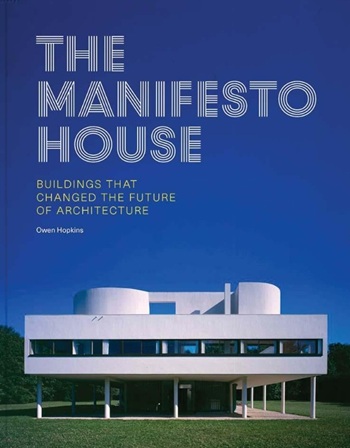
Buildings that changed the future of architecture. Book review.
The Sustainability Pathfinder© Handbook
Built environment agency launches free Pathfinder© tool to help businesses progress sustainability strategies.

Government outcome to the late payment consultation, ECA reacts.
IHBC 2025 Gus Astley Student Award winners

Work on the role of hewing in UK historic conservation a win for Jack Parker of Oxford Brookes University.
Future Homes Building Standards and plug-in solar
Parts F and L amendments, the availability of solar panels and industry responses.
How later living housing can help solve the housing crisis

Unlocking homes, unlocking lives.
Preparing safety case reports for HRBs under the BSA

A new practical guide to preparing structural inputs for safety cases and safety case reports published by IStructE.
Male construction workers and prostate cancer

CIOB and Prostate Cancer UK encourage awareness of prostate cancer risks, and what to do about it.