





Trenches in the construction industry
A trench is a hollow cut into the ground, usually with parallel sides and which is typically deeper than it is wide. Trenches were used in the First World War as a means of conducting combat as they offered a degree of protection and cover from enemy fire.
In construction, trenches are typically excavated for:
- Laying or getting access to services.
- Constructing foundations such as strip foundations. For more information see: Strip foundation.
Trenches may be dug manually or by mechanical excavators, with spoil typically loaded onto dump trucks to be taken for disposal, or re-used elsewhere on site. They need to be constructed with care and must be adequately supported to prevent the sides from caving in, thereby causing a hazard to life, as well as resulting in unnecessary costs and delays to the project.
For shallow trenches in firm ground, open timbering is usually used – whether made of timber or steel trench struts – in conjunction with poling boards. For softer ground, the number of poling boards is increased and they are arranged at closer intervals. Where the trench is deeper than 1.8m, or in loose soil, the sides are usually close-boarded.
In deep trenches, especially where they are likely to be left open for any length of time, the pressures exerted by the trench sides onto the boarding are often considerable and there is the possibility of the sides caving in if not adequately supported. They may also fill with water following heavy rain which may cause structural problems and require a pump to evacuate the water.
For more information see: Trench support and Dewatering.
[edit] Diaphragm walls
The construction of diaphragm walls often requires relatively narrow trenches to be cut – typically 500mm – 1,000mm wide and to depths of 50m and more. Excavation is typically undertaken using rope-suspended mechanical or hydraulically-operated grabs.
Preventing such deep, narrow trenches from caving in would be difficult using physical means such as struts and sheeting. Therefore, to provide support (before placing reinforcement and pouring the concrete) a bentonite slurry is poured into the trench. The slurry has thixotropic properties which means it is load bearing and so keeps the trench sides from collapsing. As the concrete is piped into the bottom of the trench, the bentonite is gradually displaced.
For more information see: Diaphragm wall.
Trenches are often termed temporary works as they are only required for a portion of the construction process.
For more information see: Temporary works.
[edit] Related articles on Designing Buildings Wiki
Featured articles and news
Costs and insolvencies mount for SMEs, despite growth

Construction sector under insolvency and wage bill pressure in part linked to National Insurance, says report.
The place for vitrified clay pipes in modern infrastructure
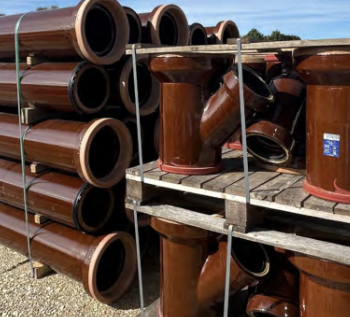
Why vitrified clay pipes are reclaiming their role in built projects.

Research by construction PR consultancy LMC published.
Roles and responsibilities of domestic clients

ACA Safety in Construction guide for domestic clients.
Fire door compliance in UK commercial buildings

Architect and manufacturer gives their low down.
Plumbing and heating for sustainability in new properties

Technical Engineer runs through changes in regulations, innovations in materials, and product systems.
Awareness of the Carbon Border Adjustment Mechanism
What CBAM is and what to do about it.
The new towns and strategic environmental assessments
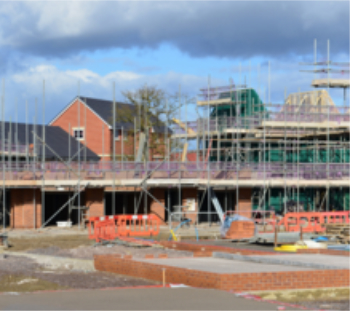
12 locations of the New Towns Taskforce reduced to 7 within the new towns draft programme and open consultation.

Buildings that changed the future of architecture. Book review.
The Sustainability Pathfinder© Handbook
Built environment agency launches free Pathfinder© tool to help businesses progress sustainability strategies.

Government outcome to the late payment consultation, ECA reacts.
IHBC 2025 Gus Astley Student Award winners

Work on the role of hewing in UK historic conservation a win for Jack Parker of Oxford Brookes University.
Future Homes Building Standards and plug-in solar

Parts F and L amendments, the availability of solar panels and industry responses.
How later living housing can help solve the housing crisis

Unlocking homes, unlocking lives.
Preparing safety case reports for HRBs under the BSA
A new practical guide to preparing structural inputs for safety cases and safety case reports published by IStructE.
Male construction workers and prostate cancer

CIOB and Prostate Cancer UK encourage awareness of prostate cancer risks, and what to do about it.