





Complex project
.jpg)
[edit] Introduction
A construction project, sometimes referred to just as a ‘project’, is the organised process of constructing, renovating, refurbishing, remodelling or demolishing a building, structure or item of infrastructure.
Construction projects normally involve a series of related tasks which, if executed successfully and in the correct order, will lead to the completion of the project, be it a building, bridge, tunnel, dam etc.
[edit] Factors influencing complexity of projects
Construction projects may vary in complexity. A project may be complex because of:
- The project type: a new hospital will be intrinsically more complex than a house;
- The project size: airports, for example, tend to be more complex than other projects due to their planning, spatial, safety and technological requirements. Also, larger projects will by their very nature require more people to work on them and may necessitate more project management, more sequencing, coordination, organisation, and so on. Larger contracts may mean that more responsibility is transferred from major construction industry clients to contractors. In such a leading role, the contractor is faced with the challenge of managing the interrelationships of the whole supply chain which makes the whole operation a highly complex undertaking;
- The project location: projects in busy city centres may have to overcome intense planning, spatial and environmental constraints. Projects such as HS2 have added complexity given the immense task of negotiating and buying-up land along the route;
- Political / planning considerations: Highly-sensitive projects, such as nuclear power stations and high-speed rail lines, may be opposed by third parties as the project goes through a series of public consultations and enquiries. This may add many years to the duration of a project, resulting in increased complexity, controversy and spiralling costs;
- The method of procurement and financing: a public private partnership (PPP) usually involves a potentially complex collaborative arrangement between the public and private sectors to ensure sufficient financing and completion of a project. Such arrangements can be highly complex and may not always end in success. Complexity may be further increased in procurement variants such as design, build, operate and maintain (DBOM) or build, own, operate and transfer (BOOT), where the contractor or developer contracts to undertake operation and maintenance of a facility, in addition to design and construction, and transfer it back to the client after a specified time period.
- Regulartory requirements. Regulations may vary from one country to another, and are generally becoming more strict, imposing more, and more complex demands of projects.
NB The 'Complex Projects Contract' was developed by the Chartered Institute of Building (CIOB) and published in 2013. In 2015 it was renamed the Time and Cost Management Contract to better reflect its intended objectives.
The original version suggested that complex projects were likely to have one or more of the following features
Work comprising:
- complex mechanical, electrical or plumbing services, in excess of single voltage power, hot and cold water, heating and telephone
- more than one structure
- any structure that is more than 15 metres (50 feet) high
- usable space below ground
Production involving the management of:
- a construction period in excess of twelve months
- design to be completed during construction
- multiple prime contractors
- more than 20 subcontracts
- multiple possessions and/or access dates
- short-period possessions
- multiple key dates and/or sectional completion dates.
In July 2021, the IPA published an updated routemap for novel or complex major projects. https://www.gov.uk/government/publications/improving-infrastructure-delivery-project-initiation-routemap
[edit] Related articles on Designing Buildings
- Build, own, operate and transfer (BOOT).
- Complexity.
- Complex projects contract.
- Concession.
- Concession agreement.
- Construction contract.
- Design build operate (DBO).
- Integrated Supply Team.
- Nationally significant project.
- Managing the procurement process.
- Partnership.
- PF2 (successor to PFI).
- Pre-Contract Services Agreement.
- Private Finance Initiative.
- Project complexity assessment.
Featured articles
Check out some of the best features and news from Designing Buildings as well as key stories from around the web.
Undervaluing our industrial past

Heritage value changes as taste for building styles changes.
Changing expectations around competence and compliance

New information sheet from CIAT.
Grenfell investigation files passed to CPS

Angela Rayner apologises on behalf of the British state.

Electrical contractors need to understand the practical implications.

The real barrier to getting more value from digital technology.

Your guide to The Construction Reset at UKCW Birmingham.

Accommodating the Victorian and Edwardian working woman. Book review.
Rethinking passive fire protection in design

PFP demands the same level of design rigour as structure or services.

38% of Gen Zs feel safe when a fire door is wedged open.
Stunning images from around the world
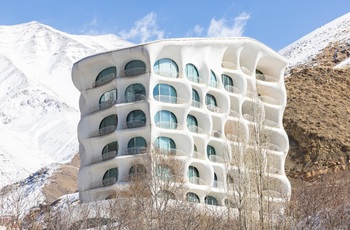
Shortlist for CIOB’s Art of Building photography competition.

Guidance for conversion of traditional pre-1919 stone buildings.
Industrial heritage in the Ruhr
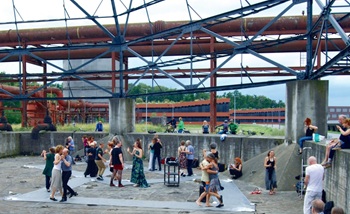
A marked difference to the fate of industrial landscapes in the UK.
Comments
[edit] To make a comment about this article, or to suggest changes, click 'Add a comment' above. Separate your comments from any existing comments by inserting a horizontal line.