






Smart meters and building performance evaluation
This article originally appeared as a --BSRIA blog post Smart metering makes BPE easy…or does it? published in November 2013 and written by Head of BSRIA Instrument Solutions Alan Gilbert.
Building Performance Evaluation (BPE) is here to stay. With government driving towards a 20% reduction in costs for its built estate and increasing unwillingness to accept design predictions as sufficient to prove outcomes, objective measurement will be key. Government Soft Landings (GSL) and the implied BPE activities attest to this. In the housing sector regulation is increasingly looking to proof of performance (airtightness for example) with a growing European focus on providing owners with objective labeling of homes. Revisions of Part L have largely focused on fabric issues but it seems likely that attention will now turn to the performance of installed HVAC plant and associated controls which themselves will present a challenge in proving that combinations of low-carbon technologies are indeed working properly.
All this is happening at the same time as measures to introduce smart metering are coming on-stream. With a commitment to have full implementation by 2020, smart meters should provide a powerful means to assist with BPE of both commercial and non-commercial buildings but will they really realise this objective?
Just how “smart” is smart in the context of metering? At its lowest level the smart meter simply offers a remote display of energy use (often expressed in £) so that users are sensitised to consumption. Rarely are both gas and electricity monitored. or water as well. This is a shame: water (especially hot water) is an increasing proportion of dwelling energy use and is largely ignored by householders. There is increasing evidence that this kind of visible display can have good initial impact but that users rapidly desensitise. Really, these meters are not smart but simply remote display devices.
More commonly “smart” means that meter readings can be transmitted to the supply company on a scheduled basis. This is the type currently planned to be used in the present roll-out. Again it is unlikely that all three services are monitored and the data is often collected at no more than half hour intervals. As an alternative to self-read or estimated billing they are undoubtedly an improvement and will help electricity companies come to terms with balancing home generation and network loading but the thorny problem of access to data remains to be overcome.

Finally there is the possibility of the “really smart” meter which will permit full two-way communication between utility and user thus bringing into reality the possibility of sophisticated demand management options for the power companies. Potentially this could be a rich source of data for BPE but ownership of the protocols and access rights are likely to be a serious hurdle to potential third party users of this resource.
Even if full access to a multi-service, duplex remote metering scheme is possible it cannot provide the additional data that a proper BPE service demands. In order to interpret energy use data additional sensors are needed to enable forensic analysis. Internal temperatures, occupancy rates, casual gains from white goods and local weather, all are needed to understand and normalise energy use back to some design criteria. Even when all this is achieved there is often no substitute for “feet on the ground” to interview occupants or spot unusual behaviours.
Access to large volumes of user data is one key requirement to understanding just how the various interventions in existing dwellings or the application of new regulations in the built environment sector are working. The Department of Energy & Climate Change (DECC) has developed a restricted access National Energy Efficiency Data-Framework (NEED) and this has proven invaluable in understanding the real impact of certain measures such as cavity fill retrofits. Unfortunately this kind of data is not readily available to the wider research community at present nor is it fed from real-time or near real-time sources. This makes it unsuitable for analysis of individual properties.
We want to deliver truly low-energy, low-carbon buildings that are also healthy, productive and comfortable to use but, until the tangle of issues associated with privacy and smart metering are resolved then there is little alternative or more of this kind of work that will not only resolve issues in individual dwellings but also create a new generation of people able to interpret complex building physics and behavioural data. Surely a good thing in itself. If however we really want to look at effects in the wider population of buildings then DECC should be encouraged to invest in NEED and roll it out to the wider research community so that academics, business and industry can better identify opportunity for action in bringing the UK nearer to its legal carbon commitments.
--BSRIA
[edit] Find out more
[edit] External references
Featured articles and news
Costs and insolvencies mount for SMEs, despite growth

Construction sector under insolvency and wage bill pressure in part linked to National Insurance, says report.
The place for vitrified clay pipes in modern infrastructure
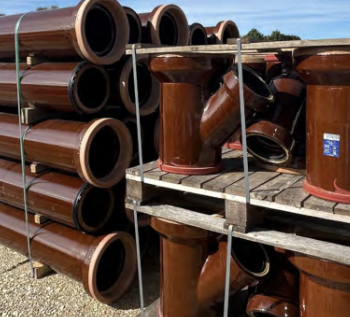
Why vitrified clay pipes are reclaiming their role in built projects.

Research by construction PR consultancy LMC published.
Roles and responsibilities of domestic clients

ACA Safety in Construction guide for domestic clients.
Fire door compliance in UK commercial buildings

Architect and manufacturer gives their low down.
Plumbing and heating for sustainability in new properties
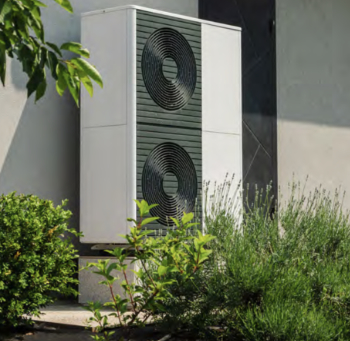
Technical Engineer runs through changes in regulations, innovations in materials, and product systems.
Awareness of the Carbon Border Adjustment Mechanism
What CBAM is and what to do about it.
The new towns and strategic environmental assessments
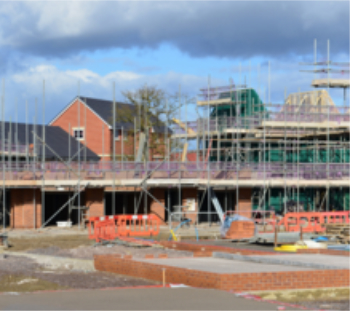
12 locations of the New Towns Taskforce reduced to 7 within the new towns draft programme and open consultation.

Buildings that changed the future of architecture. Book review.
The Sustainability Pathfinder© Handbook
Built environment agency launches free Pathfinder© tool to help businesses progress sustainability strategies.
Government outcome to the late payment consultation, ECA reacts.
IHBC 2025 Gus Astley Student Award winners

Work on the role of hewing in UK historic conservation a win for Jack Parker of Oxford Brookes University.
Future Homes Building Standards and plug-in solar
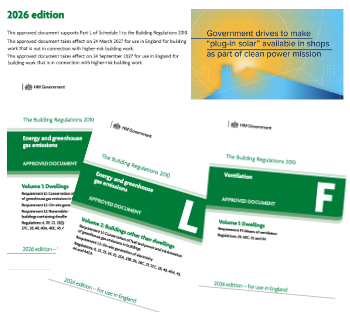
Parts F and L amendments, the availability of solar panels and industry responses.
How later living housing can help solve the housing crisis

Unlocking homes, unlocking lives.
Preparing safety case reports for HRBs under the BSA

A new practical guide to preparing structural inputs for safety cases and safety case reports published by IStructE.
Male construction workers and prostate cancer

CIOB and Prostate Cancer UK encourage awareness of prostate cancer risks, and what to do about it.