





Government announces an overhaul of the planning system
On 30 July 2024, the government announced an overhaul of the planning system to “fix the foundations and grow the economy”.
This included a review of the greenbelt to identify ‘grey belt’ land and meet local housing needs, with ‘golden rules’ driving 50% delivery of affordable homes and a new system to ensure every area must have local housing plans. All councils in England are to be given new, mandatory housing targets to pave the way to deliver 1.5 million more homes. The new targets will mean councils must boost housebuilding in areas most in need, helping more people buy their own homes, removing the largest barriers to economic growth, and getting Britain building again.
The Deputy Prime Minister has written to every council Leader and Chief Executive in England to make clear that there is “not just a professional responsibility but a moral obligation to see more homes built”, and that she will not hesitate to use her powers of intervention should it be necessary – including taking over an authority’s plan making directly.
Deputy Prime Minister, Angela Rayner said: “Our decisive reforms to the planning system correct the errors of the past and set us on our way to tackling the housing crisis, delivering 1.5 million homes for those who really need them. And something I am personally proud of, our new flexibilities for councils will boost the number of social and affordable homes, and give working families a better route to a secure home.”
In addition to restoring mandatory housing targets, the method used to calculate them will be updated. The new method will require councils to ensure homes are built in the right places and development is proportionate to the size of existing communities, while adding an extra level of ambition in the most unaffordable areas.
The first port of call for development will be brownfield land. Reforms announced today will make explicit that the default answer to brownfield development should be “yes” and they will promote homebuilding at greater densities in urban centres.
To help deliver 1.5 million homes over the next five years, councils will have to review their green belt land if needed to meet their own target, identifying and prioritising ‘grey belt’ land, which the government has today set out a definition for. This includes land on the edge of existing settlements or roads, as well as old petrol stations and car parks.
|
For the purposes of Plan-making and decision-making, grey belt is defined as land in the Green Belt comprising Previously Developed Land and any other parcels and/or areas of Green Belt land that make a limited contribution to the five Green Belt purposes (as defined in para 140 of this Framework) but excluding those areas or assets of particular importance listed in footnote 7 of this Framework (other than land designated as Green Belt). |
The update will make clear the requirement for councils to consider the proximity of new homes to existing transport infrastructure.
Where local authorities do not have up-to-date plans in place to enable sufficient housing to come forward to meet local targets, homebuilders can bring forward proposals on grey belt land. In all cases, land that is safeguarded for environmental reasons will continue to be protected.
Land released in the Green Belt will be subject to the government’s ‘golden rules’, which make clear that development should deliver 50% affordable homes, increase access to green spaces and put the necessary infrastructure in place, such as schools and GP surgeries.
In addition to these reforms to the planning system, the government is also taking steps to deliver quality affordable and social housing. This includes changes to Right to Buy, giving councils flexibility to use their receipts to build and buy more social homes. The government has started its review of the increased discounts introduced in 2012, with changes to be implemented in the Autumn.
The Deputy Prime Minister also confirmed that details of future government investment in social and affordable housing will be brought forward at the next spending review, so social housing providers can plan for the future and help deliver "the biggest increase in affordable housebuilding in a generation".
The government has also confirmed that at the next fiscal event it will provide councils and housing associations with the rent stability they need to be able to borrow and invest in new and existing homes – while ensuring that there are appropriate protections for both existing and future social housing tenants.
The government is also confirming its intention to introduce a universal system of strategic planning across England in this Parliament, underpinned by the necessary legislation, that will deliver on the manifesto commitment to plan for growth on a larger than local scale.
Other announcements include:
- Government is introducing new flexibilities in the Affordable Homes Programme for GLA to unlock delivery in London.
- Government is increasing the flexibilities on how councils can use their Right to Buy receipts, which includes: removing the caps on the percentage of replacements delivered as acquisitions and the percentage cost of a replacement home that can be funded using these receipts, and giving councils the ability to combine Right to Buy receipts with section 106 contributions, with these flexibilities in place for an initial 2 years and subject to review.
- Government will review Right to Buy more widely, which includes looking at eligibility criteria and protections for new homes, and will bring forward a consultation in the autumn.
- Government is confirming that the third round of the Local Authority Housing Fund will be going ahead, with £450m to councils to acquire and create homes for families at risk of homelessness.
- Government is also confirming that Awaab’s Law will be introduced into the social rented sector, with more detail and secondary legislation to implement this in due course.
For more information see: https://www.gov.uk/government/news/housing-targets-increased-to-get-britain-building-again
[edit] Related articles on Designing Buildings
- CIOB launches pre-election manifesto
- Construction industry responds to general election announcement
- ECA general election campaign
- Grey belt land
- Industry reacts to first labour government King's speech in fifteen years
- NPPF
- The construction industry and the general election
- The construction industry builds up to the general election
- The construction industry prepares for imminent general election
- The general election and the construction industry
Featured articles and news
Costs and insolvencies mount for SMEs, despite growth

Construction sector under insolvency and wage bill pressure in part linked to National Insurance, says report.
The place for vitrified clay pipes in modern infrastructure

Why vitrified clay pipes are reclaiming their role in built projects.

Research by construction PR consultancy LMC published.
Roles and responsibilities of domestic clients

ACA Safety in Construction guide for domestic clients.
Fire door compliance in UK commercial buildings

Architect and manufacturer gives their low down.
Plumbing and heating for sustainability in new properties

Technical Engineer runs through changes in regulations, innovations in materials, and product systems.
Awareness of the Carbon Border Adjustment Mechanism
What CBAM is and what to do about it.
The new towns and strategic environmental assessments
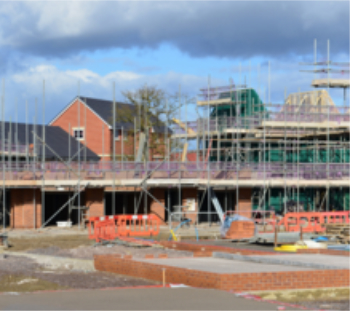
12 locations of the New Towns Taskforce reduced to 7 within the new towns draft programme and open consultation.
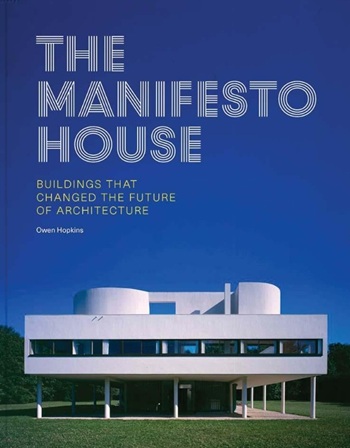
Buildings that changed the future of architecture. Book review.
The Sustainability Pathfinder© Handbook
Built environment agency launches free Pathfinder© tool to help businesses progress sustainability strategies.

Government outcome to the late payment consultation, ECA reacts.
IHBC 2025 Gus Astley Student Award winners

Work on the role of hewing in UK historic conservation a win for Jack Parker of Oxford Brookes University.
Future Homes Building Standards and plug-in solar
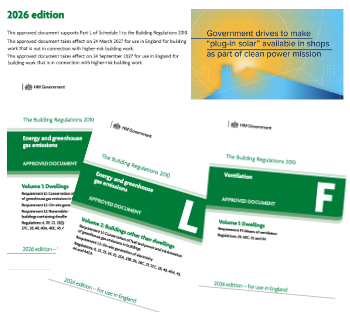
Parts F and L amendments, the availability of solar panels and industry responses.
How later living housing can help solve the housing crisis

Unlocking homes, unlocking lives.
Preparing safety case reports for HRBs under the BSA
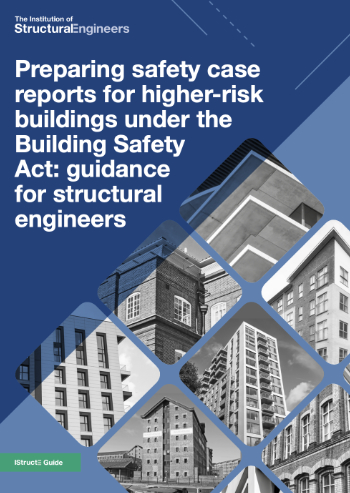
A new practical guide to preparing structural inputs for safety cases and safety case reports published by IStructE.
Male construction workers and prostate cancer

CIOB and Prostate Cancer UK encourage awareness of prostate cancer risks, and what to do about it.