






EU policy for sustainable construction
Contents |
[edit] Introduction
The construction sector represents 40% of the European Union's (EU) total energy consumption, 35% of its greenhouse gas emissions, a third of its water consumption, and a third of the waste generated. Taking action to reduce those numbers is absolutely necessary.

Reducing energy consumption and using renewable energies in the construction sector can help the EU to abide by the Kyoto Protocol. In the same way, it would help the EU achieve its long-term commitments to hold the increase in the global average temperature below 2°C, and to reduce greenhouse gas emissions by at least 20% by 2020, compared with 1990 levels.
Achieving those targets before the deadline seems like an arduous task in Spain due to the crisis in the sector the country has experienced lately. The current situation has not helped in achieving any improvement to reach the above mentioned challenges.
[edit] At what stage is the EU policy?
Before the end of 2018, the European Parliament, the European Commission and the European Council should establish the guidelines regarding energy, in order to launch a new directive which will likely become effective in 2020.
This way, European citizens will have a guide to set the course towards their common commitment of 2015 – to abide by the Paris Agreement and its applicability after 2020, once the validity of the Kyoto Protocol expires – regarding total decarbonization in 2050 to reverse climate change.
The European Parliament is pushing the use of renewable energies with the draft of the new directive, which increases the percentage of such energies from 27 to 35% by 2030. In addition, it protects self-supply energies and it ends the 'sun tax' approved, by the Spanish government, despite widespread criticism.
Spain is the EU country with the highest number of environmental infringements. In 2017, the nation accumulated 30 open cases, four more than the year before, representing almost 10 % of all the EU cases. Spain ranks first in the list of most fined countries for breaking the EU policy, and this fact should lead to further thoughts. Cases include all areas, from poor water management to omission of assessments in urban projects, habitats protection or air pollution, among others.
[edit] What about Spain?
In Spain, the great challenges of the construction sector in the near future are the Europe 2020 strategy and to keep to the Directive 2010/31/EU on the Energy Performance of Buildings. As of 31 December 2020, new buildings in the EU will have to consume ‘nearly zero-energy’, although new buildings owned and occupied by public authorities will already apply this directive after 31 December 2018.
Article 4 of the Directive reads, 'minimum energy performance requirements shall be reviewed at regular intervals which shall not be longer than five years'. For this reason, a new update of the Basic Document of Energy Saving in Buildings DB-HE of the Spanish Technical Building Code (CTE), is expected to be approved in 2018.
Spain’s new document will review the obligatory regulations, so new buildings built after the effective date are able to reduce its energy consumption (below 50% of the current demands), as well as to increase the qualities of the building, its facilities, and to incorporate renewable energies, meaning attention is paid to its demands, and consequently, CO2 emissions could reach values near zero.
[edit] What will happen after 2020?
At a European level, there is the 'Level(s) – A common EU framework of core sustainability indicators for office and residential buildings' initiative, which is in its initial steps.
The fundamental idea of this initiative is to harmonise voluntary sustainability certificates in order to legislate on a range of sustainability parameters, besides energy. Level(s) provides a set of indicators and common metrics for measuring the performance of buildings along their life cycle. It also enables other important related performance aspects to be assessed using indicators and tools for health and comfort, life cycle cost and potential future risks to performance.
The intention is not to create a new standalone building certification scheme, or to establish performance benchmarks, but rather to provide a consistent and comparable voluntary reporting framework that works across national boundaries and has a broad potential for use by building sector professionals across the EU.
The EU values private certificates in sustainable construction as a basis to boost better practices and to be the engine of the market, considering that these methodologies always go beyond regulations and energy efficiency. Legislation on sustainability parameters is needed, although everything related to energy efficiency is already included in the current law, it still requires a basis for evaluating everything else: greenhouse gas emissions during building’s life cycle, efficient resources and materials with a circular life cycle, efficient use of water, or comfortable healthy places, among others.
[edit] How to anticipate this regulatory framework
Sustainable construction certificates are a key tool to anticipate future demands of the EU policy.
Certification brings economic benefits for those who promote, operate or maintain the building, benefits in terms of health and well-being for their occupants, as well as reducing building life-cycle environmental impacts. BREEAM evaluates ten categories, which go beyond energy efficiency, and analyses other issues like Water, Materials, Health and Wellbeing, Transport, Waste, Land Use and Ecology, Pollution, Management, and even Innovation.
BREEAM includes specific methodologies for communities’ design, new construction buildings and in use buildings, providing many opportunities to improve the existing buildings, reducing CO2 emissions and getting energy-efficient buildings.
This article was originally published here by BRE Buzz on 4 July 2018. It was written by Rosalía Fernández Pardo.
--BRE Buzz
[edit] Related articles on Designing Buildings Wiki
Featured articles and news
Costs and insolvencies mount for SMEs, despite growth
Construction sector under insolvency and wage bill pressure in part linked to National Insurance, says report.
The place for vitrified clay pipes in modern infrastructure
Why vitrified clay pipes are reclaiming their role in built projects.

Research by construction PR consultancy LMC published.
Roles and responsibilities of domestic clients

ACA Safety in Construction guide for domestic clients.
Fire door compliance in UK commercial buildings

Architect and manufacturer gives their low down.
Plumbing and heating for sustainability in new properties
Technical Engineer runs through changes in regulations, innovations in materials, and product systems.
Awareness of the Carbon Border Adjustment Mechanism
What CBAM is and what to do about it.
The new towns and strategic environmental assessments
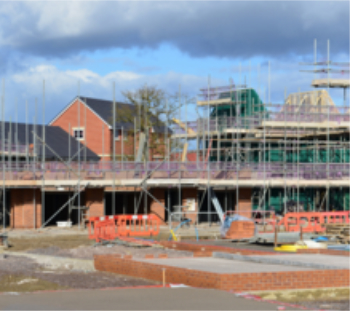
12 locations of the New Towns Taskforce reduced to 7 within the new towns draft programme and open consultation.
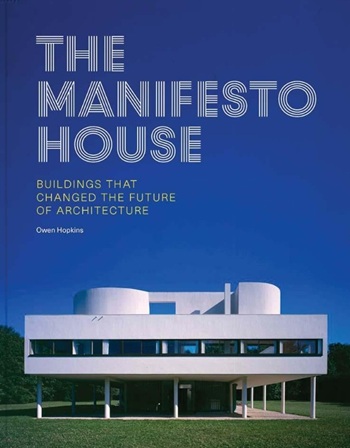
Buildings that changed the future of architecture. Book review.
The Sustainability Pathfinder© Handbook
Built environment agency launches free Pathfinder© tool to help businesses progress sustainability strategies.
Government outcome to the late payment consultation, ECA reacts.
IHBC 2025 Gus Astley Student Award winners

Work on the role of hewing in UK historic conservation a win for Jack Parker of Oxford Brookes University.
Future Homes Building Standards and plug-in solar
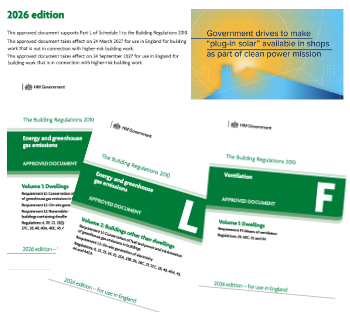
Parts F and L amendments, the availability of solar panels and industry responses.
How later living housing can help solve the housing crisis
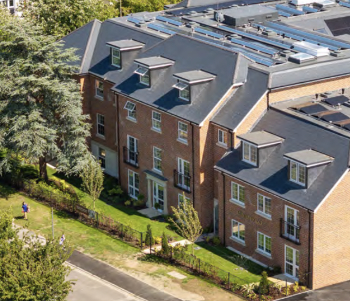
Unlocking homes, unlocking lives.
Preparing safety case reports for HRBs under the BSA
A new practical guide to preparing structural inputs for safety cases and safety case reports published by IStructE.
Male construction workers and prostate cancer

CIOB and Prostate Cancer UK encourage awareness of prostate cancer risks, and what to do about it.