






Capability Brown - proof that engineering for sustainability works

|
| ICE Past President Barry Clarke, (2012/13), encourages the need to place civil engineering in context and realise the outcomes to ensure a resilient, sustainable future. Photo: Blenheim Palace, Woodstock, Oxfordshire. |
Contents |
[edit] Introduction
Infrastructure transforms the landscape to the extent that we are still using what was built over 2,000 years ago.
Transforming the landscape was a feature of the English Landscape Movement of the 18th century, when Capability Brown and others were in the right place at the right time to create a legacy that is still enjoyed by millions today.
The movement is an example of how civil engineering can be defined by eras triggered by policy, technology or the environment. For example, the River Navigation Acts (1651-1850), Turnpike Trusts (1707 - 1888), canals (1763-1790), railways (1821-1867), national grid (1901-1938), and motorways (1958-1996).
This is in addition to an ongoing need for other major infrastructure projects, including water supply and sanitation, harbours, airports, flood control and sea defences.
[edit] Project characteristics
The characteristics of these projects are that through adaption and replacement, they can last more than one, possibly more than several, generations.
Usually they are:
- Capital-intensive with low operational costs, though their longevity means that there will be significant periods of investment throughout their life;
- Assets which are intended to be maintained indefinitely through replacement and refurbishment;
- Constructed with significant volumes of low-cost materials, and
- Complex networks that are the lifelines that society depends on for its health, wealth and wellbeing.
Creating a resilient, sustainable infrastructure requires an understanding of how it was built and maintained over several generations of civil engineers using different materials, processes and design principles.
[edit] Transforming the landscape
The legacy left by Capability Brown and his peers was a result of a combination of social, economic, financial, scientific, agricultural and political change that could be regarded as the start of the modern era.
- The Scientific Revolution (16th – 18th century) marked the emergence of modern science due to developments in mathematics, physics, astronomy, biology and chemistry underpinning engineering practice.
- The Age of Enlightenment (17th – 18th century) was a philosophical movement advocating freedom, democracy and reason as the primary values of society which resulted in a decline in the influence of the church, government reformation and greater rights for the common people and a rise of the professional class – a precursor to the professional institutions.
- The Bill of Rights (1689) created a constitutional monarchy in England guaranteeing freedom of speech and freely-elected MPs from landowners.
- The formation of the Bank of England in 1694 to raise funds for government and to issue notes to promote the public good and benefit of the people by maintaining monetary and financial stability.
- The Enclosure Acts (1730 – 1780) were a precursor to improvements in agriculture, which together with trade expansion into North America and Caribbean, created wealth leading to social and political changes and increased land ownership.
- The Agricultural Revolution (1700 -1850) improved land use (land conversion, drainage and reclamation), land governance (enclosure, increase in farm size), agricultural processes (crop rotation, selective breeding) and, with improved transport (turnpikes, canals, river navigation) and markets (tariff, toll and custom free), supported a doubling in population during the 18th century.
The confidence, prosperity and political stability of the 18th century associated with the increase in land ownership led to a demand for significant engineering works to transform the landscape.
[edit] The impact of Capability Brown
Capability Brown was an engineer, an architect and a landscape architect who was responsible for transforming over 250 estates during that period using a signature style of a serpentine lake surrounded by pasture, woodland and parkland.
Sites where Capability Brown is known or thought to have worked in the UK include Blenheim Palace, Harewood House, Buckingham Palace, Cliveden and Dunham Massey.
Traditional methods of construction practice and tools, known since the Roman times, were used together with contractual procedures that still exist today to undertake major earthworks, earth dams, drainage, water courses and roads, which, at the time, probably exceeded all other engineering works.
Brown’s vision was to create a landscape to provide for every need of the ‘great house’, which had to cohere, look elegant and be fit for the owner, the poet and the painter; that is, it had to meet the principles of modern design – fit for purpose, aesthetics and sustainable.
This is evident in that the estates have created areas of genetic diversity and biodiversity, regulated local climate, water quality and flow, and provided a sense of place and history.
[edit] What we can learn from past achievements
Engineering the landscape by generations of civil engineers highlights the need to place engineering in context to understand the outcomes so that the legacy created is resilient with a sustainable future that can be adapted to change.
[edit] About this article
This article was written by ice.org.uk Barry Clarke, Past ICE President and ICE Fellow. It was first published on the website of the Institution of Civil Engineers (ICE) in April 2019 and can be accessed here.
[edit] Related articles on Designing Buildings Wiki
- Articles by ICE on Designing Buildings Wiki.
- Civil engineer.
- Consulting engineer.
- Designers.
- Engineering Council.
- Geotechnical engineering.
- How to become an engineer.
- Institution of Civil Engineers.
- Institute of Engineering and Technology.
- Institution of Structural Engineers.
- Mechanical engineer.
- Mixed news from the Perkins Review.
- Parents are pivotal in reaching future engineers.
- Project engineer.
- Resident engineer.
- Section engineer.
- Site engineer.
- Structural engineer.
- The role of the engineer in creating inclusive cities.
Featured articles and news
Costs and insolvencies mount for SMEs, despite growth

Construction sector under insolvency and wage bill pressure in part linked to National Insurance, says report.
The place for vitrified clay pipes in modern infrastructure
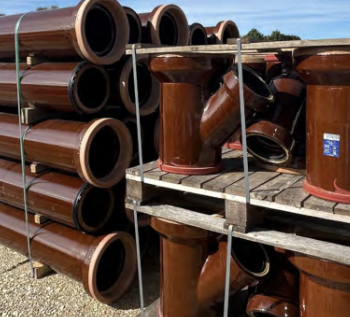
Why vitrified clay pipes are reclaiming their role in built projects.

Research by construction PR consultancy LMC published.
Roles and responsibilities of domestic clients

ACA Safety in Construction guide for domestic clients.
Fire door compliance in UK commercial buildings

Architect and manufacturer gives their low down.
Plumbing and heating for sustainability in new properties

Technical Engineer runs through changes in regulations, innovations in materials, and product systems.
Awareness of the Carbon Border Adjustment Mechanism
What CBAM is and what to do about it.
The new towns and strategic environmental assessments
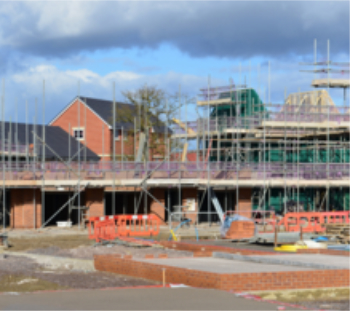
12 locations of the New Towns Taskforce reduced to 7 within the new towns draft programme and open consultation.
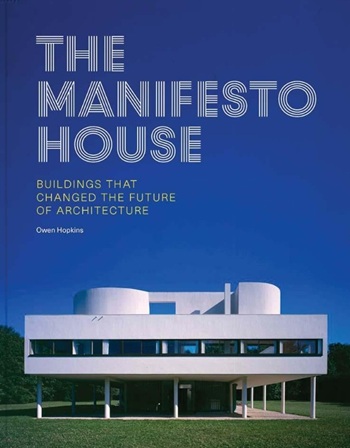
Buildings that changed the future of architecture. Book review.
The Sustainability Pathfinder© Handbook
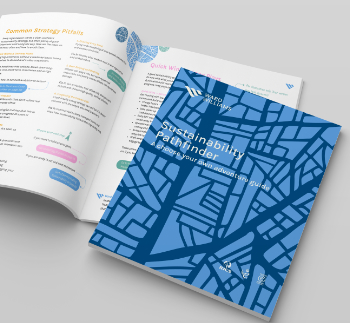
Built environment agency launches free Pathfinder© tool to help businesses progress sustainability strategies.
Government outcome to the late payment consultation, ECA reacts.
IHBC 2025 Gus Astley Student Award winners

Work on the role of hewing in UK historic conservation a win for Jack Parker of Oxford Brookes University.
Future Homes Building Standards and plug-in solar
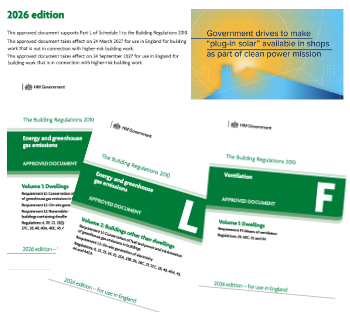
Parts F and L amendments, the availability of solar panels and industry responses.
How later living housing can help solve the housing crisis

Unlocking homes, unlocking lives.
Preparing safety case reports for HRBs under the BSA

A new practical guide to preparing structural inputs for safety cases and safety case reports published by IStructE.
Male construction workers and prostate cancer

CIOB and Prostate Cancer UK encourage awareness of prostate cancer risks, and what to do about it.