





Biophilic design

|
| Biophilic design makes use of natural materials and planting to increase wellbeing. |
Contents |
[edit] Introduction
As a term, ‘biophilia’ comes from Greek and means a love of nature. Biophilic designs therefore are those that connect people to nature and natural processes, helping people act in more productive ways. The word was first used in this context in “The heart of man”, a book by German psychologist, Erich Fromann.
Edward Wilson, an American biologist, popularised the term in the 1980s. His concern was that increasing urbanisation was leaving people disconnected from the natural world. In his book Biophilia, he argued that humans have an innate and evolutionarily based affinity for nature and defined the term as referring to, ‘the connections that human beings subconsciously seek with the rest of life’.
A more recent explanation was provided by Judith Heerwagen, who undertook extensive research into the relationship between buildings and psychological wellbeing. She suggested that ‘biophilia evolved to guide functional behaviours associated with finding, using and enjoying natural resources that aided survival and reproductive fitness – and avoiding those that are harmful.'
[edit] Biophilic design
A biophilic building might be a hospital that promotes faster healing, or a school that enables children to perform better and achieve higher grades, or a workplace where people are more productive. It could also be a neighbourhood incorporating design elements that promote better interaction between neighbours and has areas that encourage people to linger and converse, creating a better environment that has beneficial effects on people’s health and wellbeing.
Within the workplace, biophilic design can help people achieve wellbeing and perform more efficiently by allowing them to interact with nature. This can be done by introducing plants, water and air, or through using colour, shapes and natural materials such as timber and stone.
Windows can provide natural daylight, but can also provide visual interaction with the 'natural' world outside. This could be a courtyard with trees or a water feature or planting.
Plants inside can allow people to see and interact with natural forms, especially important if they are working with their back to the window.
Incorporating biophilic design can include:
- Providing open space with naturalised or planted areas around buildings and ensuring windows overlook those areas.
- Maintaining existing trees, which will also help provide natural landscaping.
- Routing access pathways through planted areas.
- Incorporating living walls into building facades.
The design of buildings to maximise biophilia can include:
- Considering outlook to allow the maximum exposure to outdoor, natural scenes.
- Including green roofs and green facades.
- Bringing nature and planting inside buildings.
- Considering the use of water features inside buildings to provide visual and acoustic benefits.
At the interior design level, features could include:
- The inclusion of potted plants and small internal gardens.
- The use of ‘natural’ art and natural materials.
BRE Group has partnered to create The Biophilic Office - a project on its main campus at Watford, UK, which involves live monitoring of occupants before and after a nature-inspired refurbishment.
[edit] Cities can also be biophilic
There is increasing awareness of the importance of biophilia at the urban scale. Because it is thought that urban residents benefit from links to nature, designers are encouraged to explore creative solutions to incorporate them into urban environments.
The Biophilic Cities Network was launched in 2013 and in April 2014, Birmingham, UK became the first city to join the network.
Biophilic cities are considered to be:
- Cities of abundant nature in close proximity to large numbers of residents.
- Biodiverse cities, that value, protect and actively restore biodiversity.
- Green and growing cities that are organic and nature-rich.
- Places where residents feel a deep affinity for the nearby flora and fauna along with the climate, topography and other special qualities.
- Cities that provide abundant opportunities to be outside and to enjoy nature through walking, hiking, cycling or exploring.
- Rich, multi-sensory environments, where the sounds of nature (and other sensory experiences) are appreciated as much as the visual experience.
- Cities that place importance on nature and biodiversity in education, and on providing many and varied opportunities to learn about and directly experience nature.
- Cities that invest in the social and physical infrastructure that gives residents a closer connection and understanding of nature, whether through natural history museums, wildlife centres, school-based nature initiatives, parks and recreation.
- Globally-responsible cities that recognise the importance of actions to limit the impact of resource use on nature and biodiversity beyond their urban borders.
[edit] Related articles on Designing Buildings
- Biodiversity in the urban environment.
- Biophilic design research.
- Biophilic design and sustainability.
- Biophilic design - health and wellbeing in buildings.
- Biophilic gym.
- Biophilic urbanism.
- Biotechnology.
- Green roof.
- Green space.
- Green walls.
- Landscape urbanism.
- The biophilic office.
- 2019 Wellness and biophilia symposium.
Featured articles
Check out some of the best features and news from Designing Buildings as well as key stories from around the web.
Building Safety Act implementation in Wales

CIAT to host industry panel on 26 June.

New and updated CLC building safety guidance.
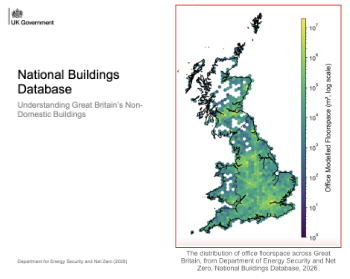
New UK National Buildings Database.
Building Safety Wiki Interviews

Chief executive of the British Woodworking Federation.
Planning condition discharge in England and Wales

A brief explanation from a building compliance expert, with further links.
Overheating guidance and tools for building designers

Guidance for dealing with element of building fabric control that have increasing importance.
Shading for housing, a design guide

From the Good Homes Alliance and British Blind and Shutter Association.
UK Standard Skills Classification (SSC)

A shared framework for describing skills needs.
Social media ban consultation comes to close

CIOB urges UK Government to consider social media’s role in careers guidance in ban debate.
The latest of eight Skills England apprenticeship units

The addition of battery manufacturing welcomed by ECA with a warning about the risks of fast-tracked apprenticeship units.
Building Control Independent Panel final report

A precis of a key report led by Dame Hackitt with full recommendations and link to the government response.