





CCTV
Closed-circuit television, commonly known as CCTV, is a video monitoring system in which all of the circuits are closed and all of the elements are directly connected. This is unlike broadcast television where any receiver that is correctly tuned can pick up the signal. CCTV may employ point to point (P2P), point to multipoint, or wireless links.
CCTV was first used in the 1940s by the company Siemens in Germany to observe rockets launching. It went on to be installed in high-security locations such as banks, but over the years CCTV has been used much more widely, most commonly associated with security and surveillance, and its prevalence has fuelled privacy concerns in many parts of the world.
In 2011, it was estimated that there were 1.85 million CCTV cameras in the UK, equating to one camera for every 32 people (ref research undertaken by the deputy chief constable of Cheshire, Graeme Gerrard, lead on CCTV for the Association of Chief Police Officers ACPO).
CCTV systems use strategically placed video cameras, to capture footage and feed it to either a private network of monitors for real-time viewing, or to a digital video recorder (DVR) for future reference.
CCTV is used for a very wide variety of purposes, including:
- Monitoring traffic.
- Home and grounds security.
- Maintaining a perimeter in medium to high security areas.
- Monitoring transport and enforcing restrictions (such as speed limits, parking and congestion charging).
- Business and retail surveillance.
- Overseeing hazardous locations such as construction sites or industrial environments.
- Providing a visual record in places where it is necessary to maintain security such as airports or banks.
- Monitoring public places, such as streets, parks, stadiums and landmarks.
- Monitoring enclosed spaces such as lifts.
- Personal recording devices such as those used by the police and increasingly by cyclists.
Older CCTV systems used small, low-resolution black and white cameras and monitors with no interactive capabilities. Modern CCTV systems display in full-colour and at high-definition. This can be particularly helpful for facial recognition which can be vital if analysis, investigation or legal proceedings are a possibility.
CCTV cameras have the ability to zoom in and pan to track action. Motion sensors can be used to automatically record when there are signs of movement. This can be particularly useful for home security. Disc indexing and time-stamping make locating and accessing recoded footage easier.
Night vision or Infra-red cameras can be used for applications ranging from monitoring a sleeping baby, to carrying out surveillance in the heart of combat zones.
A particular difficulty for large businesses is how to monitor multiple camera feeds in a cost effective manner. Video analytics (or video content analysis VCA) can help automate CCTV analysis recognising important features such as license plates, or patterns of movement and allowing surveillance to focus on potentially important events.
CCTV may be operated as part of a wider building management system, allowing related systems such as access controls, alarms, sensors and lighting to be integrated. This can permit greater control, achieve better responses and give improved flexibility, for example, setting different configurations for weekends, holidays and night time, turning lights on and off, recording important events, and so on. Such systems might operate across a number of different sites.
CCTV images can be transmitted to a monitoring facility or can be accessed on devices such as mobile phones, allowing responses to be directed remotely, such as police or fire service action, or in some cases to permit access and de-activate alarms.
[edit] Related articles on Designing Buildings
- Access control.
- Access to construction sites.
- Commercial security systems.
- Entry control.
- Fire detection and alarm systems.
- Hostile architecture.
- Intruder alarm.
- Perimeter security.
- Ram raid.
- Security and the built environment.
- Smart surveillance, video surveillance and VSaaS.
- Time-lapse project management cameras.
Featured articles
Check out some of the best features and news from Designing Buildings as well as key stories from around the web.

38% of Gen Zs feel safe when a fire door is wedged open.
Stunning images from around the world

Shortlist for CIOB’s Art of Building photography competition.

Guidance for conversion of traditional pre-1919 stone buildings.
Industrial heritage in the Ruhr
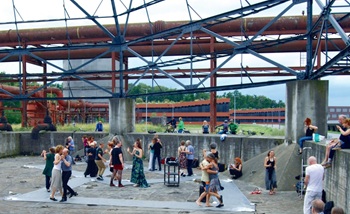
A marked difference to the fate of industrial landscapes in the UK.

Communities will be able to build their own clean energy.
Why diversity and inclusion matters for SMEs

CIOB’s D&I Charter shows how practical changes can support long-term growth.
Cut electricity bills to power growth

Coalition sends joint letter to the Chancellor.

Gasholders: a history in pictures. Book review.
Recognition, influence and growth

SocEnv identifies three strategic pillars in new strategy to 2045.

Discover the future of roofing, cladding and insulation.

New guidance for professional practice, cultural change and regulation in social housing.
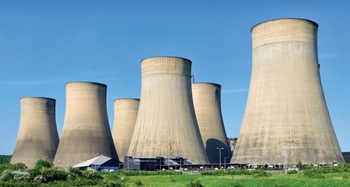
The heritage of nuclear and conventional power stations.
Comments
CCTV systems are getting more and more popular everyday. using security cameras give people peace of mind when they're away from home or office. they can control and see they're home or office through their cell phones.