





Urban decay

Contents |
[edit] Introduction
Urban decay is a process in which a previously functioning city, or city area, falls into disrepair and disuse. Common indications of urban decay are abandoned buildings and empty plots, high unemployment levels, high crime rates, and an urban landscape that is generally decrepit and desolate.
Urban decay has become associated with western cities, particularly in North America and Europe, as well as certain areas associated with the former Soviet Russia. It tends to be a feature of major cities which despite maintaining high property values in the inner city and central business district (CBD), and a thriving suburban area, have peripheral slums on the outskirts.
In the UK, the phrase ‘urban decay’ is often associated with ‘sink estates’ in cities, but can also be applied to seaside resort towns such as Morecambe and Skegness which have experienced falling tourist rates with the rise of low-cost air travel. In France, it is often associated with the banlieues of Paris, Marseille and Lyon. In the US, the most famous example of urban decay is in Detroit, which was hit particularly hard by the collapse of the motor industry.
[edit] Socio-economic factors
There are many socio-economic factors that may lead to urban decay, including:
- Deindustrialisation, either by industry dying out or moving away.
- Depopulation or changing population, through ‘white flight’ (large-scale movement from urban areas to the suburbs).
- Restructuring of transport networks.
- Political disenfranchisement.
- Rent controls.
- Economic downturn and recession which may result in local businesses failing.
- Urban planning decisions.
- Prolonged riots and crime.
- Lack of new construction work or urban renewal projects.
- Environmental conditions, changes or disasters.
- Redlining (see below).
‘Redlining’ is the practice of directly or indirectly denying services such as banking, transport, health care or adequate shopping facilities, to the residents of certain areas. This became a particular problem in the United States during the 1970/80s, where black inner city neighbourhoods were often discriminated against by banks and other businesses who refused aid and did not invest in the area.
[edit] Urban blight
‘Urban blight’ refers to property that is in a state of decay and disrepair. A property can be said to be ‘blighted’ if:
- It is a public nuisance.
- It is fire-damaged or dangerous.
- It poses a severe and immediate health or safety threat.
- It is open to the elements and trespassing.
- It has had utilities and other services disconnected, removed or rendered ineffective.
NB: Property blight (sometimes referred to as 'planning blight' or 'blighted land') refers to the reduction in marketability and value of land as a result of a public sector decision, such as approval of a development that might result in the compulsory purchase of the land.
[edit] Blight removal
There are several steps that can be taken to tackle blight removal:
- Demolition.
- Property auctions.
- Nuisance abatement agreements.
- Partnering with groups and organisations in the community.
In September 2013, President Obama established the Detroit Blight Task Force to remove every blighted structure and clear every vacant lot in Detroit, Michigan, as quickly as possible using an environmentally-conscious approach.
The Blight Task Force defines neighbourhood blight as ‘all blighted residential structures, small commercial structures (less than 25,000 sq. ft lot size) and vacant lots’. There are 84,641 properties and lots in Detroit that meet this description, which includes around 40,000 unsalvageable buildings which will require demolition.
As of July 2016, an average of 75 vacant buildings had been demolished every week since 2014. The Task Force claim that they can remove all blight in five years or less, and estimate the total cost could approach $2 billion.
[edit] Related articles on Designing Buildings
- Adam Curtis - The Great British Housing Disaster.
- Ballymun mass housing and regeneration.
- British post-war mass housing.
- Brownfield land.
- Decay.
- Demolition.
- Densification.
- Empty dwelling management orders.
- Eyesore.
- Gentrification.
- Listed building.
- Property blight.
- Regeneration.
- Sink estate regeneration plans.
- Social housing.
- Structures at the end of their design life.
- Urban design.
- Urban sprawl.
- Urban Task Force.
Featured articles
Check out some of the best features and news from Designing Buildings as well as key stories from around the web.
New and updated CLC building safety guidance.
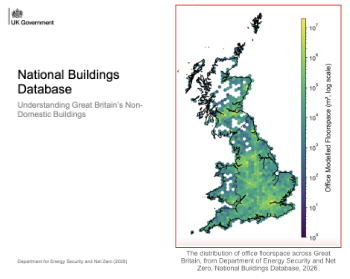
New UK National Buildings Database.
Building Safety Wiki Interviews

Chief executive of the British Woodworking Federation.
Planning condition discharge in England and Wales

A brief explanation from a building compliance expert, with further links.
Overheating guidance and tools for building designers

Guidance for dealing with element of building fabric control that have increasing importance.
Shading for housing, a design guide

From the Good Homes Alliance and British Blind and Shutter Association.
UK Standard Skills Classification (SSC)

A shared framework for describing skills needs.
Social media ban consultation comes to close

CIOB urges UK Government to consider social media’s role in careers guidance in ban debate.
The latest of eight Skills England apprenticeship units

The addition of battery manufacturing welcomed by ECA with a warning about the risks of fast-tracked apprenticeship units.
Building Control Independent Panel final report
A precis of a key report led by Dame Hackitt with full recommendations and link to the government response.
Building Safety recap April, 2026
A short and longer run-through of the month, with links to further information and sources.