






Ten facts about Expanded Polystyrene (EPS) insulation to help specifiers
Contents |
[edit] Introduction
Expanded polystyrene (EPS) is often associated with poor quality packaging that comes wrapped around new consumer goods such as TVs or washing machines. However, EPS is also used in the construction industry as an insulating material and can be made in different densities and even with thermal enhancing graphite to provide a cost effective insulation material. Here we have 10 facts about EPS to help specifiers learn a little bit more about the product.
[edit] 1. Low cost
When compared to other rigid insulations, EPS is without doubt the most cost effective. For example, to achieve a thermal resistance of 4.54 m2K/W you would need 100 mm thick PIR. Alternatively, you could specify PlusTherm EPS, at a slightly thicker 135 mm, but still save up to 50% on cost compared to PIR. This excellent cost-to-performance ratio results in a low cost design without compromising on thermal performance.
[edit] 2. Thermal performance
The structure of expanded polystyrene (EPS) makes it a simple, effective insulator. Whilst most people are familiar with standard white EPS there is also an enhanced grey EPS available. Grey EPS contains high-purity graphite that reflects and absorbs radiant energy, increasing the materials thermal conductivity to 0.030 W/mK.
[edit] 3. Lightweight
EPS is an extremely lightweight material as it is made up of approximately 98% air and just 2% plastic. Lightweight construction materials can be a great choice as they have the advantage of being very easy to transport and are generally more environmentally friendly than heavier materials. The density of our EPS ranges from 15 to 40 kg/m3 depending on the grade.
[edit] 4. Compressive strength
Despite its lightweight, the unique structure of EPS brings the benefit of superb compressive strength and rigidity. This means it is ideal for use in many construction and civil engineering applications such as flooring and structural fills. It’s available in a range of densities or grades which are classified to BS EN 13163 standards to meet the minimum design strength for each specific project.
[edit] 5. Durability
EPS is a durable, rot proof and permanent material when specified and installed correctly. It will remain effective for the life of any application with no deficiency effects to be expected over a 100-year life cycle. EPS is inert which means it will not leach into surrounding soils or groundwater when buried in the ground. EPS provides no nutrient attraction to insects, vermin, fungi or bacteria which is another reason why it is an ideal construction material.
[edit] 6. Water resistant
EPS has a closed cell structure which means its mechanical and thermal properties are unaffected by humidity and it limits water absorption to minimal levels. When used in well-drained applications, no change in weight occurs, if installed in a submerged application EPS will have a negligible increase of around 0.7% in weight depending on the density of EPS specified.
[edit] 7. Reaction to fire
Like many construction materials, for example timber, EPS is combustible therefore it should be considered in conjunction with all the other materials that make up the whole building element to give an overall fire classification.
A fire retardant additive (FRA) can be specified which is included during the manufacturing process, the FRA inhibits the early stages of fire development. When a FRA is included the classification for reaction to fire is Euroclass E.
[edit] 8. Safe to use
EPS is non-toxic, chemically inert, non-irritant and odourless making it entirely safe to use across all construction applications. These attributes help reduce on-site health and safety issues and concerns compared to other insulation materials, for example mineral wool irritates the skin and can cause respiratory problems if correct PPE is not worn.
[edit] 9. Easy to install
EPS is lightweight and therefore easily carried and installed manually on-site without the need for specialist equipment or skills. EPS can be cut to size on-site using a hand saw or hot wire cutter. If it is being installed as a structural fill, then it does not require compaction unlike other traditional fill materials such as soil or aggregates.
[edit] 10. Sustainability
EPS offers exceptional sustainability credentials. It contains no CFC’s or HCFC’s. It has Zero Ozone Depletion Potential and a low Global Warming Potential whilst also being 100% recyclable at many stages of its life cycle. Whilst larger off cuts can be utilised elsewhere on a project, manufacturers offer a recycling service for any smaller pieces which are taken back in bulk bags and recycled into new products.
--Styrene Packaging and Insulation Ltd 12:02, 16 Apr 2018 (BST)
[edit] Find out more
[edit] Related articles on Designing Buildings Wiki
- Compressive strength of expanded polystyrene for civil engineering.
- EPS Geofill - Retaining Walls.
- EPS Geofill - Road Construction.
- Fire behaviour of expanded polystyrene.
- Floor insulation.
- The benefits of specifying expanded polystyrene for external wall insulation.
- Thermal insulation for buildings.
- Types of insulation.
Featured articles and news

We're expanding our collaborative mission by launching DB Intelligence, an exclusive market research advisory panel. Built environment professionals can now get paid to share their expertise on industry trends, products and services.
Panel members receive direct financial incentives for participating in research projects like short surveys, 1-2-1 interviews and focus groups. Register today to shape the future of the construction sector.
Building Control Independent Panel final report
A precis of a key report led by Dame Hackitt with full recommendations and link to the government response.
Guide to ISO 19650 for Architecture Firms (2026)
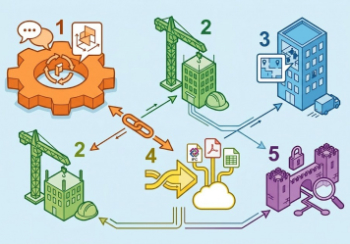
A user gives their low down.

A UK training and membership provider for mould remediation professionals.
Building Safety recap April, 2026
A short and longer run-through of the month, with links to further information and sources.
CIAT May 2026 briefing.
Independent NSI and BAFE study exploring how organisations are changing the way they buy fire safety services.
From medieval scribes to modern word art.
ECA welcomes crackdown on late payment and push for clean energy, whilst CIOB seek fixed cladding removal timeframes.
Cyber Security in the Built Environment
Protecting projects, data, and digital assets: A CIOB Academy TIS.
Managing competence in the built environment
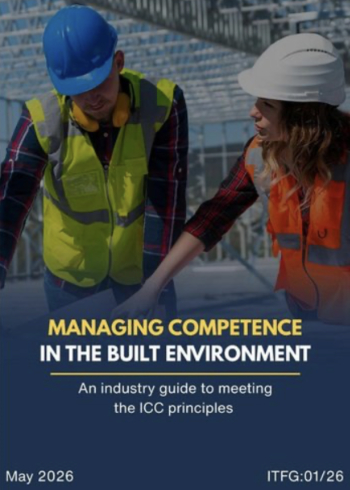
ITFG publishes new industry guide on how to meet the ICC principles.
The UK's campaign to reduce noise pollution: Mythbusting, articles and topic guides.