





Taxation in building design and construction

|
Contents |
[edit] Introduction
A tax is a deduction made by the government from the income of an individual, group or company. The deduction is compulsory and people who try to evade it or present fraudulent information to the HM Revenue and Customs (HMRC) are committing a criminal offence. Shops, banks and other institutions may also deduct tax, e.g VAT, but when they do it is on behalf of the government and they pass the monies collected to it.
Tax deducted is used by the government to strengthen its finances and to allow it to spend on roads, homes, defence and other areas of the economy.
[edit] Digitisation
Making Tax Digital (MTD) is a key part of the government’s Tax Administration Strategy, aimed to help reduce the tax gap by requiring businesses and individuals to: keep digital records, use software that works with Making Tax Digital and submit updates every quarter, bringing the tax system closer to real-time. See Making Tax Digital MTD
[edit] Main types of tax
[edit] Income tax
Individuals pay tax on their income although some types of income may be exempt. Tax is payable on various types of income, such as:
- Earnings from employment;
- Profits made through being self-employed;
- Some state benefits;
- Most pensions, including state pensions, company and personal pensions and retirement annuities;
- Rental income (although this may not apply in some cases of being a ‘live-in’ landlord);
- Job-related benefits, e.g company car, lunch allowance etc;
- Income from a trust, and
- Interest on savings over the stipulated savings allowance.
As at 2019, income tax is not payable on:
- A limited amount of income from self-employment - this is the ‘trading allowance’;
- A limited amount of rental income from property (unless the Rent-a-Room Scheme is being used);
- Income from tax-exempt accounts, e.g Individual Savings Accounts (ISAs) and National Savings Certificates;
- Dividends from company shares under a dividends allowance;
- Some state benefits;
- Money won on premium bonds, the National Lottery or the Health Lottery;
- Rent an individual receives from a lodger in their house that is below the Rent-a-Room limit and
- Income Tax allowances and reliefs.
Most people in the UK get a 'personal allowance' of tax-free income. This is the amount of income they can have before they must pay tax.
The majority of people pay income tax through a system called PAYE (Pay As You Earn) which is used by employers and pension providers to deduct tax and National Insurance Contributions (NIC) directly out of wages and pensions. It is an automatic process and spares many people, especially those on lower incomes, the complexity of calculating what their tax should be.
For more information see: PAYE
[edit] Capital gains tax
Capital Gains Tax is a tax on profit that is made when an asset is sold (disposed of) and that asset has increased in value since the date it was bought. The amount of tax is paid on the gain, not the amount received for the asset.
For example, a crystal vase bought for £5,000 and sold for £15,000 - this means the seller has made a taxable gain of £10,000. Capital gains tax thresholds can change annually, usually at a higher rate, but people are usually allowed a tax-free allowance up to a certain amount. If the item sold is above that amount, tax is paid on the difference between the total money received minus the threshold value. Some assets are tax-free. Capital gains tax is not payable if all a person’s gains in a year are under their tax-free allowance.
Capital gains tax is paid on:
- Most personal possessions worth above a threshold, apart from a car;
- Property that is not the person’s main home (e.g a holiday home);
- A person’s main home if they have let it out, used it for business or it is very large;
- Some types of shares and
- Business assets.
For more information see: Capital gains tax
[edit] VAT
Value Added Tax (VAT) is a tax added to the cost of certain goods and services. It is only accountable where the party raising an invoice is VAT registered. It is necessary to register if VAT-able turnover exceeds a minimum threshold in any 12-month period. When VAT is added to a sales invoice it is 'output tax' in the hands of the party raising the invoice. To the recipient of the invoice the same tax is 'input tax'.
For more information see: VAT
[edit] Inheritance tax
When someone dies, inheritance tax may be deducted from their estate (this is their property, money and possessions) assuming the total value lies above the threshold.
Inheritance tax will normally not have to be paid if:
- The value of the estate is below a certain threshold (subject to change);
- The estate (above a certain threshold) is left to a spouse, civil partner, charity or a community amateur sports club.
In the UK, homes that are given away to children of the deceased (including adopted, foster or stepchildren) or grandchildren are normally subject to higher thresholds.
[edit] Corporation tax
Corporation tax is a tax on doing business, whether as a limited company, a foreign company with a UK office, or a club, co-operative or other unincorporated association, e.g a community group or sports club.
A company will pay corporation tax on its profits from doing business, its investments and for selling assets.
[edit] Construction Industry Scheme (CIS)
Under CIS, contractors deduct money from a subcontractor’s payments and pass it to HM Revenue and Customs (HMRC). Registering for the scheme is compulsory for contractors, although subcontractors do not have to register, but they will pay higher deductions if they do not.
[edit] Business rates
Business rates are a local tax paid by the occupiers of non-domestic property in England and Wales. Business rates are calculated and collected by local authorities. They are put in a central pool and then redistributed back to local authorities to help to pay for local services.
For more information see: Business rates.
[edit] Stamp duty land tax
Stamp duty land tax is payable on the purchase or transfer of property or land in the UK which has a value above a certain threshold. Therefore, it is a tax which arises on propertytransactions. Given the large amounts of money involved, it is important that it is fully factored into project appraisals.
For more information see: Stamp duty land tax
[edit] Council tax
The council tax is a form of local property tax (LPT) collected by local councils. It was introduced in 1993 by the Local Government Finance Act 1992, when it replaced the unpopular Community Charge (Poll Tax). Very broadly, domestic properties pay the council tax, whereas business properties pay business rates (sometimes referred to as non-domestic rates).
For more information see: Council tax
The full range of articles about tax on Designing Buildings Wiki can be seen here.
[edit] Related articles on Designing Buildings
- Business rates.
- Capital allowances and super deductions.
- Capital gain.
- Capital gains tax.
- Capital allowances.
- Industrial buildings allowance (IBA)
- Landfill tax.
- PAYE.
- Stamp duty.
- Tariff.
- Tax relief.
- VAT
[edit] External references
Featured articles and news

We're expanding our collaborative mission by launching DB Intelligence, an exclusive market research advisory panel. Built environment professionals can now get paid to share their expertise on industry trends, products and services.
Panel members receive direct financial incentives for participating in research projects like short surveys, 1-2-1 interviews and focus groups. Register today to shape the future of the construction sector.
Planning condition discharge in England and Wales

A brief exoplanation from a building compliance expert, with further links.
Overheating guidance and tools for building designers

Guidance for dealing with element of building fabric control that have increasing importance.
Shading for housing, a design guide

From the Good Homes Alliance and British Blind and Shutter Association.
UK Standard Skills Classification (SSC)

A shared framework for describing skills needs.
Social media ban consultation comes to close

CIOB urges UK Government to consider social media’s role in careers guidance in ban debate.
The latest of eight Skills England apprenticeship units

The addition of battery manufacturing welcomed by ECA with a warning about the risks of fast-tracked apprenticeship units.
Building Control Independent Panel final report
A precis of a key report led by Dame Hackitt with full recommendations and link to the government response.
Building Safety recap April, 2026

A short and longer run-through of the month, with links to further information and sources.
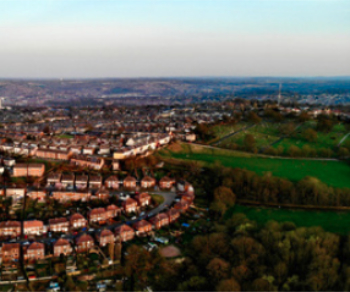
CIAT May 2026 briefing.

From medieval scribes to modern word art.

ECA welcomes crackdown on late payment and push for clean energy, whilst CIOB seek fixed cladding removal timeframes.
Cyber Security in the Built Environment
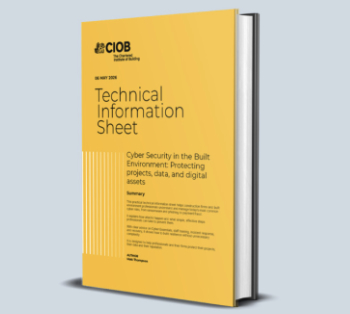
Protecting projects, data, and digital assets: A CIOB Academy TIS.
Managing competence in the built environment

ITFG publishes new industry guide on how to meet the ICC principles.
The UK's campaign to reduce noise pollution: Mythbusting, articles and topic guides.