





Performance specification

Specifications are written documents that describe the materials and workmanship required for a development. They do not include cost, quantity or drawn information but need to be read alongside other contract documentation such as quantities, schedules and drawings.
Specifications vary considerably depending on the stage to which the design has been developed, ranging from performance (open) specifications that require further design by a contractor or supplier, to prescriptive (closed) specifications where the design is already complete when the project is tendered.
Prescriptive specifications give the client more certainty about the end product when they make their final investment decision (i.e. when they appoint the contractor), whereas a performance specification gives the contractor and suppliers more scope to innovate and adopt cost effective methods of work, potentially offering better value for money.
Typically, performance specifications are written on projects that are straight-forward, standard building types, whereas prescriptive specifications are written for more complex buildings, or buildings where the client has requirements that might not be familiar to contractors and where certainty regarding the exact nature of the completed development is more important to the client.
An exception to this might be a repeat client such as a large retailer, where a specific, branded end result is required and so whilst the building type is well known, the specification is likely to be prescriptive.
In fact, most projects will involve a combination of performance and prescriptive specifications, where items crucial to the design will be specified prescriptively (such as external cladding), whilst less critical items, or items requiring specialist design are specified only by performance (such as service lifts).
Key to deciding whether to specify a component of the building prescriptively or not is considering who is best placed to select that components, i.e. who is most likely to achieve best value, the client, the designers, the contractor or suppliers. Large clients may be able to procure certain products at competitive rates themselves (for example, the government).
Designers may have particular experience of using a specific product (although some clients may not allow designers to specify particular products as they believe it restricts competition and innovation and may relieve the contractor of their liability for 'fitness for purpose').
Performance (open) specifications describe the result that is required from particular items and leave it to the contractor or supplier to satisfy that requirement. In effect it requires the contractor or supplier to complete the design. The nature of the performance required may be defined by the desired outcome, or by reference to standards (in this case it is important to ensure that the standards referred to are up to date, and this can be done by subscribing to services such as NBS).
It is important when defining performance to:
- Ensure that the performance that has been specified cannot be achieved without delivering the desired outcome.
- Ensure the client will be able to test whether the required level of performance has been achieved (i.e. wherever possible the specification should be objective not subjective).
- Require evidence of compliance with the specification (manufacturers test results, calculations, records of tests, provision of samples and mock-ups etc.)
- Ensure that tests and compliance requirements are economically practicable.
- Ensure where there are elements of prescriptive and performance specification that performance items can be properly integrated into the rest of the works.
NB: In the public sector, the government prefers that tendering takes place after the project brief has been prepared, i.e. before any design studies have been undertaken. Tenders are based on an output-based specification setting out only the functional requirements for the development and not prescribing how those requirements should be achieved.
However, as the public sector tends to procure repeat building types such as schools, hospitals, prisons etc. there are a great number of existing standards and codes that specifications can refer to.
The Geospatial Glossary, published by the Geospatial Commission, and accessed on 17 September 2022, defines an open specification as: ‘A specification that promotes interoperability through its public availability to developers, who use it to develop software or hardware compatible with the common resource described in the specification. Open specifications are generally consistent with related standards and are updated to conform with new standards and new technologies. They may be developed and maintained, as in the case of OpenGIS Specifications, by a public open consensus process.’
[edit] Related articles on Designing Buildings
- Contractor's designed portion.
- Final specifications.
- Insulation specification.
- Outline specification.
- Output-based specification.
- Performance.
- Prescriptive specification.
- Production information.
- Project brief.
- Public procurement.
- Service level specification.
- Specification.
- Specification basics.
- Tender.
- Track record.
[edit] External references
- The JCT Guide to the Use of Performance Specifications.
- NBS: Briefs 4. Prescription or performance.
- OGC: Whole-life costing and cost management.
Featured articles
Check out some of the best features and news from Designing Buildings as well as key stories from around the web.

Communities will be able to build their own clean energy.
Why diversity and inclusion matters for SMEs

CIOB’s D&I Charter shows how practical changes can support long-term growth.
Cut electricity bills to power growth

Coalition sends joint letter to the Chancellor.

Gasholders: a history in pictures. Book review.
Recognition, influence and growth

SocEnv identifies three strategic pillars in new strategy to 2045.

Discover the future of roofing, cladding and insulation.

New guidance for professional practice, cultural change and regulation in social housing.
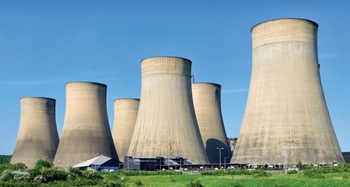
The heritage of nuclear and conventional power stations.
New measures to stop people being ripped off

Government to protect families from cowboy builders and aggressive bailiffs.

New Futurebuild showcase brings an innovation-first approach.
National Planning Policy Framework
Understanding the 2026 changes.
ECA's public affairs priorities

Member consultation opens to shape priorities for 2027 to 2030.
Comments