





Cite Radieuse

Cite Radieuse (Radiant City), is a high-density residential development, characteristic of the Unite d’habitation concept design developed by Le Corbusier.
Located in Marseille, France, Cite Radieuse is arguably the most influential Brutalist building of all time, and is considered one of Le Corbusier’s most famous and successful works. Indeed, the building is often credited as being the initial inspiration behind the architectural style of Brutalism.
Built between 1947 and 1952, the design applied Le Corbusier’s famous dictum that a house was a ‘machine for living in’, to an entire community. In so doing, it redefined high-density housing by creating a self-contained 18-storey block structured like an ocean liner.
The building is situated at the centre of a large urban park, and is 165 m long and 56 m high.
Departing from his trademark smooth white surfaces, Le Corbusier chose to construct the building in beton brut (rough-cast concrete), textured by the timber formwork. This was a matter of expediency, since a steel frame would have been too expensive considering post-WW2 material shortages, but subsequently became a design staple of Brutalism.
The building is raised up off the ground on chunky concrete piloti, and its long elevations comprise a series of balconies and deep-set windows that create a strong visual grid. Le Corbusier based this grid on his Modulor Man concept of measurement that he created to achieve designs based on human proportions.
Corridors extend through the centre of the long axis on every third floor of the building, referred to as ‘internal streets’. Most of the 337 apartments are arranged as 2-storey duplexes with a double-height living room at one end, stretching from one side to the other. Pairs of apartments interlock around the central access corridor. The apartments accommodate 1,600 residents, and the building also includes shops, sport and medical facilities, a hotel and restaurant.
Le Corbusier designed the building’s flat roof to serve as a communal terrace, together with sculptural ventilation stacks, a running track and children’s paddling pool.
When the building was unveiled, it was immediately celebrated by the architectural community as a success. The architect Walter Gropius is reported to have said at the opening event, “any architect who does not find this building beautiful, had better lay down his pencil.”
Despite influencing countless system-built residential blocks, the concept has frequently proven unsuccessful elsewhere, with some theorising this was becuase the generous proportions of Cite Radieuse were not adopted.
Between 2010 and 2013, the roof underwent renovation, and an exhibition centre was created. In 2016, it was designated a UNESCO World Heritage Site and was classified as a historic monument by the French Ministry of Culture.
[edit] Related articles on Designing Buildings Wiki
Featured articles
Check out some of the best features and news from Designing Buildings as well as key stories from around the web.

Electrical contractors need to understand the practical implications.

The real barrier to getting more value from digital technology.

Your guide to The Construction Reset at UKCW Birmingham.

Accommodating the Victorian and Edwardian working woman. Book review.
Rethinking passive fire protection in design

PFP demands the same level of design rigour as structure or services.

38% of Gen Zs feel safe when a fire door is wedged open.
Stunning images from around the world
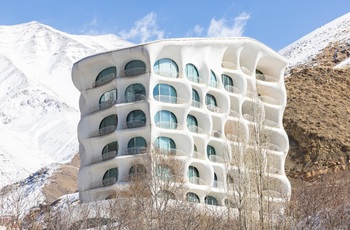
Shortlist for CIOB’s Art of Building photography competition.
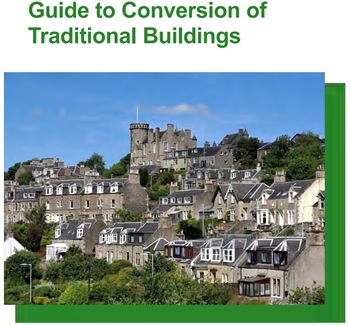
Guidance for conversion of traditional pre-1919 stone buildings.
Industrial heritage in the Ruhr
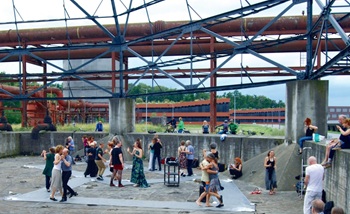
A marked difference to the fate of industrial landscapes in the UK.
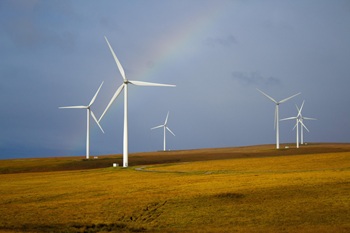
Communities will be able to build their own clean energy.
Why diversity and inclusion matters for SMEs

CIOB’s D&I Charter shows how practical changes can support long-term growth.
Cut electricity bills to power growth

Coalition sends joint letter to the Chancellor.
Comments
The featured building is NOT the Cité Radieuse in Marseille, but apparently the Housing Unit built by Le Corbusier upon the same blue print in Briey la Forêt in Eastern France. Five Housing Units were built, including the one in Marseille (1946-52), Rezé (1953-55), West Berlin (1957-58), Briey La Forêt (1959-60) and the latest in Firminy (1965-67). The one in Marseille is the only one encapsulating all principles of the vertical city (Public School, roof top opened to public, public spaces, shops and spaces for profesional activities...). It now also host an international art center (MAMO) and a Third space for architecture (Kolektiv Cité Radieuse). All Housing Units are UNESCO listed since 2016.
Maxime Forest, Kolektiv Cité Radieuse Marseille
Thank you for offering this correction. The image has been updated.
--Editor, Designing Buildings