






Solid-State Cooling in HVAC: Emerging trends

Contents |
[edit] Emerging Trend Spotlight: Solid-State Cooling in HVAC
The cooling industry is changing fast. As the world gets warmer and the demand for air conditioning grows, traditional vapour compression systems are coming under pressure. At the same time, new environmental rules are forcing a move away from refrigerants that harm the planet. This is where solid-state cooling (SSC) can play a role. A new technology that could make cooling cleaner, quieter, and more efficient.
[edit] Why It’s Gaining Attention?
Cooling already accounts for nearly 10% of global electricity use, and demand is expected to triple by 2050, putting more strain on electricity grids. In addition, governments are tightening regulations on refrigerants. For example, in the U.S., the AIM Act will reduce the use of high-GWP (global warming potential) refrigerants by 85% by 2036, whilst in the EU, the F-Gas Regulation aims for a full phase-out by 2050.
These policies will make traditional HVAC systems more expensive to produce and maintain. Solid-state systems, by contrast, don’t use refrigerants or compressors, so they are automatically compliant and often more energy efficient. The U.S. Department of Energy estimates that SSC could cut energy use by up to 46% compared to standard systems.
[edit] How It Works?
Traditional air conditioners rely on gases that change from liquid to vapour to move heat around. Solid-state cooling works differently. It uses solid materials that heat up or cool down when exposed to magnetic fields, electrical currents, pressure, or mechanical stress.
This means SSC systems can:
- Run silently with no moving parts
- Be smaller and more flexible in design
- Require less maintenance
- Eliminate refrigerant-related emissions
There are several main approaches used to achieve solid-state cooling:
- Thermoelectric (Peltier), which is already used in small fridges and electronic cooling. Recent material improvements have boosted efficiency by about 70%.
- Elastocaloric, which uses flexible metal alloys that heat and cool when stretched. This is promising but still limited by material wear.
- Magnetocaloric, which uses magnets to drive temperature change and is effective but currently large and expensive.
- Barocaloric, which uses pressure changes, with promising lab results but high-pressure requirements.
[edit] Where It’s Being Used
Solid-state cooling is already being applied in niche, high-value markets where precision and reliability matter most:
- Medical and laboratory equipment, where quiet, accurate temperature control is vital.
- Electronics and data centres, for localised cooling of chips and components.
- Aerospace and defence, where space and vibration control are critical.
Companies like Solid State Cooling Systems (SSCS) already supply compact chillers for laboratory and industrial uses. Meanwhile, Phononic has introduced a modular platform for commercial buildings that replaces refrigerants entirely and can reduce running costs by about 18% over its lifetime.
These examples suggest that SSC's initial growth will likely be driven by modular and retrofit solutions, laying the groundwork for future expansion into full building systems.
[edit] Industry Investment
Leading players in HVAC and advanced materials are actively positioning themselves in the emerging solid-state space.
One major industry player has committed €15 million to a European firm developing refrigerant-free heat pump technology based on shape-memory alloys, signalling a strategic move to gain early access to solid-state innovation.
Meanwhile, a collaboration between another global manufacturer and a leading research institution has reported a 70% efficiency improvement using nano-engineered thermoelectric materials. This kind of partnership could accelerate the adoption of compact, compressor-free cooling solutions across both electronics and HVAC sectors.
These developments reflect a growing consensus among technology and HVAC leaders: solid-state systems are likely to play a pivotal role in the next generation of refrigerant-free product design.
[edit] Looking Ahead
Solid-state cooling remains in its early stages, but momentum is building. Whilst it won’t replace conventional air conditioning overnight, it offers a clear trajectory toward more sustainable and efficient cooling solutions.
As advanced materials become more cost-effective and dependable and as regulations continue to phase out harmful refrigerants the commercial potential for solid-state cooling will steadily grow.
This article is based on the BSRIA article "Emerging Trend Spotlight: Solid-State Cooling in HVAC" dated October 2025 and written by Pietro Picca Senior Market Intelligence Analyst at BSRIA, pitured above.
--BSRIA
[edit] Related articles on Designing Buildings
- Absorption refrigeration.
- Air conditioning.
- Air handling unit.
- BREEAM Impact of refrigerants.
- BSRIA articles
- BSRIA definitions
- Building management systems.
- Building services
- Chiller unit.
- Chilled water.
- Complex system.
- Cooling degree days.
- Corrosion in heating and cooling systems.
- Data centre cooling.
- Dehumidification.
- Desiccant cooling.
- Displacement ventilation.
- Drivers of change in global heating markets.
- Ductwork.
- Evaporative cooling.
- Fan coil unit.
- Heating.
- Heat load.
- Heating ventilation and air conditioning HVAC
- Humidification.
- HVAC.
- HVACR.
- Mechanical ventilation.
- Natural ventilation.
- Night-time purging.
- Passive building design.
- Passive ventilation.
- Plant room.
- Refrigeration.
- Thermal comfort.
- Thermal storage for cooling.
- Ventilation.
Featured articles and news
Costs and insolvencies mount for SMEs, despite growth

Construction sector under insolvency and wage bill pressure in part linked to National Insurance, says report.
The place for vitrified clay pipes in modern infrastructure
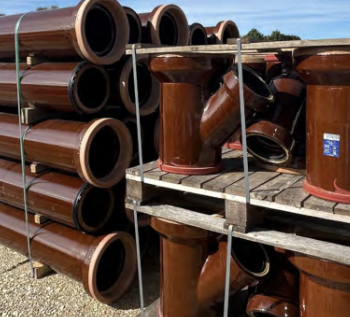
Why vitrified clay pipes are reclaiming their role in built projects.
Research by construction PR consultancy LMC published.
Roles and responsibilities of domestic clients

ACA Safety in Construction guide for domestic clients.
Fire door compliance in UK commercial buildings

Architect and manufacturer gives their low down.
Plumbing and heating for sustainability in new properties
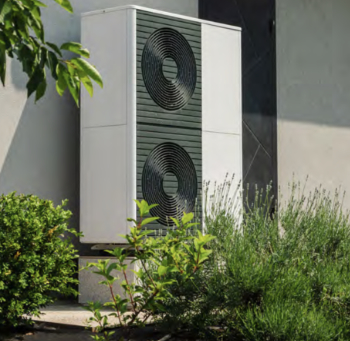
Technical Engineer runs through changes in regulations, innovations in materials, and product systems.
Awareness of the Carbon Border Adjustment Mechanism
What CBAM is and what to do about it.
The new towns and strategic environmental assessments

12 locations of the New Towns Taskforce reduced to 7 within the new towns draft programme and open consultation.

Buildings that changed the future of architecture. Book review.
The Sustainability Pathfinder© Handbook
Built environment agency launches free Pathfinder© tool to help businesses progress sustainability strategies.

Government outcome to the late payment consultation, ECA reacts.
IHBC 2025 Gus Astley Student Award winners

Work on the role of hewing in UK historic conservation a win for Jack Parker of Oxford Brookes University.
Future Homes Building Standards and plug-in solar
Parts F and L amendments, the availability of solar panels and industry responses.
How later living housing can help solve the housing crisis

Unlocking homes, unlocking lives.
Preparing safety case reports for HRBs under the BSA

A new practical guide to preparing structural inputs for safety cases and safety case reports published by IStructE.
Male construction workers and prostate cancer

CIOB and Prostate Cancer UK encourage awareness of prostate cancer risks, and what to do about it.