






RIBA Stirling Prize winners' open letter declaring climate and biodiversity emergency

|
| Below is the text of the open letter from RIBA Stirling Prize winners declaring a climate and biodiversity emergency. |
Contents |
[edit] An open letter
The twin crises of climate breakdown and biodiversity loss are the most serious issue of our time. Buildings and construction play a major part, accounting for nearly 40% of energy-related carbon dioxide (CO2) emissions while also having a significant impact on our natural habitats.
For everyone working in the construction industry, meeting the needs of our society without breaching the earth’s ecological boundaries will demand a paradigm shift in our behaviour. Together with our clients, we will need to commission and design buildings, cities and infrastructures as indivisible components of a larger, constantly regenerating and self-sustaining system.
The research and technology exist for us to begin that transformation now, but what has been lacking is collective will. Recognising this, we are committing to strengthen our working practices to create architecture and urbanism that has a more positive impact on the world around us.
We will seek to:
- Raise awareness of the climate and biodiversity emergencies and the urgent need for action among our clients and supply chains;
- Advocate for faster change in our industry toward regenerative design practices and a higher governmental funding priority to support this;
- Establish climate and biodiversity mitigation principles as the key measure of our industry’s success, demonstrated through awards, prizes and listings;
- Share knowledge and research to that end on an open-source basis;
- Evaluate all new projects against the aspiration to contribute positively to mitigating climate breakdown and encourage our clients to adopt this approach;
- Upgrade existing buildings for extended use as a more carbon-efficient alternative to demolition and new build whenever there is a viable choice;
- Include lifecycle costing, whole-life carbon modelling and post-occupancy evaluation as part of our basic scope of work, to reduce both embodied and operational resource use;
- Adopt more regenerative design principles in our studios, with the aim of designing architecture and urbanism that goes beyond the standard of net zero carbon in use;
- Collaborate with engineers, contractors and clients to further reduce construction waste;
- Accelerate the shift to low embodied carbon materials in all our work, and
- Minimise wasteful use of resources in architecture and urban planning, both in quantum and in detail.
We hope that every UK architectural practice will join us in making this commitment.
Along with 16 other UK winners of the RIBA Stirling Prize, Haworth Tompkins has signed an open letter declaring a climate and biodiversity emergency, making a commitment to positive action in response and inviting all UK architectural practices to add their names.
To do this, please go to www.architectsdeclare.com, #architectsdeclare
[edit] Signatories
- AL_A
- Alison Brooks Architects
- Alford Hall Monaghan Morris
- Caruso St John
- David Chipperfield
- dRMM
- Haworth Tompkins
- Hodder + Partners
- Maccreanor Lavington
- Michael Wilford
- Rogers Stirk Harbour + Partners
- Stanton Williams
- WilkinsonEyre
- Witherford Watson Mann
- Zaha Hadid Architects
[edit] Ivan Harbour, Senior Partner, Rogers Stirk Harbour + Partners
"The government's declaration of a climate emergency confirms that 30 years of slowly moving towards sustainable construction has not been enough and we now need to go much further, much faster. The work we take on as architects today will endure for the next century and beyond, with our clients and the industry, if we are to help safeguard the future for all."
[edit] About the architect Rogers Stirk Harbour + Partners
Rogers Stirk Harbour + Partners is an international architectural practice based in London. Over the past four decades, RSHP has attracted critical acclaim and awards with built projects across Europe, the Americas, Asia and Australia.
The practice is experienced in designing a wide range of building types, including office, residential, transport, education, culture, leisure, retail, civic and healthcare. The quality of its designs has been recognised with some of architecture’s highest awards, including two RIBA Stirling Prizes, one in 2006 for Terminal 4, Madrid Barajas Airport and the other in 2009 for Maggie’s West London Centre.
A deep belief in the importance of sustainability has underscored the firm’s work since the early days, and recent and ongoing projects such as the extension to the London School of Economics, the New Cancer Centre at Guy’s Hospital, International Towers Sydney and the extension to the British Museum exemplify this belief with a range of environmental features built into the fabric of the building.
Since the early days of the Lloyd’s building in the 1970s, the practice has produced innovative, beautiful, sustainable and practical architecture which creatively solves problems for clients. A focus on providing flexible spaces separated from service elements means RSHP’s buildings are adaptable and resilient in a world where technology is changing rapidly.
The firm was founded as the Richard Rogers Partnership in 1977 but over time evolved and in 2007 the decision was made to rename the firm Rogers Stirk Harbour + Partners to reflect the vital contributions of Graham Stirk, designer of the iconic Leadenhall Building and Protos Winery, and Ivan Harbour, whose residential scheme for homeless families, PLACE/Ladywell, won the Mayor of London’s prize for the project that best creatively contributes to the capital’s economy. The practice now has 13 partners, with several long-standing members of the practice being named partners in 2015. Together, they represent the inherent continuity and consistency of the philosophy which the practice applies to all its work.
[edit] About this article
This article was written by Rogers Stirk Harbour + Partners (RSH+P). It was first published on its website in May 2019 and can be accessed here.
[edit] Related articles on Designing Buildings Wiki
- Biophilic design.
- BREEAM launches local planning authority guidance.
- BREEAM Responsible sourcing of materials.
- Circular economy in the built environment.
- Climate change science.
- Community energy network.
- CRC Energy Efficiency Scheme.
- Designing future heritage buildings
- Earth overshoot day.
- Ecological impact assessment.
- Emission rates.
- Energy.
- Energy Act.
- Energy certificates.
- Energy Performance Certificates.
- Energy Related Products Regulations.
- Energy targets.
- Environmental impact assessment.
- Environmental legislation.
- FutuREstorative - review.
- Green building.
- Intergovernmental Panel on Climate Change.
- Mean lean green.
- National Planning Policy Framework.
- Passivhaus.
- Reduce, reuse, recycle.
- Site waste management plan.
- Sustainable development.
- Sustainable materials.
- Sustainable procurement.
- Sustainable urban drainage systems.
- The Carbon Plan: Delivering our low carbon future.
- UK Climate Change Risk Assessment.
- U-value.
- Zero carbon homes.
- Zero carbon non-domestic buildings.
--RSHP
Featured articles
Check out some of the best features and news from Designing Buildings as well as key stories from around the web.
The importance of early engagement
Construction lessons from the Trillium HealthWorks Experience Centre.
Mayors are to be given planning call in powers
Mayors across England will be able to make the most important planning decisions.
The Master Builder: William Butterfield and his times. Book review.

Why construction can't afford to ignore the skills gap.
Building Safety Regulator, 19 August

Gill Kernick appointed Independent Chair of Residents’ Panel.
Connecting knowledge, technology and conservation
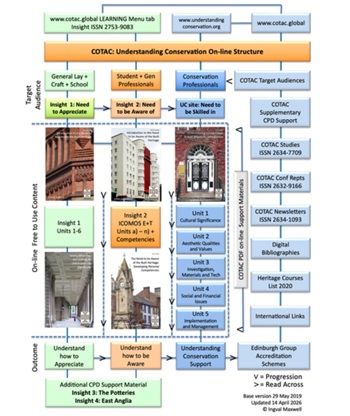
Building competence for the future of built heritage.
Building Regulations and Building Safety Act

CIOB publishes free advice for non-domestic clients.

Building Safety Newsletter from MHCLG.
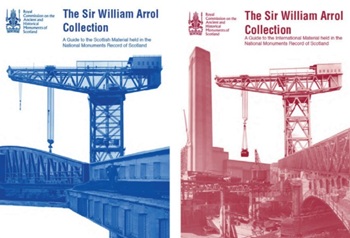
An extraordinary record of steel engineering worldwide.

Households living near new pylons to save on bills.

ECA warns growth must not outpace grid capacity or skills.
The role of the client and decision making

CIOB response to built environment professions call for evidence.