






Queensferry crossing

Contents |
[edit] Introduction
Scotland’s magnificent new road bridge across the Forth estuary, the Queensferry Crossing, opened in 2017. Extraordinarily in an age when big projects are often in the headlines for spiralling costs, it has been procured for around a third of its original budget.
It is the centrepiece of a major upgrade to the important cross-Forth transport corridor in the east of Scotland, representing a total Scottish government investment of £1.35bn.
The new 2.7 km structure is the longest three-tower, cable-stayed bridge in the world, as well as by far the largest to feature cables which cross mid-span.
The original bridge design was estimated to cost between £3.2bn and £4.2bn. By extending the life of the adjacent 1964 Forth Road Bridge for light public-transport use and by making clever use of existing road space, however, the cost has been cut by nearly two-thirds.
[edit] Reassessing the old bridge
According to Shackman, "following ministerial announcement at the end of 2007, no future functional use of the existing road bridge was envisaged. But in early 2008, a second investigation gave an improved prognosis for the rate of cable deterioration. This, together with removal of general traffic – which constitutes some 15% of the cable loading – provided hope that a functional use for the existing road bridge might be possible.
"The existing bridge had also been ruled out as unsuitable for future light rail use. However, we felt this finding should be challenged, particularly in relation to perceived problems with rotations at expansion joints. A feasibility study was therefore carried out to evaluate the suitability of the suspension bridge to carry a future light rail system (Hussain et al., 2011).
"This demonstrated that the Forth Road Bridge could provide a public transport corridor, initially for buses, but which could be developed to accommodate light rail or trams if required in the future.
"Additionally, if the Forth Road Bridge was to be retained then it could also continue to accommodate the pedestrian and cyclist facilities. The new bridge could therefore be slimmed down significantly."
[edit] Intelligent transport system
Climie says, "In conjunction with the feasibility study on the existing bridge, it was recognised in view of the high cost estimate that the project should be subject to a thorough value-engineering exercise, making best use of existing infrastructure where possible.
"A total of nine main options were considered to connect the new bridge to the M9 and to M90 motorways either side. All options were assessed in relation to a number of factors including cost, environmental impact, connectivity, traffic routing, design standards – in particular junction spacing – and ground conditions.
"In addition, the use of an intelligent transport system, involving variable mandatory speed limits and variable message signs, was deemed to be a pragmatic way of managing the relatively heavy traffic flows along the project corridor and helping to minimise new road construction. The 22 km long, state-of-the-art intelligent transport system will be the first such application of this technology in Scotland."
[edit] Completion and opening
On 30th August 2017, the Queensferry Crossing officially opened to traffic. Despite severe weather hampering the timetable for delivery, the project was hailed by the Scottish Government for coming in £245m under its spending budget.
The finest examples of civil engineering from the last three centuries now sit side by side by side across the Forth Estuary. Each bridge represented a leap in engineering at the time and broke new records.
The iconic Forth Bridge carrying the railway across the Forth is a Unesco world heritage site. Its solid 19th century design was born in part out of the tragic collapse of the nearby Tay Bridge 11 years earlier. The structure was built out from the piers or supports - the longest single cantilever bridge in the world exceeded only by Québec Bridge some 40 years later after several failed attempts.
The 20th century Forth Road Bridge was the longest suspension bridge in Europe when it opened in 1966. A much lighter and visibly more modern structure with the road suspended from steel cables - the first time this kind of bridge had been built in such a harsh climate. Suspension bridges are widely used around the world in preference to cantilever bridges for long spans but are vulnerable to the single point risk of weakening in the two critical cables.
The 21st century Queensferry Crossing represents another stride in engineering innovation. The wonderful slender structure is again a record holder but the greatest step forward from the 20th century bridge is in resilience. The cable-stayed design with the road supported by many smaller cables brings resilience to the structure, with all the cables individually replaceable. The wind shielding along the roadway brings resilience for users, with the bridge capable of staying open in much higher winds.
This article was originally published as 'Buying Scotland's big new bridge' on 7 Nov 2016 by ICE. It was written by Simon Fullalove. It also takes content from the article 'Three bridges, three centuries', published by ICE on 30 Aug 2017, written by Sara Thiam.
--The Institution of Civil Engineers
[edit] Related articles on Designing Buildings Wiki
- Articles by ICE on Designing Buildings Wiki.
- Assessing bridges.
- Bridge construction.
- Bridge Engineering Exhibition.
- Bridges of the world.
- ICE Peoples Choice Award 2017.
- State Route 520 Floating Bridge.
- Road construction.
- Structural Health Monitoring SHM.
- The Millau Viaduct.
- Upper Orwell Crossings Project, Ipswich.
Featured articles and news
Costs and insolvencies mount for SMEs, despite growth

Construction sector under insolvency and wage bill pressure in part linked to National Insurance, says report.
The place for vitrified clay pipes in modern infrastructure
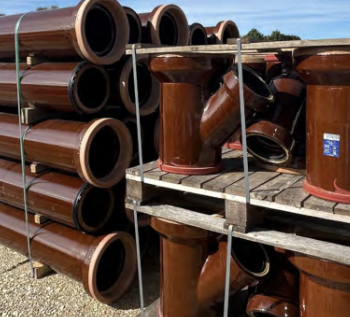
Why vitrified clay pipes are reclaiming their role in built projects.

Research by construction PR consultancy LMC published.
Roles and responsibilities of domestic clients

ACA Safety in Construction guide for domestic clients.
Fire door compliance in UK commercial buildings

Architect and manufacturer gives their low down.
Plumbing and heating for sustainability in new properties
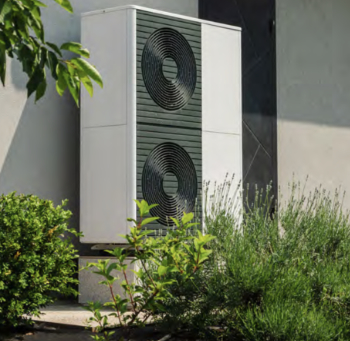
Technical Engineer runs through changes in regulations, innovations in materials, and product systems.
Awareness of the Carbon Border Adjustment Mechanism
What CBAM is and what to do about it.
The new towns and strategic environmental assessments
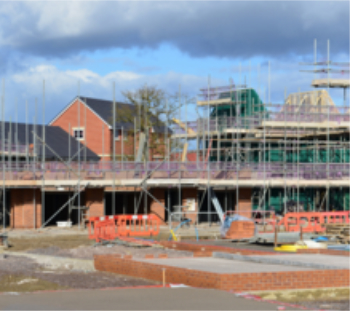
12 locations of the New Towns Taskforce reduced to 7 within the new towns draft programme and open consultation.
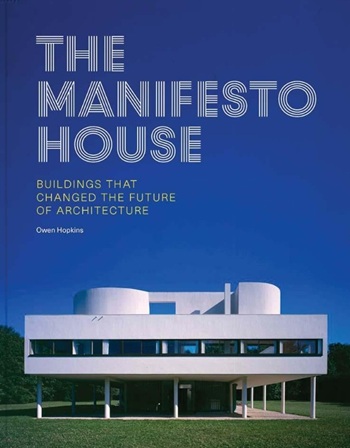
Buildings that changed the future of architecture. Book review.
The Sustainability Pathfinder© Handbook
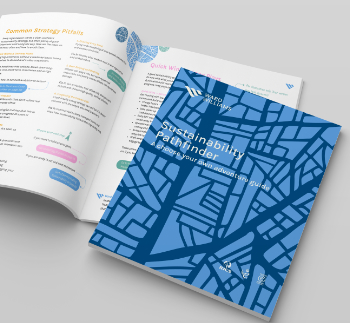
Built environment agency launches free Pathfinder© tool to help businesses progress sustainability strategies.

Government outcome to the late payment consultation, ECA reacts.
IHBC 2025 Gus Astley Student Award winners
Work on the role of hewing in UK historic conservation a win for Jack Parker of Oxford Brookes University.
Future Homes Building Standards and plug-in solar
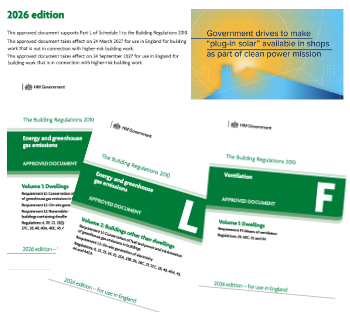
Parts F and L amendments, the availability of solar panels and industry responses.
How later living housing can help solve the housing crisis
Unlocking homes, unlocking lives.
Preparing safety case reports for HRBs under the BSA
A new practical guide to preparing structural inputs for safety cases and safety case reports published by IStructE.
Male construction workers and prostate cancer

CIOB and Prostate Cancer UK encourage awareness of prostate cancer risks, and what to do about it.