






Qualifying as a professional electrician

|
| This article addresses the age-old question: what constitutes a qualified, professional electrician? |
Contents |
[edit] Introduction
For many years now, there has been increasing concern across the industry about ‘five-week wonder’ electrical courses and similar training programmes that purport to qualify individuals to an industry standard.
Numerous employers have first-hand experience of applicants turning up with certificates from courses which they may have paid thousands of pounds for, but which have no value or recognition in the industry. The individuals in question have often spent their money in the belief that they are doing the right thing, but they are usually left with limited options for employment and progression.
[edit] Money matters
A technical apprenticeship remains the industry’s preferred entry point. However, some training providers' websites perpetuate outdated information, stating that apprenticeships can not be funded for those over 19 - which is completely incorrect. In England, companies can now get funding to take on an apprentice at any age.
With the financial support available, apprenticeships can also be a great option for employers to upskill more experienced workers to gain a formal qualification. Many employers will be unaware that the apprenticeship standard can be used for this purpose. Providing the employee requires a minimum of 12 months of development, with 20 percent of this being allocated for ‘off the job’ training such as in the classroom, supervised work, or coaching, for instance, it is worth investigating funding in this area.
In addition to adult apprenticeships, there are also routes such as the JIB Mature Candidate Assessment to qualify those with existing industry knowledge, skills and experience.
The promotional information given by training providers may well confuse many potential trainees. Websites often offer packages labelled as ‘gold’, ‘silver’ and ‘bronze’ which claim to transform an individual into a professional electrician. But close inspection of the smaller print often reveals that an individual also needs to be working in the industry to achieve these levels (which many applicants are not). Furthermore, the package may include a cost for onsite assessment at a future point - assessments which would have been funded if the individual was on an apprenticeship.
[edit] Three-pronged plan
The Electrotechnical Skills Partnership (TESP) is highly aware of the issues these training programmes are causing and the detrimental affect they are having on the industry. To address this, TESP is currently working on an ‘Industry Approved’ qualifications campaign which it aims to launch later in 2019.
There are three main strands to this campaign:
- First, it is important to develop improved guidance and information on routes into the industry, and which qualifications are recognised or valued, so those paying for training or enrolling on a full-time course understand what they are getting. The new Electrical Careers website will be a focal point for this, and we will also develop a ‘TESP Industry Approved’ logo which will be used for designated qualifications.
- Second, we will work with the main awarding organisations to review their offer and explore the potential for rationalising qualifications and providing better information for candidates and training providers. Following initial analysis, TESP is already concerned about the proliferation of meaningless qualifications that contain no work-based learning and have no apparent value to the industry.
- Third, we will engage directly with numerous training providers, particularly those referring to ECA, ECS or JIB recognition or affiliation. The more robust process being introduced for ECA Educational Associates will also help to ensure that anyone holding Associate status complies with best practice.
[edit] What’s next?
Broader developments might also be moving in favour of robust, competence-based qualifications. ECA and other partners have been working hard to secure improvements to the Electrotechnical Assessment Specification (EAS), which defines how certification bodies assess the electrotechnical capability of organisations.
These include proposals to close-off alternative routes to ‘Qualified Supervisor’ status, other than completion of a relevant apprenticeship and/or level 3 diploma, and further reinforcement of the duty of each organisation to properly ensure individuals’ qualifications and competence.
In the current landscape, increasing importance is attached to evidence that individuals are appropriately qualified and competent to do their job. The TESP Industry Approved qualifications campaign will be a further step towards achieving this goal within our industry.
Further information is available from www.the-esp.org.uk
[edit] About this article
This article was written by Ruth Devine, Managing Director of SJD Electrical and Chair of TESP. It previously appeared under the title 'Not all roads lead to qualification' in the Autumn 2019 issue of ECA Today (magazine of the Electrical Contractors' Association) pp24-26, and can be accessed HERE.
More articles by ECA on Designing Buildings Wiki can be accessed HERE.
[edit] Related articles on Designing Buildings Wiki
- Articles about electricity.
- Consumer electronics.
- Consumer unit.
- ECA articles.
- Electrical appliance.
- Electrical consumption.
- Electrical energy.
- Electrical equipment.
- Electrical installation.
- Electrical power.
- Electrical safety.
- Electrical system.
- Electrical wiring.
- Electrician.
- Electricity bill.
- Is social media the new way to plug the gender skills gap?
- Professional Qualifications Bill.
- What’s the best way into the industry?
--ECA
Featured articles and news
Costs and insolvencies mount for SMEs, despite growth

Construction sector under insolvency and wage bill pressure in part linked to National Insurance, says report.
The place for vitrified clay pipes in modern infrastructure
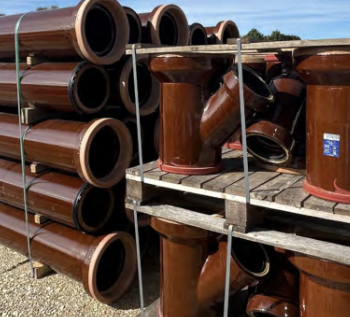
Why vitrified clay pipes are reclaiming their role in built projects.

Research by construction PR consultancy LMC published.
Roles and responsibilities of domestic clients

ACA Safety in Construction guide for domestic clients.
Fire door compliance in UK commercial buildings

Architect and manufacturer gives their low down.
Plumbing and heating for sustainability in new properties

Technical Engineer runs through changes in regulations, innovations in materials, and product systems.
Awareness of the Carbon Border Adjustment Mechanism
What CBAM is and what to do about it.
The new towns and strategic environmental assessments

12 locations of the New Towns Taskforce reduced to 7 within the new towns draft programme and open consultation.

Buildings that changed the future of architecture. Book review.
The Sustainability Pathfinder© Handbook
Built environment agency launches free Pathfinder© tool to help businesses progress sustainability strategies.

Government outcome to the late payment consultation, ECA reacts.
IHBC 2025 Gus Astley Student Award winners

Work on the role of hewing in UK historic conservation a win for Jack Parker of Oxford Brookes University.
Future Homes Building Standards and plug-in solar
Parts F and L amendments, the availability of solar panels and industry responses.
How later living housing can help solve the housing crisis

Unlocking homes, unlocking lives.
Preparing safety case reports for HRBs under the BSA
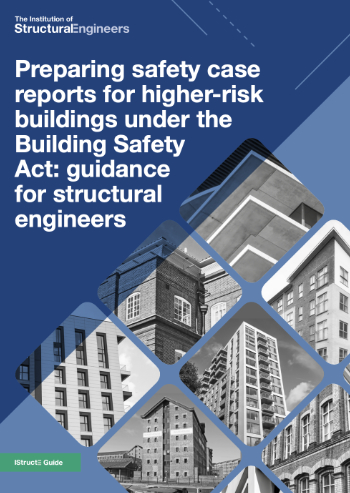
A new practical guide to preparing structural inputs for safety cases and safety case reports published by IStructE.
Male construction workers and prostate cancer

CIOB and Prostate Cancer UK encourage awareness of prostate cancer risks, and what to do about it.