





Public in building design and construction

The term ‘public’ can be used in a number of different ways:
- It can be used as a noun to refer to the ‘body politic’ or the citizens of a nation, state, or other community-at-large. (Also 'general public'.)
- It can be used as an adjective to describe a space, place or building that is open to all for common use as opposed to be privately owned and off-limits to general access.
- It can refer to the public sector, that is, the part of the economy that consists of public services and public enterprises that are owned and operated by the government.
The term 'public project' is an ambiguous one, but in very broad terms, it refers to a project that is financed (or part financed) by a government and is typically owned, and may be operated by the government. This can include major infrastructure works such as roads, bridges, dams, railways, tunnels, and so on, or public facilities such as hospitals, schools, prisons, libraries, leisure centres, and so on. Designing Buildings Wiki has an outline work plan setting out the tasks necessary to complete a public project, which you can find here.
A public contracting authority is defined in the Public Contracts Regulations 2015 as; ‘…the State, regional or local authorities, bodies governed by public law or associations formed by one or more such authorities or one or more such bodies governed by public law, and includes central government authorities, but does not include Her Majesty in her private capacity.’ For more information, see Public contracting authority.
A public space is an area that tends to be open and accessible to all people. This includes roads, pavements, town squares, parks, beaches, and to a more limited extent public buildings such as town halls and libraries. The term 'common land' is sometimes used to refer to land in public ownership or to which everyone has access. To have such status, land must be legally registered as a common.
In the UK, a public building is narrowly defined as a building that is ‘occupied by a public authority and frequently visited by the public’. For more information, see Public building definition.
Public rights of way are a general right to access across land. A public right of way can be established by:
- Express dedication, where a landowner has given the public the right.
- Presumed dedication, where a right of way has been in use for longer than can be remembered.
- Deemed dedication, where a right of way has been used for 20 years or more.
For more information, see Rights of way.
Personal injury or death, or loss or damage to property of third parties is covered by public liability insurance. Public liability insurance might cover against claims by:
For more information, see Public liability insurance.
Designing Buildings Wiki has a range of articles relating to the public, including:
- An Architect's Guide to Public Procurement.
- BREEAM Public Transport Accessibility.
- Community.
- Complaining about construction sites.
- Improving Public Services through better construction.
- Public authority.
- Public body.
- Public building.
- Public contract.
- Public contracting authority.
- Public good.
- Public health consultant.
- Public procurement.
- Public project.
- Public private partnerships PPP.
- Public realm.
- Public sector.
- Public sector comparator.
- Public services.
- Public Services (Social Value) Act.
- Public space.
- Public space intervention.
- Public v private sector housing.
- Society.
- Terraced houses and the public realm
Featured articles and news
The roofscape of Hampstead Garden Suburb
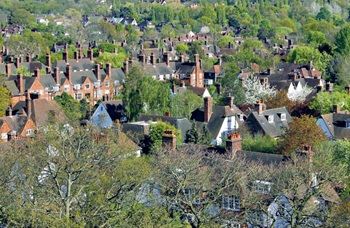
Residents, architects and roofers need to understand detailing.
Homes, landlords. tenants and the new housing standards
What will it all mean?
The Architectural Technology podcast: Where it's AT

Catch-up on the latest episodes.
Edmundson Apprentice of the Year award 2026

Entries now open for this Electrical Contractors' Association award.

Traditional blue-grey slate from one of the oldest and largest UK slate quarries down in Cornwall.

There are plenty of sources with the potential to be redeveloped.
Change of use legislation breaths new life into buildings

A run down on Class MA of the General Permitted Development Order.
Solar generation in the historic environment
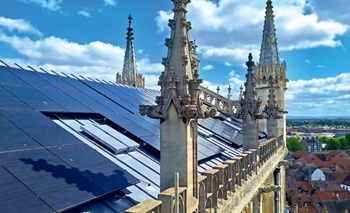
Success requires understanding each site in detail.
Level 6 Design, Construction and Management BSc

CIOB launches first-ever degree programme to develop the next generation of construction leaders.
Open for business as of April, with its 2026 prospectus and new pipeline of housing schemes.
The operational value of workforce health

Keeping projects moving. Incorporating unplanned absence and the importance of health, in operations.
A carbon case for indigenous slate
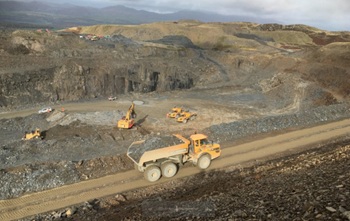
UK slate can offer clear embodied carbon advantages.
Costs and insolvencies mount for SMEs, despite growth

Construction sector under insolvency and wage bill pressure in part linked to National Insurance, says report.
The place for vitrified clay pipes in modern infrastructure
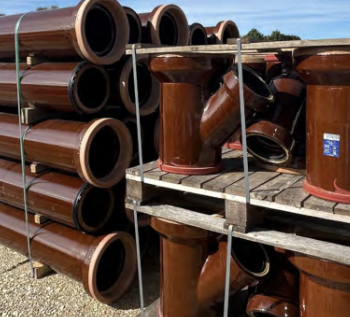
Why vitrified clay pipes are reclaiming their role in built projects.
Research by construction PR consultancy LMC published.
Roles and responsibilities of domestic clients
ACA Safety in Construction guide for domestic clients.