





Popular UK Applications for Self-Loading Concrete Mixers (From Driveways to Foundations)
The self-loading concrete mixer has found a natural home in the United Kingdom's diverse construction landscape. From the narrow lanes of Cornwall to the suburban extensions of Greater Manchester, these versatile machines are displacing traditional ready-mix deliveries and manual mixing methods. The reason is simple. Self loading concrete mixer offers independence, precision, and mobility that align with the fragmented, site-specific nature of UK residential and commercial projects. This article describes the most popular applications for self-loading mixers across the UK. It examines driveway installations, foundation pours, agricultural works, and small-scale infrastructure. For each application, the analysis explains why the self-loading configuration offers advantages over conventional alternatives. Contractors who understand these applications can deploy self-loading mixers to expand their service offerings and improve project margins.
Contents |
[edit] Residential Driveways and Patios
The typical UK residential driveway project presents a logistical paradox. The concrete volume is too small for a ready-mix truck to deliver economically. Many ready-mix suppliers impose minimum order quantities of 6 to 8 cubic meters. A driveway may require only 3 to 5 cubic meters. The contractor who orders ready-mix pays for concrete they do not need or faces a surcharge for a small load. Manual mixing using a portable drum mixer is an alternative. It is also labour-intensive. Two workers mixing bags of cement and shovelling aggregate can produce 2 cubic meters per hour under ideal conditions. The labour cost is significant. The quality is variable. The self-loading mixer bridges this gap. The machine produces 3 to 5 cubic meters per hour with one operator. The material cost is lower because the contractor buys aggregates and cement in bulk rather than bagged products. The quality is consistent because the machine weighs ingredients rather than measuring them by shovel. For the UK driveway contractor, the self-loading mixer is not a luxury. It is a productivity tool that pays for itself within a few projects.

Beyond standard driveways, the self-loading mixer enables specialised applications. Pattern imprinted concrete requires precise control of slump and setting time. A mix that is too wet will not hold the imprint. A mix that is too dry will not flow into the mould. The self-loading mixer's ability to adjust water addition on the fly gives the operator real-time control. The contractor can test a small batch, adjust the slump, and then produce the remaining volume consistently. This capability is difficult to achieve with ready-mix delivered from a distant plant. The driver cannot adjust the mix once it leaves the batching facility. The self-loading mixer puts control in the hands of the person placing the concrete. For decorative work, that control is decisive.
[edit] Foundations and Strip Footings
Foundation pours demand continuous concrete supply. A strip footing for a house extension may require 8 to 12 cubic meters. The pour must be completed without interruption to avoid cold joints. Ready-mix trucks can provide continuous supply if the site has good access and the supplier has sufficient fleet capacity. On constrained UK sites—terraced houses with rear access only—truck access may be impossible. The self-loading mixer solves this problem. The machine is positioned at the nearest accessible point. The operator produces batches continuously. The concrete is transported to the footing by wheelbarrow, dumper, or pump. The pour proceeds without interruption. The contractor is not dependent on a ready-mix supplier's schedule or fleet availability. This independence is particularly valuable in rural areas where ready-mix plants are distant and delivery charges are high.
The self-loading mixer excels on sites where ready-mix trucks cannot reach. A hillside extension in the Peak District. A barn conversion in the Cotswolds. A new build on a narrow plot in a conservation area. In each case, the access road may be too narrow, the turning circle too tight, or the ground too soft for a 32-tonne concrete truck. The self loading concrete mixer for sale UK, typically weighing 5 to 10 tonnes, navigates these constraints. The machine can be delivered on a flatbed lorry and unloaded with a small crane or by driving off ramps. Once on site, it manoeuvres into position. The contractor produces concrete where it is needed, eliminating the need for double-handling. The cost premium for a self-loading mixer is justified by the ability to bid on projects that competitors cannot access.
[edit] Agricultural and Equestrian Construction
The agricultural sector in the UK is a significant consumer of concrete. Farm buildings require floor slabs. Livestock housing requires slatted floors. Silage clamps require reinforced walls. These projects are often located on working farms, where access for ready-mix trucks is complicated by mud, livestock, and narrow farm tracks. The self-loading mixer is well-suited to this environment. The machine can be towed behind a farm tractor. It can operate on rough ground that would defeat a concrete truck. The operator can batch concrete using aggregates stockpiled on the farm. The independence from external suppliers is valuable to farmers who prefer to control their own schedules. The self-loading mixer also produces small batches economically. A slatted floor pour may require 2 cubic meters. A ready-mix supplier may refuse the order or charge a premium. The self-loading mixer owner produces the required volume without negotiation or delay.

Equestrian construction has specific concrete requirements. Stable floors must be durable, non-slip, and easy to clean. Arena surfaces may include concrete perimeter beams and drainage channels. These projects are typically located in rural areas, distant from ready-mix plants. The self-loading mixer enables the contractor to produce concrete on site, using materials sourced locally. The quality control is superior to manual mixing. The labour requirement is reduced. The contractor who invests in a self-loading mixer can build a profitable niche in agricultural and equestrian construction, serving customers who value reliability and responsiveness over the lowest price.
[edit] Small-Scale Infrastructure and Utilities
The utilities sector requires concrete for a range of small-scale applications. Manhole chamber covers. Trench backfill for fibre optic or water pipe installations. Concrete bases for telecom cabinets or electrical substations. These pours are typically small—1 to 3 cubic meters—and widely distributed. A contractor covering a geographic area may perform multiple small pours in a single day. A ready-mix truck delivering to each site would be inefficient. The self-loading mini cement mixer solves this problem. The contractor loads the machine with materials at a central yard, travels to the first site, produces the required concrete, travels to the next site, and repeats. The machine serves as a mobile batching plant. This operating model is particularly effective for contractors working on long-term utility framework agreements. The self-loading mixer reduces transport costs, eliminates concrete waste, and improves schedule flexibility.
Local authority footpath and cycleway projects require concrete for foundations, edgings, and drainage channels. These projects are often located in residential areas where access is constrained and noise restrictions apply. The self-loading mixer's compact size and relatively quiet operation (compared to a ready-mix truck) are advantages. The contractor can produce concrete on site without disturbing residents or blocking narrow streets. The quality of the concrete is controlled by the operator, ensuring that the mix meets the specification for the application. For local authorities seeking to reduce disruption and improve project delivery times, contractors equipped with self-loading mixers offer a compelling proposition.
Featured articles
Check out some of the best features and news from Designing Buildings as well as key stories from around the web.

CIAT publishes briefing on planning reforms.
Leaders in Learning for Practice Network

Call for conservation leaders in learning to register interest in new network.
The importance of early engagement

Construction lessons from the Trillium HealthWorks Experience Centre.
Mayors are to be given planning call in powers

Mayors across England will be able to make the most important planning decisions.

The Master Builder: William Butterfield and his times. Book review.

Why construction can't afford to ignore the skills gap.
Building Safety Regulator, 19 August

Gill Kernick appointed Independent Chair of Residents’ Panel.
Connecting knowledge, technology and conservation
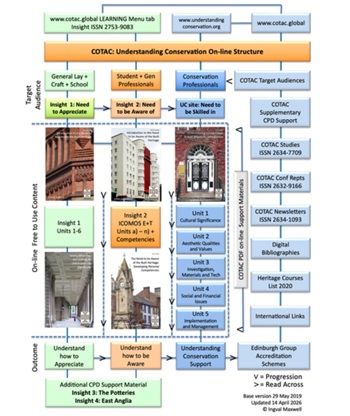
Building competence for the future of built heritage.
Building Regulations and Building Safety Act

CIOB publishes free advice for non-domestic clients.

Building Safety Newsletter from MHCLG.

An extraordinary record of steel engineering worldwide.

Households living near new pylons to save on bills.