







How to make projects off-site ready
In 2019, UK government departments will favour bids for construction contracts that offer off-site manufacturing. Gavin White and Andrew Mather of Ramboll offer guidance to civil engineers on how to make projects ‘off-site ready’.

Contents |
[edit] Introduction
Off-site construction encompasses a huge range of disciplines and systems. From factory made concrete, steel and cross-laminated timber components to facade units complete with windows and balconies and modular plant rooms.
However, understanding the off-site benefits for a particular project can be challenging – and only fully realised through a co-ordinated and detailed approach.
While knowledge of off-site construction has been developing in the industry for many years, it remains a diverse and fragmented market.
Realising the benefits of off-site manufacturing for a particular project requires a project-specific, holistic review based on important lessons learned over the past decade.
[edit] Understanding constraints
Off-site construction will only deliver value if its constraints are fully understood and lead the design approach.
These constraints can be of manufacture, handling, transportation, lifting or installation, or project site-specific criteria.
Each part is important and should not be overlooked to avoid expensive bespoke solutions late in the project.
The constraints of off-site construction must also be considered holistically by all engineering disciplines. Acoustics, daylight assessments, sustainability criteria, facade details, and more must all be developed closely with the architectural, structural and mechanical, electrical and plumbing (MEP) designs from an early stage.
Furthermore, the technical design must align with the procurement, cash flow, supplier availability and client’s funding mechanism.
[edit] Off-site reviews
Understanding constraints and involving all disciplines are the basis of Ramboll’s project-specific ‘off-site reviews’ that we are now offering for free on their website.
These are in-depth holistic reviews to find the right off-site systems for a project and culminates in a score for how ‘off-site ready’ the project is. This provides an immediate and comparable indication of the relative merits of different techniques.
A recent example application is the Victoria Quarter in Ashford, Kent. This residential development by Neighbour consists of seven buildings of six to seven storeys, with the majority of flat layouts standardised.
Taking into account the client’s aims for the site and key drivers, Ramboll used digital tools linked to their off-site technical database to undertake rapid option assessment of the building forms for the site, ranging from in situ concrete floors, walls and columns to fully fitted steel-frame modules. A master planning tool then determined the off-site approaches that best aligned with the client’s needs.
Alongside technical analysis, the overall approaches to off-site construction were also assessed, including procurement, Building Information Modelling (BIM) and design collaboration, to highlight opportunities for further value. This was compared with industry peers in the project’s off-site-ready score, with benchmarks and further details on how to maximise value.
[edit] Conclusion
Construction is changing, with higher standards expected and improvements in delivery time of 50% demanded by the UK government in its Construction 2025 industrial strategy.
The housing shortage fuels the need for change, while regulation and industry adoption of BIM create opportunities for data-driven construction techniques.
Off-site construction and digital design are well-placed to deliver in this space. Indeed, in last year’s Autumn Budget, chancellor Philip Hammond said government departments will, ‘adopt a presumption in favour of offsite construction by 2019’ (ref. HM Treasury, 2017).
Market-leading developers and new disruptors alike are already targeting the off-site market – the rest of construction industry now needs to keep up.
This article was originally published here by ICE on 9 August 2018. It was written by Gavin White and Andrew Mather.
--The Institution of Civil Engineers
[edit] Related articles on Designing Buildings Wiki
Featured articles and news
Costs and insolvencies mount for SMEs, despite growth

Construction sector under insolvency and wage bill pressure in part linked to National Insurance, says report.
The place for vitrified clay pipes in modern infrastructure
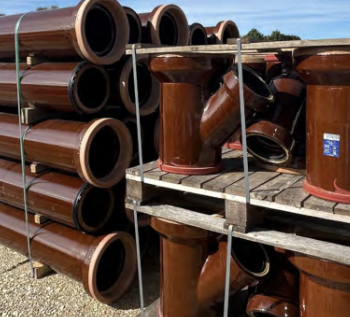
Why vitrified clay pipes are reclaiming their role in built projects.

Research by construction PR consultancy LMC published.
Roles and responsibilities of domestic clients

ACA Safety in Construction guide for domestic clients.
Fire door compliance in UK commercial buildings

Architect and manufacturer gives their low down.
Plumbing and heating for sustainability in new properties

Technical Engineer runs through changes in regulations, innovations in materials, and product systems.
Awareness of the Carbon Border Adjustment Mechanism
What CBAM is and what to do about it.
The new towns and strategic environmental assessments
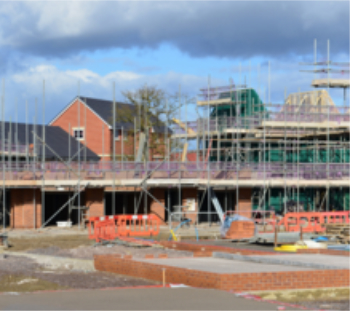
12 locations of the New Towns Taskforce reduced to 7 within the new towns draft programme and open consultation.

Buildings that changed the future of architecture. Book review.
The Sustainability Pathfinder© Handbook
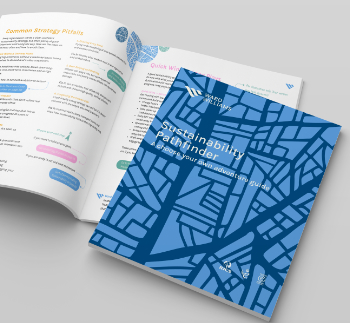
Built environment agency launches free Pathfinder© tool to help businesses progress sustainability strategies.

Government outcome to the late payment consultation, ECA reacts.
IHBC 2025 Gus Astley Student Award winners

Work on the role of hewing in UK historic conservation a win for Jack Parker of Oxford Brookes University.
Future Homes Building Standards and plug-in solar
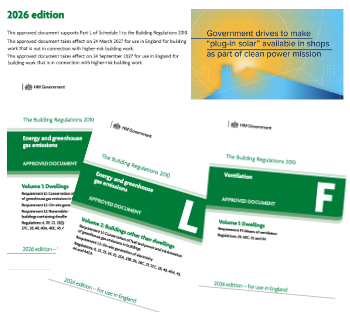
Parts F and L amendments, the availability of solar panels and industry responses.
How later living housing can help solve the housing crisis

Unlocking homes, unlocking lives.
Preparing safety case reports for HRBs under the BSA
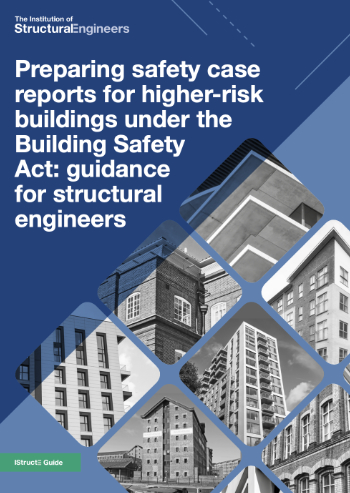
A new practical guide to preparing structural inputs for safety cases and safety case reports published by IStructE.
Male construction workers and prostate cancer

CIOB and Prostate Cancer UK encourage awareness of prostate cancer risks, and what to do about it.