





Green Sky Thinking
Between May 14th and 18th 2018, Open City held five events a day for Green Sky Thinking Week at venues across London, exploring lessons learned from the capital’s best, sustainable, city-making projects. Addressing a ‘people first’ theme, these events were led by built environment specialists with a passion for, and expertise in sustainable design.
On 17 May, prompted by the omission of the density matrix from the New London Plan, an industry panel discussed the drivers that will direct density in London's future housing developments. Organised by Mæ in partnership with Vastint UK at Sugar House Island, the event was entitled: Designing for people or designing for density - can we continue to create urban liveability at ever increasing densities?
The panel of architects and developers explored this issue in the context of London, as well as further afield, offering diverse perspectives on a challenging subject.
Chaired by Alex Ely, Principal at Mæ, the panel included:
- Michiel van Soest - Development Manager – Vastint UK
- Jennifer Currier - Head of Design - Red Door Ventures
- Peter Maxwell - Director of Design - LLDC
- Oliver Bulleid - Associate Director – Mæ
 Michiel van Soest, Development Manager at Vastint UK began by asserting that density needs to be considered holistically rather than simply as a product of residential design. He outlined how Vastint’s mixed-use schemes in London, Leeds and Cardiff are led by design of the public realm and the provision of outdoor spaces for different communities to enjoy and own.

Michiel explained the team’s decision to omit a proposed building from the southern part of Sugar House Island to reduce density and give space back to allow future communities to shape it for their own use, whether for events or markets or something not yet considered. Michiel said he felt it was important not to over design but to leave opportunities for communities to solve problems as a positive action themselves and take ownership of the buildings and spaces they occupy. This philosophy extends to the shared streets which prioritise pedestrians and cyclists in the scheme.
Jennifer Currier, Head of Design at Red Door Ventures said she did not consider that density was necessarily in opposition to designing for people. In Metro's ranking of boroughs, Islington is both the most dense borough and the most desirable. Many dense boroughs are perceived to be great places to live.

Jennifer asserted that many factors which make a place desirable (such as amenity, transport etc) require footfall to support placemaking. Jennifer then outlined Red Door’s 60-year business plan and their objective to be recognised as a build-to-rent market leader by creating exceptional living experiences. She presented the case study of a PRS scheme in Plaistow which is using increased density to catalyse improvements to the area.
Peter Maxwell, Director of Design at LLDC discussed the importance of considering density in the context of liveability – how places work and operate. Peter highlighted the ‘Thriving places index’ as an important measuring tool for the built environment.

The LLDC has a long-term plan to try and improve the attainment and life chances of its inhabitants and his focus is on five new neighbourhoods in the Olympic Park delivering 7,000 homes and 10,000 new jobs, as well as a new cultural and education district.
Oliver Bulleid, Associate Director at Mæ, suggested that without having a density limit it's questionable whether high quality places can be created. He acknowledged that increasing population and the shift to urban living do require density but more importantly require intensity through mixed use. Oliver described a number of practice case studies and their densities.

He then proposed a new Green Sky-city living campus of linked settlements as a way of solving some of the spatial pressures within the London orbit.
Alex Ely took questions and comments from the audience on space standards, sustainability and its real meaning in the Green Sky Thinking movement and whether design can fulfil density while still creating spaces people want to occupy. A discussion took place on post-occupation evaluations and how longer-term developments enabled designers to deliver improved customer satisfaction in later phases.
Alex summed up proceedings and commented on the significance of public spaces and street level interventions as part of the density mix, as well as London’s increasing love of tall buildings.
[edit] Related articles on Designing Buildings Wiki
- Brainstorm.
- Could microhousing tackle London's housing crisis?
- Densification.
- Edge Debate 71 - Can decentralisation solve the housing crisis?
- Gentrification.
- Megacity.
- Micro flats.
- Must cities grow to compete?
- Redefining density, making the best use of London’s land to build more and better homes.
- The compact sustainable city.
- The future of the green belt.
- Urban sprawl.
SaveSave
Featured articles and news

ECA, JIB and JTL back Fabian Society call to invest in skills for a stronger built environment workforce.

Women's Contributions to the Built Environment.
Calls for the delayed Circular Economy Strategy

Over 50 leading businesses, trade associations and professional bodies, including CIAT, and UKGBC sign open letter.
The future workforce: culture change and skill
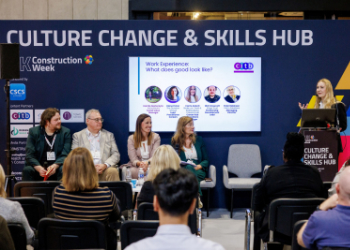
Under the spotlight at UK Construction Week London.
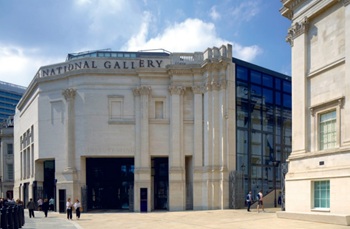
A landmark moment for postmodern heritage.
A safe energy transition – ECA launches a new Charter

Practical policy actions to speed up low carbon adoption while maintaining installation safety and competency.
Frank Duffy: Researcher and Practitioner
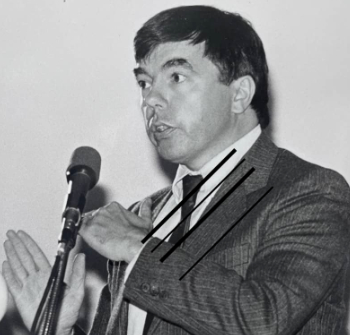
Reflections on achievements and relevance to the wider research and practice communities.
The 2026 Compliance Landscape: Fire doors

Why 'Business as Usual' is a Liability.
Cutting construction carbon footprint by caring for soil

Is construction neglecting one of the planet’s most powerful carbon stores and one of our greatest natural climate allies.
ARCHITECTURE: How's it progressing?

Archiblogger posing questions of a historical and contextual nature.
The roofscape of Hampstead Garden Suburb
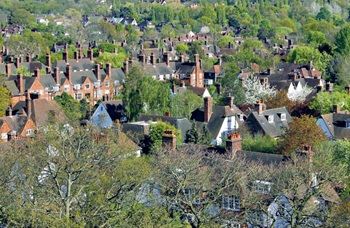
Residents, architects and roofers need to understand detailing.
Homes, landlords. tenants and the new housing standards

What will it all mean?
The Architectural Technology podcast: Where it's AT

Catch-up on the latest episodes.
Edmundson Apprentice of the Year award 2026

Entries now open for this Electrical Contractors' Association award.

Traditional blue-grey slate from one of the oldest and largest UK slate quarries down in Cornwall.

There are plenty of sources with the potential to be redeveloped.
Change of use legislation breaths new life into buildings

A run down on Class MA of the General Permitted Development Order.
Solar generation in the historic environment
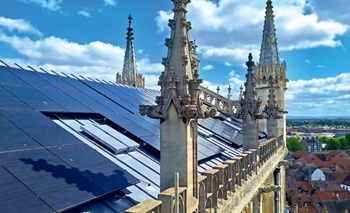
Success requires understanding each site in detail.