





Concrete slabs in buildings
Contents |
[edit] Introduction
A slab is a structural element, made of concrete, that is used to create flat horizontal surfaces such as floors, roof decks, and ceilings. A slab is generally several inches thick and supported by beams, columns, walls, or the ground.
Concrete slabs can be prefabricated off-site and lowered into place or maybe poured in-situ using formwork. If reinforcement is required, slabs can be pre-stressed or the concrete can be poured over rebar positioned within the formwork.
There are several different types of slabs, including:
[edit] Flat slab
This is typically a reinforced slab supported directly by columns or caps, without the use of beams. This type of slab is generally easy to construct and requires little formwork.
[edit] Conventional slab
This type of slab is supported with beams and columns, with the load transferred to those elements. A conventional slab is classified as either:
- One-way: Supported by beams on two opposite sides, carrying the load in one direction.
- Two-way: Supported by beams on all four sides, carrying the load along with both directions.
[edit] Hollow-core ribbed slab
The hollow core concrete slab has tubular voids that run the entire length of the slab, typically with a diameter equal to 2/3-3/4 of the slab's thickness, which decreases the weight of the slab, as well as the amount of concrete required. They can also function as service ducts. This type of slab is generally reinforced with longitudinal rebar and can achieve long spans, making it suitable for office buildings, multi-story car parks, and so on.
[edit] Waffle slab
This type of slab contains square grids with deep sides, resembling a waffle shape, often used where large spans are required without the interference of columns. Waffle slabs can be capable of supporting a greater load than conventional slabs.
[edit] Solid slab raft
This is a type of shallow foundation, typically formed by a reinforced concrete slab that covers a wide area, often the entire footprint of a building. It spreads the load imposed by a number of columns, walls, and so on, over a large area, and can be considered to ‘float’ on the ground in a similar way to a raft floating on water. It is often used for lightly-loaded buildings on weak or expansive soils such as clays or peat.
For more information, see Types of raft foundation.
[edit] Composite slab
Composite slabs are typically constructed from reinforced concrete cast on top of profiled steel decking, (re-entrant or trapezoidal). Slabs are most commonly made of concrete because of its mass and stiffness which can be used to reduce the floor's deflections and vibrations, and achieve the necessary fire protection and thermal storage. Steel is often used as the supporting system underneath the slab due to its superior strength-weight and stiffness-weight ratio and ease of handling.
For more information, see Composite slab.
[edit] Related articles on Designing Buildings
- Building foundations.
- Cast-in-place concrete.
- Cellular raft foundation.
- Concrete.
- Concrete floor.
- Domestic floors: Part 1: Construction, insulation, and damp proofing.
- Floating floors in buildings.
- Floor slab.
- Floor void.
- Footings.
- Pad foundation.
- Strip foundation.
- Types of the floor.
- Types of raft foundations.
Featured articles
Check out some of the best features and news from Designing Buildings as well as key stories from around the web.

CIAT publishes briefing on planning reforms.
Leaders in Learning for Practice Network

Call for conservation leaders in learning to register interest in new network.
The importance of early engagement

Construction lessons from the Trillium HealthWorks Experience Centre.
Mayors are to be given planning call in powers

Mayors across England will be able to make the most important planning decisions.

The Master Builder: William Butterfield and his times. Book review.

Why construction can't afford to ignore the skills gap.
Building Safety Regulator, 19 August

Gill Kernick appointed Independent Chair of Residents’ Panel.
Connecting knowledge, technology and conservation
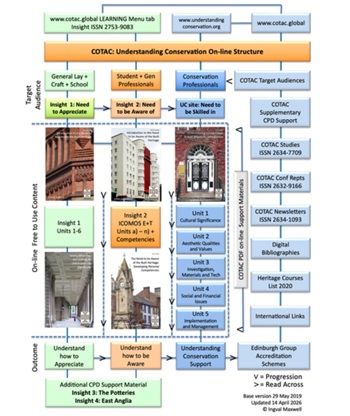
Building competence for the future of built heritage.
Building Regulations and Building Safety Act
CIOB publishes free advice for non-domestic clients.

Building Safety Newsletter from MHCLG.

An extraordinary record of steel engineering worldwide.

Households living near new pylons to save on bills.