





Code of practice
Codes of practice (often just referred to as ‘codes’ or CoPs) typically give authoritative and practical guidance about how those in a particular profession or activity should behave or undertake tasks in order to comply with legal or professional obligations. Typically, they are recommendations (often regarded as ‘best practice’) for doing things in a particular way and are usually drawn up by a regulatory authority, institute or association. As benchmarks for industry best practice, they can help people and organisations understand their obligations and uphold high industry standards.
Codes may be drawn up to reflect legal provisions made in the sector concerned, or help people to comply with professional, ethical, health and safety, environmental standards and so on. Some may not be mandatory, while others could involve legal or professional consequences if transgressed. For example, Approved Codes of Practice (ACOP) are guidance with legal standing and deal with working practices and hazardous materials.
A code may be drawn up by one body or have input from numerous sources. For example, the code of practice for grid-connected solar photovoltaic systems was published in 2014 by the Institution of Engineering and Technology (IET). It was written by IET Standards with expert technical input from the BRE National Solar Centre.
There are codes applying to a vast array of human endeavour and can cover employment, advertising, health and safety, the way buildings are assembled, the way specific materials are manufactured and used, the way a site is organised, surveillance cameras, the way to safely store hazardous materials, picketing, etc. Some codes may be approved by parliament and used as procedural basis by public and private institutions, organisations companies and other bodies.
A code of practice may be specific or universal, for example, the code of practice for the sustainable use of soils on construction sites provides relevant advice on the use of soil in construction projects. In contrast, the code of practice for the welfare of cats applies to all cats, not just to tabby cats, etc. A code may be applicable to all the UK or only a part, e. g England.
Codes of practice can help to protect consumers in the provision of goods and services.
The RIBA maintains a Code of Conduct for its members, as does the ARB, RICS, IStrucE and others. For more information see: Code of conduct.
[edit] Related articles on Designing Buildings
- Action programme for responsible and ethical sourcing.
- ARB proposals for a new Architects Code.
- Architect.
- Architects Registration Board.
- Best practice.
- Building regulations.
- CIAT responds to the architects' regulation review.
- Code of conduct.
- Consultation opens for code of practice for fire risk appraisal and assessment of external wall construction.
- Corporate social responsibility in construction.
- Design-Build Institute of America DBIA.
- Diversity in the construction industry.
- Employee.
- Employee handbook.
- Ethical labour sourcing standard.
- Ethical sourcing.
- Ethics and the engineer.
- Ethics in construction.
- Gangmaster.
- International Building Code (IBC).
- International Ethics Standards Coalition.
- International Existing Building Code (IEBC).
- Investors In People award CIOB silver accreditation.
- Joint Fire Code.
- Modern slavery and the supply chain.
- Professional.
- Professional conduct.
- Professional indemnity insurance.
- Review of regulation of architects: call for evidence.
- RIBA Code of Professional Conduct.
- Standards.
- Structural engineering codes.
- The Architects Act.
- The history of the architectural profession.
- The role of architects.
- The role of codes, standards and approvals in delivering fire safety.
- Why infrastructure transparency matters.
Featured articles
Check out some of the best features and news from Designing Buildings as well as key stories from around the web.
Bridging the gap between clients and contractors

Concerns remain around contractor quality, capability, and delivery.
Construction Management, 10 June.

Heat pumps beat boilers in new home tests.
Building Safety Act implementation in Wales

CIAT to host industry panel on 26 June.
New and updated CLC building safety guidance.
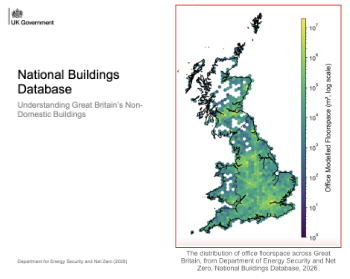
New UK National Buildings Database.
Building Safety Wiki Interviews

Chief executive of the British Woodworking Federation.
Planning condition discharge in England and Wales

A brief explanation from a building compliance expert, with further links.
Overheating guidance and tools for building designers

Guidance for dealing with element of building fabric control that have increasing importance.
Shading for housing, a design guide

From the Good Homes Alliance and British Blind and Shutter Association.
UK Standard Skills Classification (SSC)

A shared framework for describing skills needs.
Social media ban consultation comes to close

CIOB urges UK Government to consider social media’s role in careers guidance in ban debate.