






Building with structural stone
Contents |
[edit] Introduction
The use of stone as a structural material has fallen so far out of favour in most of the world that its properties are no longer even taught in some architectural and structural engineering degrees in the UK, and there are few building standards to cover its use.
[edit] Gradual emergence of stone in Europe
Some countries are introducing the idea that stone should reclaim its place as a sustainable structural building material. France has been at the forefront of this and has been using stone as a load bearing or semi-load bearing material since the end of WW2. As a result, although they still lack a building standard for the use of stone as a principle building material, most French quarries issue strength certificates for the stone they produce.
In the UK, Amina Taha’s Groupwork architectural practice has been working closely with Steve Webb of Webb Yates and Pierre Badaud from the Stonemasonry Company Ltd to champion the use of stone as a loadbearing material. In February 2020, the Building Centre played host to an exhibition entitled “The New Stone Age”, curated by the three men.
[edit] Environmental benefits of stone
When the quarry is close to the building site, the use of stone blocks to construct a building can be an environmentally friendly choice. The Inventory of Embodied Carbon and Energy 2019 gives general stone's carbon footprint as 0.079kg/kg (this is compared to 0.15kg/kg for concrete and 2.8kg/kg for steel).
Stone does not need covering or coating to make it weatherproof, and although wood is lighter to transport and captures CO2 during its growth, it needs more processing than stone. Once the building reaches its end of life, wooden structures may be left to rot or burnt, which releases CO2 into the atmosphere.
The production of concrete involves quarrying rock, grinding it up to make gravel, quarrying limestone, transporting it to factories and processing it to make cement, digging up sharp sand, then mixing them all with water to make liquid cement, and transporting it all to the building site. The site then needs to be prepared, using timber to support and form the concrete whilst it sets. At the end of this process, there is a stone-like material that is approximately 20% of the strength of the original stone (40N vs 230N) and requires steel to strengthen it. In many cases, that structure is then covered with a façade of stone.
Another feature of stone is efficiency - nothing is lost in production. Even small offcuts are still of use as ballast or hardcore, and at the end of the building’s life, 95% of it can simply be removed and reused rather than going to landfill.
The fact that stone has a high level of thermal inertia gives it very good insulating properties, making it easier to regulate the internal temperature.
[edit] Construction possibilities
The French architect Fernand Pouillon, who was active after WW2, used stone blocks pre-cut to set dimensions for large scale projects (such as one of 5000 dwellings in the Ile-de-France). These buildings became the model for future development.
Architects are now experimenting with the use of stone blocks as a replacement for concrete block. Sometimes they are using it in conjunction with concrete to reinforce the structure where large openings are required.
Taha and Webb advocate the use of stone pillars to replace concrete. In the Building Centre exhibition, they demonstrate that this is perfectly possible. They also illustrate how it is environmentally more friendly to create a 30-storey tower from stone with 12m2 open plan stone floors made from blocks threaded together with cables. 15 Clerkenwell Close is proof that stone can be used in a modern idiom and does not just lend itself to a more historical context.
However, even where a whole building is not going to be in stone, it is still possible to add in elements such as staircases, arches and columns that put the strength, longevity and environmental credentials of stone to good use.
[edit] Related articles on Designing Buildings Wiki
Featured articles
Check out some of the best features and news from Designing Buildings as well as key stories from around the web.

Your views needed - a strategy for the professions, trades and occupations.

Confronting competency, codes, capacity and costs.

The hidden risk in modern construction supply chains.
Construction Management, 10 June

24 months to 14: CITB launches accelerated apprenticeships.
Bridging the gap between clients and contractors

Concerns remain around contractor quality, capability, and delivery.
Construction Management, 10 June.

Heat pumps beat boilers in new home tests.
Building Safety Act implementation in Wales

CIAT to host industry panel on 26 June.

New and updated CLC building safety guidance.
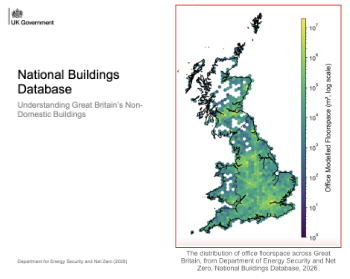
New UK National Buildings Database.
Building Safety Wiki Interviews

Chief executive of the British Woodworking Federation.
Planning condition discharge in England and Wales

A brief explanation from a building compliance expert, with further links.