





Braced frame structures

Contents |
[edit] What is a braced frame structure?
A braced frame is a very strong structural system that is commonly used in structures subject to lateral loads such as wind and seismic pressure. The members in a braced frame are generally made of structural steel, which can work effectively both in tension and compression. The beams and columns that form the frame carry vertical loads, and the bracing system carries the lateral loads. The positioning of braces, however, can be problematic as they can interfere with the design of the façade and the positioning of openings. Buildings adopting high-tech or post-modernist styles have responded to this by expressing the bracing as an internal or external architectural feature.
[edit] Vertical and horizontal bracing systems
The resistance to horizontal forces is provided by two bracing systems; vertical and horizontal bracing:
[edit] Vertical bracing
Bracing between column lines (in vertical planes) provides load paths for the transference of horizontal forces to ground level. Framed buildings require at least three planes of vertical bracing to brace both directions in plan and to resist torsion about a vertical axis.
[edit] Horizontal bracing
Bracing at each floor (in horizontal planes) provides load paths for the transference of horizontal forces to the planes of vertical bracing. Horizontal bracing is needed at each floor level, however, the floor system itself may provide sufficient resistance. Roofs may also require bracing.
[edit] Types of bracing
Some of the more common forms of bracing are listed below.
[edit] Single diagonals

Trussing, or triangulation, is formed by inserting diagonal structural members into rectangular areas of a structural frame, helping to stabilise the frame. If a single brace is used, it must be sufficiently resistant to tension and compression.
[edit] Cross-bracing

Cross-bracing (or X-bracing) uses two diagonal members crossing each other. These only need to be resistant to tension, one brace at a time acting to resist sideways forces, depending on the direction of loading. As a result, steel cables can also be used for cross-bracing. However, cross bracing on the outside face of a building can interfere with the positioning and functioning of window openings. It also results in greater bending in floor beams.
[edit] K-bracing

K-braces connect to the columns at mid-height. This frame has more flexibility for the provision of openings in the facade and results in the least bending in floor beams. K-bracing is generally discouraged in seismic regions because of the potential for column failure if the compression brace buckles.
[edit] V-bracing

.jpg)
Two diagonal members forming a V-shape extend downwards from the top two corners of a horizontal member and meet at a centre point on the lower horizontal member (left-hand diagram). Inverted V-bracing (right-hand diagram, also known as chevron bracing) involves the two members meeting at a centre point on the upper horizontal member.
Both systems can significantly reduce the buckling capacity of the compression brace so that it is less than the tension yield capacity of the tension brace. This can mean that when the braces reach their resistance capacity, the load must instead be resisted in the bending of the horizontal member.
Centric bracing is commonly used in seismic regions. It is similar to V-bracing, but bracing members do not meet at the centre point. This means there is a space between them at the top connection. Bracing members connect to separate points on the horizontal beams. This is so the 'link' between the bracing members absorbs energy from seismic activity through plastic deformation. Eccentric single diagonals can also be used to brace a frame.
[edit] Related articles on Designing Buildings
- Biaxial bending.
- Concrete frame.
- Concrete vs. steel.
- Girder.
- Gridshell.
- Gusset.
- Lateral loads.
- Limit state design.
- Portal frame.
- Roof structure.
- Shear wall.
- Skeleton frame.
- Steel frame.
- Structural engineer.
- Structural steelwork.
- Structural systems.
- Superstructure.
- Truss.
- Types of frame.
- Types of structural load.
[edit] External references
- The Constructor - Braced frames
Featured articles
Check out some of the best features and news from Designing Buildings as well as key stories from around the web.
Building Safety Act implementation in Wales
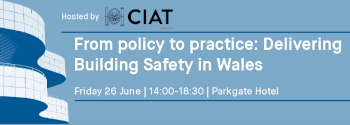
CIAT to host industry panel on 26 June.
New and updated CLC building safety guidance.
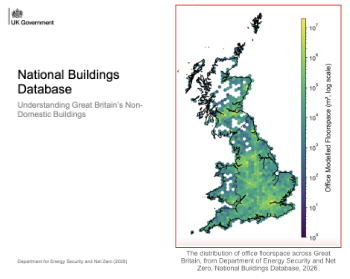
New UK National Buildings Database.
Building Safety Wiki Interviews

Chief executive of the British Woodworking Federation.
Planning condition discharge in England and Wales

A brief explanation from a building compliance expert, with further links.
Overheating guidance and tools for building designers

Guidance for dealing with element of building fabric control that have increasing importance.
Shading for housing, a design guide

From the Good Homes Alliance and British Blind and Shutter Association.
UK Standard Skills Classification (SSC)

A shared framework for describing skills needs.
Social media ban consultation comes to close

CIOB urges UK Government to consider social media’s role in careers guidance in ban debate.
The latest of eight Skills England apprenticeship units

The addition of battery manufacturing welcomed by ECA with a warning about the risks of fast-tracked apprenticeship units.
Building Control Independent Panel final report
A precis of a key report led by Dame Hackitt with full recommendations and link to the government response.
Comments
[edit] To make a comment about this article, click 'Add a comment' above. Separate your comments from any existing comments by inserting a horizontal line.
It would be great to have more examples of buildings with bracing.
This is a wiki site - so if you want to improve an article, just click 'Edit this article' at the top of the page and change it.