






DurabRoads

This article was originally written by Divya Deepankar, Research Engineer, BSRIA Sustainable Construction Group. You can see the original article, published in July 2016, here.
In the European road sector, large quantities of materials and energy are consumed both in construction and maintenance, which is magnified by the negative effects of extreme weather conditions caused by climate change and the significant increase of traffic flow on some motorways due to the opening of freight corridors.
The technical limitations of current road materials and construction procedures have significant influence on the reduction of the asphalt surfaces lifetime and as a consequence, increases the costs of construction, maintenance and rehabilitation works, whilst also reducing the network availability.
Consequently, there is a need to develop new technologies and systems to provide a more affordable, durable, safer, greener and cost-effective road infrastructure. The objective of the DurabRoads project is to design, develop, and demonstrate cost-effective, eco-friendly and optimised long-life roads, which are more adapted to freight corridors and effects of climate-change by means of innovative designs, and the use of greener materials improved by nanotechnology.
A major aim of this project is the optimisation of current construction, maintenance, and rehabilitation procedures. The identification and quantification of the harmful effects of ever increasing traffic and environmental loads on the European highways is a major task identified in this project.
The participants involved in the project consortium include:
- Universidad De Cantabria.
- Acciona Infraestructuras.
- Fraunhofer.
- European Union Road Federation (ERF).
- Tecnalia.
- Norwegian Graphite.
- BSRIA.
- Institute for Transport Sciences (KTI).
- Sia Inenierbuve (IB).
BSRIA’s role in this project is to conduct the Life Cycle Assessment and Life Cycle Costing Analysis of the proposed road design by establishing a base case scenario similar to the existing roads to then compare it with the modified alternative designs.
This project targets two problems associated with the road industry:
Deterioration of asphalt surfaces
Addressing the technical limitation of current materials and procedures, negative effects of extreme weather conditions due to climate change and increase of traffic loads due to the opening of freight corridors.
Unsustainability of the road sector
Addressing the intensive use of natural resources, i.e. aggregates and fuel, greenhouse gas emissions and low recycling rate. The base case of the road is being established based on the environmental product declaration (EPD) of a cleavage of a Spanish road, N-340 in Sector E-40, Elche (Alicante) given by Acciona Infraestructura. The alternative designs will use warm mix asphalts (WMA) incorporating the nanomaterial-modified bituminous binders (NMB), including the addition of recycled asphalt pavement (RAP) and by-products. Asphalt concrete, porous asphalt and BBTM mixes types are also expected to be designed.
This project proposes two solutions to the problems identified above in the road industry by:
- Evaluation and optimisation of road related materials and procedures.
- Development and validation of advanced, more durable, and eco-friendly asphalt materials.
The first stage of evaluation and optimisation of road-related materials and procedures will be conducted by first quantifying the impacts of climate change and of the traffic loads in freight corridors on the EU road network. Then, an evaluation of the constraints on road materials and the road construction, maintenance, rehabilitation techniques to withstand challenges coming from climate change and freight corridors will be conducted.
By defining the optimisation criteria on durability, safety, cost-effectiveness, environmental-friendliness and socio-economic factors, using life-time engineering concepts and multi-criteria analysis, the best practices will be identified.
The second stage of development and validation of advanced; more durable and eco-friendly asphalt materials will involve selection, analysis and characterization of carbon nanomaterials with good compatibility towards organic matrices like polymers and bitumen.
The alternative materials suggested as additions into the road material mix include nanomaterial-modified polymers, nanomaterial-modified bituminous binders (NMB), small quantities of steel slag as a substitute to aggregates and warm mix asphalts (WMA) incorporating the NMB, including the addition of recycled asphalt pavement (RAP) and by-products. Asphalt concrete, porous asphalt and BBTM mixes types are expected to be designed.
By conducting a Life Cycle Assessment and Life Cycle Costing Analysis, the objective is to understand the environmental impact of constructing a road which will be compared with the alternate cases on development and addition of warm mix asphalts to the road mix to identify the most suitable material mix.
After implementation and validation of two DurabRoads pavements at a real scale, these materials are suggested to be incorporated into the road construction material mix.
--BSRIA
[edit] Find out more
[edit] Related articles on Designing Buildings Wiki
- BSRIA articles on Designing Buildings Wiki.
- DurabRoads - life cycle costing analysis.
- European hydronic controls market.
- Kerbs.
- Life Cycle Costing.
- Overview of the road development process.
- Pavement.
- Platooning.
- Road construction.
- Road improvement scheme consultation.
- Road joints.
- Smart technology.
- Types of road and street.
Featured articles
Check out some of the best features and news from Designing Buildings as well as key stories from around the web.
Rethinking passive fire protection in design

PFP demands the same level of design rigour as structure or services.

38% of Gen Zs feel safe when a fire door is wedged open.
Stunning images from around the world
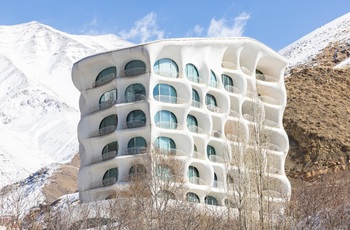
Shortlist for CIOB’s Art of Building photography competition.

Guidance for conversion of traditional pre-1919 stone buildings.
Industrial heritage in the Ruhr

A marked difference to the fate of industrial landscapes in the UK.
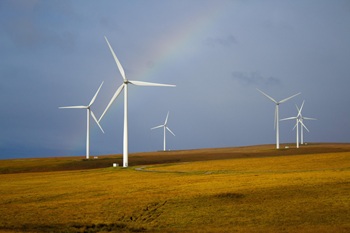
Communities will be able to build their own clean energy.
Why diversity and inclusion matters for SMEs

CIOB’s D&I Charter shows how practical changes can support long-term growth.
Cut electricity bills to power growth

Coalition sends joint letter to the Chancellor.

Gasholders: a history in pictures. Book review.
Recognition, influence and growth
SocEnv identifies three strategic pillars in new strategy to 2045.
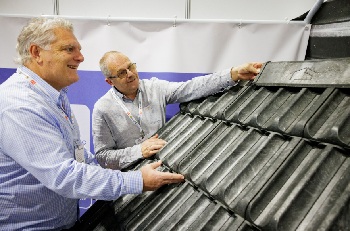
Discover the future of roofing, cladding and insulation.

New guidance for professional practice, cultural change and regulation in social housing.
Comments
Thanks for sharing this information