





Whole Life Carbon Guidance for Offsite Construction

A new report, published by the Supply Chain Sustainability School, reveals that 9 significant opportunities exist for offsite manufacturers to help their clients in their drive for low carbon construction projects, both new build and in the retrofitting of existing buildings.
The built environment industry needs to rapidly decarbonise existing and new buildings, as well as reduce embodied carbon produced in production of building materials and elements, construction, and maintenance of assets. The ability of offsite construction processes to reduce whole life carbon is often expressed, but evidence of this has been patchy.
Drawing on the experience of more than 40 organisations working across homes, commercial, public and infrastructure, the new report, ‘Whole Life Carbon Guidance for Offsite Construction’ highlights opportunities and challenges for carbon management and reduction for the offsite sector.
This includes common benefits around the material and resource efficiency of premanufacture, reduced fuel and energy use in logistics and on site, as well as greater confidence in operational energy performance with standardised designs.
Some of the strongest evidence for carbon reductions exist in energy and fuel use for transport and construction processes, with studies finding savings of 30-40%, even when factory energy use is included. However, most of the embodied carbon within construction projects comes from materials and manufacturing: the product stage.
The report proposes that there is a big opportunity for Design for Manufacture and Assembly to drive emissions savings in this stage, sharing evidence for this across homes, schools, and commercial projects. It recommends early collaboration between manufacturers and design teams in order to fully realise low carbon design options. This collaboration will also aid robust whole life carbon estimates, which are likely to become mandatory in the coming years. The report also encourages manufacturers and contractors to embed processes for the collection and communication of activity data.
Andrew Shepherd, Managing Director at TopHat Communities, said “We all know carbon is a problem, but without knowing how much of a problem, it is very difficult for us to start addressing some of the key problem areas. This report provides guidance on how to start assessing whole life carbon and understanding the impact each stage of the development cycle has on the environment about us.”
Naomi Pratt, lead author of the report and Consultant at Action Sustainability, said: “It’s been really encouraging to see projects cutting embodied carbon through offsite techniques. What these have in common is a design approach driven by material and carbon efficiency. What we need to see now is more organisations adopting this focus and sharing data.”
Ian Heptonstall, Director of Supply Chain Sustainability School, said: “The good news from this report is that yes, Offsite and MMC (Modern Methods of Construction) can help us tackle the climate emergency. However, as the evidence suggests, we are currently missing many opportunities and it’s clear as an industry we need to think and act differently. My challenge to those not at the forefront of tackling carbon is: will you act now and make a difference, or be left behind whilst your customers transition to a low carbon economy?”
The examples of best practice highlighted in the report are crucial for whole life carbon reduction and the journey to net zero. The authors encourage organisations working within the sector to show leadership, take advantage of the opportunities, and share data and experiences.
Download the report from the Supply Chain Sustainability School website here.
This article was issued via Press release as "New report shines light on offsite's carbon reduction potential" by the Supply Chain Sustainability School dated April 18.
[edit] Related articles on Designing Buildings
- Advanced manufacturing.
- BSRIA launches Offsite Construction for Building Services topic guide.
- Construction problems avoided by using a modular approach.
- Design for Manufacture and Assembly (DfMA).
- Flying factory for construction works.
- In situ.
- Modern methods of construction.
- Modular buildings.
- Modular construction market report 2020-2026.
- Off site materials.
- Offsite manufacturing.
- Off-site manufacturing.
- Offsite manufacturing and standardised design.
- Off-site manufacture for construction: Building for change.
- Off site, on track.
- Off-site prefabrication of buildings: A guide to connection choices.
- Prefabrication.
- Off-site construction.
[edit] External links
Featured articles and news
Costs and insolvencies mount for SMEs, despite growth

Construction sector under insolvency and wage bill pressure in part linked to National Insurance, says report.
The place for vitrified clay pipes in modern infrastructure
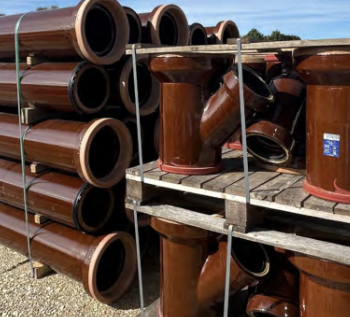
Why vitrified clay pipes are reclaiming their role in built projects.

Research by construction PR consultancy LMC published.
Roles and responsibilities of domestic clients

ACA Safety in Construction guide for domestic clients.
Fire door compliance in UK commercial buildings

Architect and manufacturer gives their low down.
Plumbing and heating for sustainability in new properties

Technical Engineer runs through changes in regulations, innovations in materials, and product systems.
Awareness of the Carbon Border Adjustment Mechanism
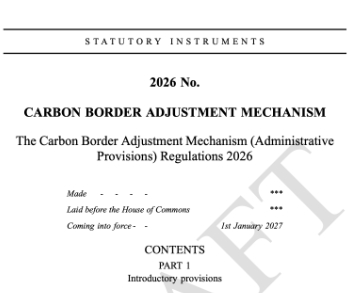
What CBAM is and what to do about it.
The new towns and strategic environmental assessments
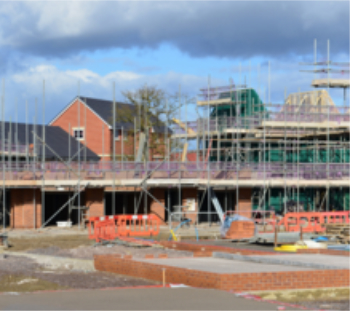
12 locations of the New Towns Taskforce reduced to 7 within the new towns draft programme and open consultation.

Buildings that changed the future of architecture. Book review.
The Sustainability Pathfinder© Handbook
Built environment agency launches free Pathfinder© tool to help businesses progress sustainability strategies.

Government outcome to the late payment consultation, ECA reacts.
IHBC 2025 Gus Astley Student Award winners

Work on the role of hewing in UK historic conservation a win for Jack Parker of Oxford Brookes University.
Future Homes Building Standards and plug-in solar
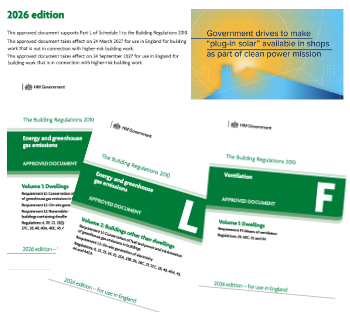
Parts F and L amendments, the availability of solar panels and industry responses.
How later living housing can help solve the housing crisis

Unlocking homes, unlocking lives.
Preparing safety case reports for HRBs under the BSA
A new practical guide to preparing structural inputs for safety cases and safety case reports published by IStructE.
Male construction workers and prostate cancer

CIOB and Prostate Cancer UK encourage awareness of prostate cancer risks, and what to do about it.
Comments
[edit] To make a comment about this article, click 'Add a comment' above. Separate your comments from any existing comments by inserting a horizontal line.