





Types of water

Water is a chemical compound that is essential for all known forms of life. As a transparent, tasteless, odourless and almost colour-less substance, it covers 71% of the Earth’s surface and is the main constituent of rivers, lakes oceans and so on. The chemical formula of water is H2O. Each molecule contains one oxygen atom and two hydrogen atoms. Water, in the strict sense, refers to the liquid state of the substance, but it can also be used to refer to the solid state (ice) and the gaseous state (steam or water vapour).
For more information see: Water.
Approved Document G (Sanitation, hot water safety and water efficiency), 2015 edition, defines a number of classifications of water.
- Domestic hot water. water that has been heated for cooking, food preparation, personal washing or cleaning purposes. The term is used irrespective of the type of building in which the hot water system is installed.
- Greywater. domestic wastewater excluding faecal matter and urine. When appropriately treated this may replace the use of wholesome water in wcs, urinals, irrigation or washing machines.
- Harvested rainwater. rainwater harvested from roofs or other suitable surfaces and collected and stored. When appropriately treated this may replace the use of wholesome water in WCs, urinals irrigation or washing machines.
- Heated wholesome water. water that, when cold, was wholesome in accordance with the definition (of wholesome water) and has been subjected to a heat source to increase its temperature.
- Softened wholesome water. water which would be regarded as wholesome for the purposes of the regulations made under Section 67 of the Water Industry Act 1991 (Standards of wholesomeness) as they apply for the purposes of Part G of Schedule 1 in accordance with paragraph (2c) but for the presence of sodium in excess of the level specified in those regulations if it is caused by a water softener or water softening process which reduces the concentration of calcium and magnesium.
- Wholesome water. water complying with the requirements of regulations made under Section 67 (Standards of wholesomeness) of the Water Industry Act 1991. The regulations made under this Section at the time of publication of this Approved Document are; for England, the Private Water Supplies Regulations 2009 (SI 2009/3101), for Wales the Private Water Supplied (Wales) Regulations (SI 2010/66) and for England the Water Supply (Water Quality) Regulations 2000 (SI 2000/3184 as amended), and, for Wales, the Water Supply (Water Quality) Regulations 2001 (SI 2001/3911 as amended).
The document also refers to:
- Heated softened water.
- Rainwater.
- Reclaimed greywater.
- Reclaimed industrial process water.
- Water abstracted from wells, springs, bore-holes or water courses.
Other definitions of water types might include:
- Black water, brown water or sewage: Water that has come into contact with faecal matter or urine.
- Bound water.
- Brackish water.
- Clarified water.
- Dependable water.
- Domestic water.
- Drinking water.
- Firefighting water.
- Foul water. waste from a sanitary convenience, bidet or appliance used for washing receptacles for foul waste; or water which has been used for food preparation, cooking or washing.
- Groundwater. Water which is below the surface of the ground within the permanently saturated zone.
- Hard water is found in areas which have a chalk and limestone geology and has a high level of naturally-occurring calcium and magnesium compounds.
- Make-up water.
- Mains water.
- Non-potable water: water that is not of drinking water quality. See: Non-potable water.
- Rainwater.
- Raw water: Water that has not yet passed through a water treatment facility.
- Recycled water / reclaimed water.
- Sewage refers specifically to a mixture of waste water and excrement.
- Soft water has a low level of naturally-occurring calcium and magnesium compounds.
- Top-up water.
- Transitional water.
- Treated water.
- Waste water. Water that has been used in homes, businesses, industry and so on.
- White water. potable water, clean water or fresh water: water that is of drinking water quality.
[edit] Related articles on Designing Buildings
- Blackwater.
- Clarified water.
- Drinking water quality.
- Foul water.
- Greywater.
- Groundwater.
- Hot water.
- Mains water.
- Non-potable water.
- Non-wholesome water.
- Passive water efficiency measures.
- Rainwater.
- Rainwater goods.
- Rainwater harvesting.
- Reclaimed water.
- Reservoir construction.
- Sustainable water.
- Urban water systems management: A data analytics approach EP 105.
- Waste water.
- Water consumption.
- Water purification.
- Water quality.
- Water resources.
- Water table.
- Water vapour.
Featured articles and news

We're expanding our collaborative mission by launching DB Intelligence, an exclusive market research advisory panel. Built environment professionals can now get paid to share their expertise on industry trends, products and services.
Panel members receive direct financial incentives for participating in research projects like short surveys, 1-2-1 interviews and focus groups. Register today to shape the future of the construction sector.
Building Control Independent Panel final report
A precis of a key report led by Dame Hackitt with full recommendations and link to the government response.
Guide to ISO 19650 for Architecture Firms (2026)
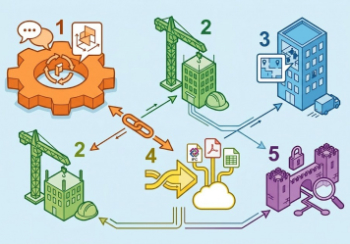
A user gives their low down.

A UK training and membership provider for mould remediation professionals.
Building Safety recap April, 2026

A short and longer run-through of the month, with links to further information and sources.
CIAT May 2026 briefing.

Independent NSI and BAFE study exploring how organisations are changing the way they buy fire safety services.
From medieval scribes to modern word art.

ECA welcomes crackdown on late payment and push for clean energy, whilst CIOB seek fixed cladding removal timeframes.
Cyber Security in the Built Environment
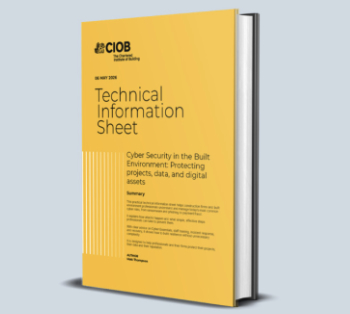
Protecting projects, data, and digital assets: A CIOB Academy TIS.
Managing competence in the built environment

ITFG publishes new industry guide on how to meet the ICC principles.
The UK's campaign to reduce noise pollution: Mythbusting, articles and topic guides.