





Statutory undertakers
Contents |
[edit] Introduction
Statutory undertakers are bodies that have been given statutory powers in relation to functions that are of a ‘public’ character. Statutory undertakers may have rights (such as the right to carry out certain works without obtaining the normal permissions) and obligations (such as the supply of utilities).
Statutory undertakers include public bodies such as the Post Office, Civil Aviation Authority, the Environment Agency and so on, and private bodies such as those performing functions in relation to railways, canals, electricity supply, gas, water, sewerage and electronic communications.
[edit] Right to connection
It is important in the early stages of a project to assess the availability of, and rights to key services on a proposed site.
[edit] Sewers
In October 2012, Schedule 3 of the Flood and Water Management Act 2010 came into force. This requires the inclusion of sustainable drainage of surface water (SUDS) in developments that require planning approval or have drainage implications. It removes the automatic right established by the Water Industry Act to connect to public sewers and instead gives powers to local authorities as SUDS Approving Bodies (SAB’s) to approve new drainage systems and their connection to public sewers.
The costs of connection are the responsibility of the land owner. If there is no suitable main available, one may be requisitioned, but a cost is likely to be incurred for this.
[edit] Water supply
For domestic premises, the statutory undertaker (now referred to as the incumbent water company) must supply a connection to the boundary of the street (within a reasonable agreed time), but onward supply is the responsibility of the owner, and if this requires passing through others land, this may mean agreeing an easement or licence with third party land owners. If the street supply is not within a reasonable distance, the owner can require the undertaker to extend their mains, but this may incur a payment.
For non-domestic premises it is for the owner and the undertaker to reach an agreement, but if such an agreement cannot be reached, then the Director General of Water Services will make a determination.
For more information, see Incumbent water company v undertaker.
NB Water Bill, Glossary: water terms, published by the Department for Environment, Food and Rural Affairs in November 2013, describes an English undertaker as: ‘An undertaker whose appointment area is wholly or mainly in England. Undertakers are generally appointed on river basin catchments rather than political boundaries. Severn Trent is the only English undertaker whose appointment area extends into Wales. This means they have some Welsh customers, e.g. in Powys.’
[edit] Gas
Owners or occupiers have the right to receive a gas supply within a reasonable, notified time if the premises are within 23 metres of an existing mains. Otherwise, they may be connected by a pipe that they have laid themselves.
[edit] Electricity
Owners or occupiers have the right to receive an electricity supply within a reasonable, notified time, to an agreed maximum power. However the owners or occupiers may be required to pay any reasonable expenses incurred.
[edit] Electronic communications
Following the privatisation of British Telecommunications (BT), the terms for the provision of electronic communications are dependent on individual operators licences, statutory regulations and the term of the supply contract with the owners or occupiers. BT has however been designated as the provider of universal service in the UK, and under The Universal Service Obligation (USO) BT has obligations in relation to the provision of access to the telephone network, schemes for consumers with special social needs and public call box services. BT also has obligations in relation to data provision under the Enterprise Act.
[edit] Related articles on Designing Buildings
- Article 4 direction.
- Flood and Water Management Act.
- Incumbent water company v undertaker.
- Statutory authorities.
- Statutory obligations.
- Street works.
- Sustainable Urban Drainage Systems.
- Third party dependencies.
- Utilities.
- Water undertaker.
- Welsh undertaker.
- What approvals are needed before construction begins.
Featured articles and news
Building Control Independent Panel final report
A precis of a key report lead by Dame Hackitt with full recomendations and link to the government response.
Guide to ISO 19650 for Architecture Firms (2026)
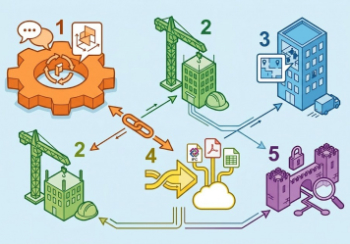
A user gives their low down.

A UK training and membership provider for mould remediation professionals.
Building Safety recap April, 2026

A short and longer run-through of the month, with links to further information and sources.
CIAT May 2026 briefing.

Independent NSI and BAFE study exploring how organisations are changing the way they buy fire safety services.

From medieval scribes to modern word art.

ECA welcomes crackdown on late payment and push for clean energy, whilst CIOB seek fixed cladding removal timeframes.
Cyber Security in the Built Environment

Protecting projects, data, and digital assets: A CIOB Academy TIS.
Managing competence in the built environment

ITFG publishes new industry guide on how to meet the ICC principles.

The UK's campaign to reduce noise pollution: Mythbusting, articles and topic guides.
Setting Expectations on Competence Management

Industry Competence Committee.
New Scottish and Welsh governments

CIOB stresses importance of construction after new parliament elections.
The sad story of Derby Hippodrome
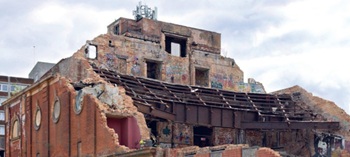
An historic building left to decay.

ECA, JIB and JTL back Fabian Society call to invest in skills for a stronger built environment workforce.
Comments
We are major suppliers to Gas, Water, Comms & Electric however serving through Section 50s, is it possible to become a Statutory Undertaker so we can serve permits through Street Manager an obtain an OD batch file? Any help appreciated.