






Smart home checklist

Did you know there are a few different levels of ‘smart home’? For example, the term smart can be anything from a thermostat that you control remotely, to a fully connected home that is completely wired and designed to offer a heightened level of comfort and efficiency.
Navigating the world of ‘smart technology’ can be overwhelming, especially if you’re a technophobe but don’t worry, it’s not that difficult to bring your home in to the 21st century so it starts working for you, instead of against you!
Helping you to embark on your very own ‘smart home’ journey, Ivory Egg outline the do's and don’ts of smart home design and creation - regardless of the type of system you’re looking for:
Do consider what you are expecting the system to be able to do.
If music is your thing, then a simple solution that enables multiple rooms to be playing the same music is probably the perfect solution for you. This can be achieved with a selection of network connected speakers, however, if the sound quality of your music is what interests you then a higher-end, single-room solution is recommended. Whether it is functionality or performance, there is a host of smart audio systems that will deliver.
Don’t forget the network.
Most routers supplied by internet providers will struggle to provide a consistent performance: especially when you have more than 20 devices connected. That may sound like a lot, but this can very quickly be achieved in a home where smart technology is installed.
Wireless coverage can also be an issue if you have the luxury of a large property. Relying on a mobile phone connection is fine when streaming content via YouTube, but to control and interface to products will require a home network: a group of devices, such as computers, game systems, printers, and mobile devices, that connect to the internet and each other.
There are various off-the-shelf solutions you can choose that will extend the Wifi capabilities throughout your home, but again, the router will still become an inevitable point of weakness. Enlist the expertise of a professional home tech installer, as they can advise you on the best approach. By doing so, you will ensure connectivity throughout the home that is able to cope with a typical family with high usage, along with the ability to include critical systems like lighting and heating.
Don’t confuse smart devices with smart systems. If you are looking to build a new home, or improving an existing one, installing a wired infrastructure will provide far greater long term flexibility and breadth of possibilities. Adding smart devices over the top of existing wiring is a great solution when you can’t rewire, but it can limit what you can achieve: particularly at a house wide level. That being said, if you engage a professional smart home installer they will be able to help you get the most from whichever system is being installed.
Don’t give up using a product after only a few times. Most smart home devices, particularly those based around voice interfaces, improve the more you use them and the more systems that you have connected. Checking the weather is certainly useful, but being able to dim the lights, shut the blinds and play your favourite album with one simple command is far more helpful. A lot of systems now have a degree of computer learning so the technology becomes tuned to your lifestyle and habits, the more you use them, the better they get.
Don’t get caught up with scaremongering around security and data protection. The majority of systems from well-known brands are inherently secure, and the manufacturers do everything possible to protect your data. Voice devices may always be listening, but they are not always recording. This feature only comes in to effect when a key word is said, at this point the voice application will make a secure connection to the cloud and process your command.
That being said, do change the default passwords.
Security is a two-way street, so make sure to do your part by using strong passwords on devices and changing them regularly. Also, make sure you don’t alter the settings in your router that opens your home to the outside world, if you are not sure, please seek expert advice.
Do consider smart home technology as an investment.
When approached the right way, technology can be used to not only make your life easier, but also make your home more comfortable, secure, efficient and healthier. This leads to a better and more enjoyable home which is the type of investment that over time, will really pay dividends for you, your lifestyle and your entire family.
There are countless places you can get more information on smart homes, so once you have done your research and have a good idea of what you can’t live without, then find a professional who will be able to ensure you get the best possible performance, regardless of the system you choose.
This article was written by Ivory Egg, specialists in KNX intelligent building technology and complementary solutions.
--CIAT
[edit] Related articles on Designing Buildings Wiki
Featured articles and news

We're expanding our collaborative mission by launching DB Intelligence, an exclusive market research advisory panel. Built environment professionals can now get paid to share their expertise on industry trends, products and services.
Panel members receive direct financial incentives for participating in research projects like short surveys, 1-2-1 interviews and focus groups. Register today to shape the future of the construction sector.
Building Control Independent Panel final report

A precis of a key report led by Dame Hackitt with full recommendations and link to the government response.
Guide to ISO 19650 for Architecture Firms (2026)
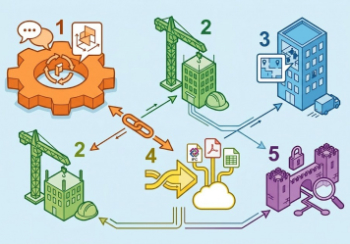
A user gives their low down.

A UK training and membership provider for mould remediation professionals.
Building Safety recap April, 2026
A short and longer run-through of the month, with links to further information and sources.

CIAT May 2026 briefing.

Independent NSI and BAFE study exploring how organisations are changing the way they buy fire safety services.

From medieval scribes to modern word art.
ECA welcomes crackdown on late payment and push for clean energy, whilst CIOB seek fixed cladding removal timeframes.
Cyber Security in the Built Environment
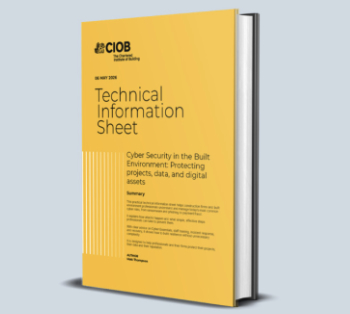
Protecting projects, data, and digital assets: A CIOB Academy TIS.
Managing competence in the built environment

ITFG publishes new industry guide on how to meet the ICC principles.
The UK's campaign to reduce noise pollution: Mythbusting, articles and topic guides.