






Research and development tax credits
As an industry whose focus is on building, it might be expected that firms working in the UK construction sector would be swift to boost end-of-year accounts from existing activities, particularly those that don’t need additional expenditure. However, tax credits for research and development (R&D) activity carried out by the sector are not being used. In the previous tax year (2017-18), the construction sector registered just 0.2% of successful claims to HMRC, with an estimated £2,450 million in potential tax credits going unclaimed.
Yet R&D tax credits can be hugely beneficial to companies operating in the construction sector, and a lucrative incentive in an industry for which the average profit margin is just 2.5%. Claiming back the available R&D tax credits can even take a construction company’s end-of-year bottom line from a minus to a plus. According to estimates by the tax advisory firm Smith & Williamson, profit-making firms claiming available tax credits on R&D can increase the benefit by up to 25%. For loss-making organisations, 33% of the cost of that investment can be claimed back.
According to HMRC, “R&D takes place when a company seeks to advance a field of science or technology through the resolution of scientific or technological uncertainty”. This uncertainty is limited to the company, except in areas in which solutions are widely known. The test to determine “uncertainty” is an objective one – if a competent professional working in the field can easily solve a problem, then this would not meet the uncertainty threshold. If there is an employee attempting to find a technical solution to a construction project – either gaining new knowledge or creating something new and improved – then this qualifies as R&D, and can be claimed for. There is no requirement for a project to be successful to be eligible, provided that the R&D was carried out in genuine spirit of enquiry.
There are three main schemes currently in place under which UK-registered companies can claim against R&D activities carried out throughout the respective tax year:
- The first is the Research and Development Expenditure Credit (RDEC) scheme. Under this a taxable credit can be claimed at 12% of qualifying R&D expenditure, offset against tax liability (or for companies with no Corporation Tax liabilities, either payable in cash or offset against other duties due). For loss making companies the tax credit is fully payable against expenditure.
- While the RDEC scheme is typically used by larger companies, smaller companies often take up the similar SME R&D tax credits scheme, due to its more generous tax rate. For profit-making SMEs, tax relief can be reclaimed at 130% on qualifying R&D expenditure. For those making losses, these can be surrendered in return for a payable tax credit of 14.5%. In terms of claimable R&D expenditure, neither RDEC nor SME credits can be claimed for items or services which customers pay for directly. However, items and services purchased for commercial purposes– for example, software licences – and outsourced R&D projects are claimable.
- The third scheme is that of R&D Capital Allowances (RDAs), which offer a 100% deduction on expenditure on assets, processes, materials or services used for R&D. This is usually used for claims on equipment, machinery and other new or refurbished assets used for R&D. However, RDAs can also be claimed on expenditure on premises or facilities for carrying out R&D – this can include building, extending, refurbishing, and sometimes purchasing property in which R&D activities take place.
As well as the immediate benefits, R&D claims can offer improved returns across the whole construction supply chain. Since claiming R&D tax relief is conducted retrospectively, construction operators have not typically built R&D activity or claims into project processes. However, if R&D relief could be estimated progressively – as all other elements of a construction process are projected, prepared and budgeted for – as part of the tender process, future challenges could be calculated, a greater value to the contracting firm could be realised, and the tender bid could be made more competitive as a result.
Such improved returns could result in a compounded benefit effect for firms across the construction sector, many of which may be tempted to increase R&D spend in order to develop and/or improve on additional innovations. If the sector’s current spend average of 0.65% of turnover on R&D were to be increased to the national UK average of 1.7% or beyond, there could be significant returns. As Smith & Williamson calculate, at the current 2.5% profit rate estimated by the construction sector, an increase in R&D intensity to between 2-4% of annual turnover could lead to further gains from tax benefit alone. For example, a firm with a turnover of around £50 million could generate between £10-20 million from successful claims on R&D activity. At the opposite end of the scale, a company currently making an annual turnover of £1 billion would need to increase turnover by between £88-175 million in order to achieve the same result as claiming the R&D activity back in the form of tax credit.
The benefits of increasing R&D claims are therefore considerable, representing a major – and as yet, unclaimed – opportunity for the construction sector.
A free webinar is available on the CIOB website, which explains the various schemes under which tax relief can be claimed, what activity is eligible to claim tax relief, the impact such claims could have on a business, and the processes by which an application for R&D tax relief can be made. https://www.ciobacademy.org/course/rd-tax-credits/
This article was originally published by CIOB on 14 January 2019. It was written by Patrick Cusworth, CIOB Head of Policy and Public Affairs. You can see the original article at: https://www.ciob.org/blog/research-development-tax-credits-opportunity-construction-sector
--CIOB
[edit] Related articles on Designing Buildings Wiki
Featured articles
Check out some of the best features and news from Designing Buildings as well as key stories from around the web.
Building Safety Act implementation in Wales

CIAT to host industry panel on 26 June.
New and updated CLC building safety guidance.
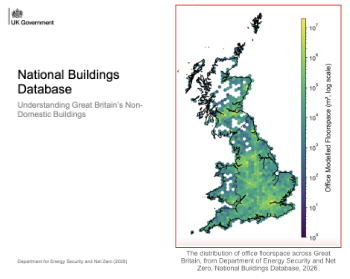
New UK National Buildings Database.
Building Safety Wiki Interviews

Chief executive of the British Woodworking Federation.
Planning condition discharge in England and Wales

A brief explanation from a building compliance expert, with further links.
Overheating guidance and tools for building designers

Guidance for dealing with element of building fabric control that have increasing importance.
Shading for housing, a design guide

From the Good Homes Alliance and British Blind and Shutter Association.
UK Standard Skills Classification (SSC)

A shared framework for describing skills needs.
Social media ban consultation comes to close

CIOB urges UK Government to consider social media’s role in careers guidance in ban debate.
The latest of eight Skills England apprenticeship units

The addition of battery manufacturing welcomed by ECA with a warning about the risks of fast-tracked apprenticeship units.
Building Control Independent Panel final report
A precis of a key report led by Dame Hackitt with full recommendations and link to the government response.